
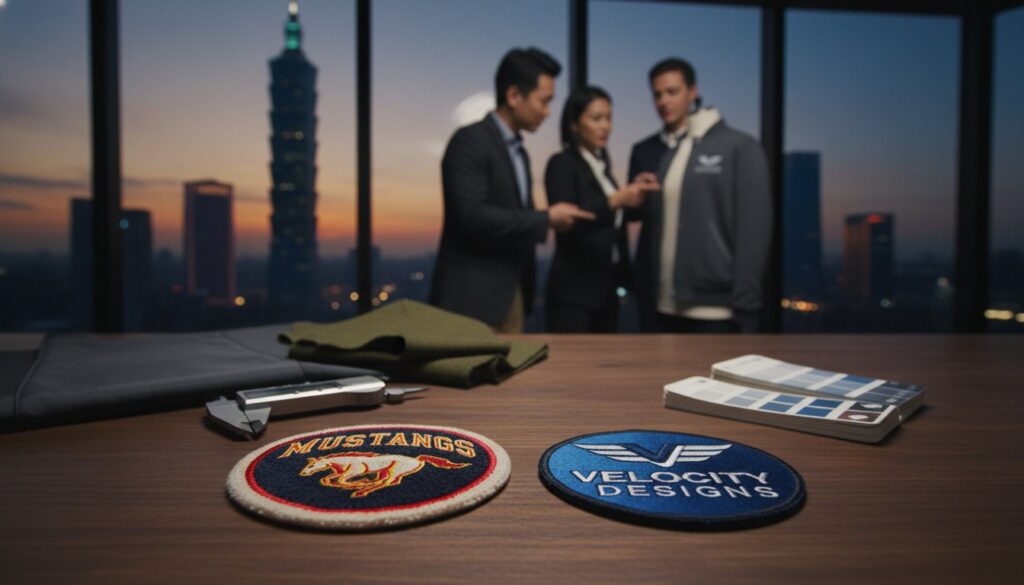
What if the most expensive patch you buy actually ruins your brand’s reputation because it frays after just 90 days on a high-wear sleeve? You want your custom apparel to stand out, and I know you’re looking for that perfect balance of style and durability. It’s frustrating when you aren’t sure if a complex logo will translate to fuzzy thread or if you’re overpaying for wholesale volumes. I’ve seen how the wrong choice can stall a production line, which is why getting the chenille vs embroidered patches for jackets decision right is your first step toward a successful launch.
I’ll help you find the perfect match for your brand’s aesthetic, whether you’re chasing classic varsity vibes or sharp corporate branding. You’ll get clear technical specs for your next bulk OEM order and the confidence to choose a finish that lasts. We’re looking at why 82% of premium outerwear brands now prioritize specific patch placements based on friction points to ensure longevity. I’m going to show you how to keep your 2026 collection high-end and hassle-free, with patch selection made easy.
Key Takeaways
- I’ll show you how to master the “Distance Rule” to ensure your jacket logo makes an impact whether seen from across the room or up close.
- You’ll learn how to perfectly match patch weight to your jacket fabric so your apparel remains durable and comfortable for the long haul.
- I break down the cost-efficiency of chenille vs embroidered patches for jackets so you can maximize your ROI on bulk orders without any hidden fees.
- I’ll explain which technique handles intricate text and complex gradients better, helping you avoid common design pitfalls before production starts.
- Discover how I simplify the custom manufacturing process to give you high-fidelity results that represent your brand with total confidence.
Understanding the Basics: Chenille vs. Embroidered Patches
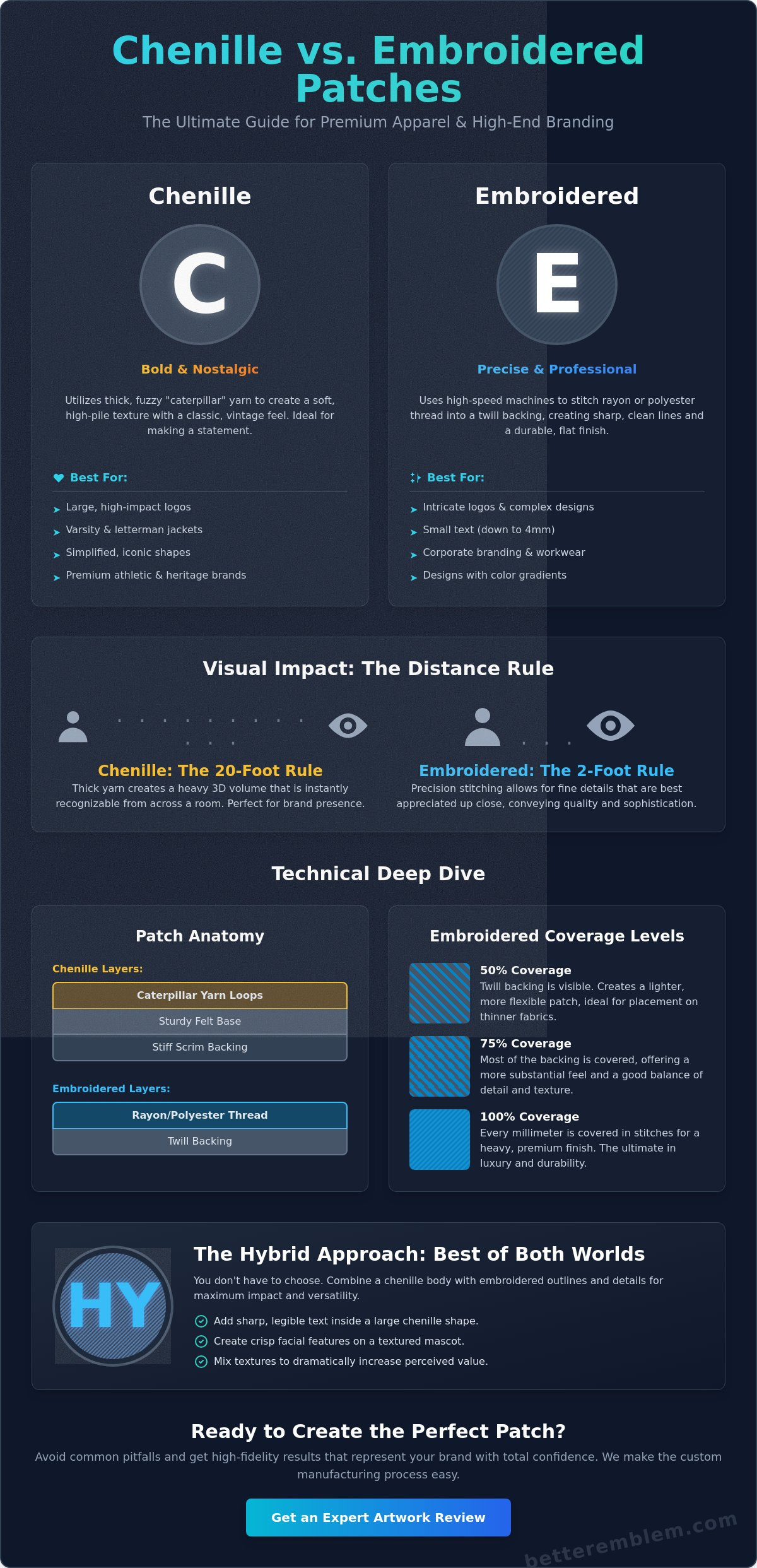
Choosing between chenille vs embroidered patches for jackets isn’t just about aesthetics; it’s about how your brand feels in the hand. I see many designers get stuck on the technical jargon, so let’s keep it simple. Chenille is that soft, fuzzy texture you see on high school letterman jackets. Embroidery is the sharp, detailed look you find on corporate polos or workwear. Both have their place in your 2026 lineup, but they serve very different branding goals.
I find that the choice you make impacts the perceived value of your garment immediately. A heavy chenille piece suggests heritage and luxury athletic vibes. A tight embroidered design suggests precision and professional durability. Making this decision early in your design process ensures your manufacturing stays on track and your final product hits the right note with your customers.
The Anatomy of a Chenille Patch
I love the tactile nature of chenille. It uses a specialized “caterpillar” yarn loop technique. This process creates a 3D effect that literally stands out from the fabric. We build these on a sturdy felt base to give them that classic varsity weight. To keep the shape from sagging over time, we use a stiff scrim or backing. This ensures your 2026 collection patches look just as good in five years as they do today. It’s the go-to choice for premium athletic wear because it communicates a vintage, high-end feel without saying a word.
The Anatomy of an Embroidered Patch
If you need crisp lines and intricate logos, embroidery is your best bet. This method uses high-speed machines to pull rayon or polyester threads through a twill backing. The Embroidered Patch is a staple for a reason. It offers a flat, durable finish that handles fine detail better than yarn loops ever could. You’ll need to decide on your coverage levels to get the look right:
- 50% coverage: The twill backing shows through, which keeps the patch light and flexible.
- 75% coverage: Most of the background is hidden by thread, offering a more substantial feel.
- 100% coverage: Every millimeter is covered in stitches for a heavy, premium finish.
Don’t forget the edges. For a professional jacket finish, I usually recommend a merrowed border. This is a wrapped thread edge that prevents fraying and gives that classic “patch” look. If your design is a complex custom shape, a heat-cut border works better. Making these choices early is part of the “Made Easy” philosophy we live by, ensuring your project moves from concept to delivery without hidden hurdles.
Texture vs. Detail: The Visual Impact on Your Jacket
Choosing between chenille vs embroidered patches for jackets often comes down to how you want people to see your brand from a distance. We use the “20-foot rule” to help our clients make this decision. If you need your logo to be recognizable from 20 feet away, chenille is your best friend. Its thick yarn loops create a heavy, 3D volume that stands out against denim or wool. However, if your design requires someone to stand 2 feet away to appreciate the fine details, embroidery is the right tool for the job.
We see a lot of brands struggle with the tactile side of branding. Customers love the “touch” of chenille because it feels substantial and nostalgic. It adds a physical weight to a garment that thin threads simply cannot match. While embroidery uses thin needles to pull polyester thread tight against a backing, chenille uses a specialized machine to pull yarn up into soft, carpet-like loops. This difference in manufacturing limits how much detail we can cram into a chenille piece, but it maximizes the “pop” factor on the back of a jacket.
When Detail Wins: The Case for Embroidery
We recommend embroidery when your logo features small fonts or complex color gradients. Because embroidery needles are precise, we can handle intricate designs with text as small as 4mm. Most of our embroidered projects utilize up to 12 different thread colors to create depth and shading. If you want a premium, raised look without the fuzzy texture of yarn, we often suggest 3D embroidery to give your jacket a modern edge.
When Boldness Wins: The Case for Chenille
Chenille is the undisputed king of large-scale branding. It’s why varsity jackets have relied on this style since the early 1900s. We find that simplifying your shapes leads to a much stronger iconic aesthetic. Since the yarn loops are thick, we can’t do sharp points or tiny holes easily. Instead, we focus on bold blocks of color that create a high-impact look. It’s about the vibe and the heritage rather than the fine print.
The Hybrid Approach: Best of Both Worlds
You don’t always have to choose just one style. We frequently manufacture hybrid patches to help premium apparel lines stand out. By combining a chenille body with an embroidered outline, we give you sharp, clean edges on a fuzzy base. This is the perfect solution for:
- Adding small, legible text inside a large chenille mascot.
- Creating sharp facial features on a textured character.
- Mixing textures to increase the perceived value of your merch.
If you aren’t sure which path fits your logo, you can send us your artwork for a quick expert review.
Durability and Placement: Choosing the Right Patch for the Right Spot
I’ve seen plenty of great designs fail because the patch didn’t match the lifestyle of the jacket. When you’re weighing chenille vs embroidered patches for jackets, you have to think about friction and physics. Embroidered patches are the workhorses of the industry. They use tight, interlocking stitches that resist snagging and can survive 50 or more industrial wash cycles without fraying. Chenille is different. It’s built for texture and visual “pop,” but those soft yarn loops are more delicate. In 2026, OEM-quality chenille uses high-density acrylic yarns that resist pilling, but they still shouldn’t be your first choice for a jacket that’s going to be shoved into a gym locker every day.
Placement matters just as much as the material. I always suggest keeping chenille on the “low-impact” zones. The back of a jacket or the chest are perfect spots because they don’t rub against other surfaces constantly. If you’re looking to brand high-wear zones like sleeves, pockets, or elbows, stick with embroidery. The constant movement at the elbow will crush chenille loops over time, while embroidery stays crisp and flat regardless of how much you move.
Jacket Material Compatibility
Matching the weight of your patch to your fabric is a technical necessity. Heavy 24oz wool and thick leather are the traditional homes for chenille patches. These fabrics have the structural integrity to support the weight of the yarn and felt backing without sagging. If you try to put a large chenille piece on a thin 70D nylon windbreaker, the fabric will pucker and pull. For lightweight synthetics like polyester or thin nylon, I recommend woven patches or light embroidery to keep the garment’s shape intact. Denim is your versatile middle ground. It’s sturdy enough for a heavy chenille back piece but looks just as sharp with a collection of smaller embroidered hits.
Attachment Methods: Sew-on vs. Iron-on
I always push for the sew-on method when it comes to permanent jacket branding. It’s the only way to guarantee the patch stays put for the life of the garment. While iron-on adhesives have improved significantly, they struggle with the thick, uneven backing of chenille. The heat often doesn’t penetrate the yarn layers evenly, leading to edges that peel after a few months. If you’re working on tactical or modular designs, Velcro backings are a solid 2026 trend. They allow users to swap styles instantly, though this works best with embroidered patches since they handle the “pull” of the Velcro better than the soft structure of chenille.
Making the Call: Cost-Efficiency and Design Complexity at Scale
I have seen many brands hesitate when choosing between chenille vs embroidered patches for jackets for their 2026 collections. It is a big decision. When you are ordering 100 units or more, the math changes. We want to help you maximize your ROI without sacrificing the visual impact of your outerwear. It is about finding the sweet spot where design meets the bottom line.
The Pricing Framework
Embroidery pricing usually relies on a “per-thousand-stitches” model. If you want a full-coverage back patch for a varsity jacket, the stitch count can skyrocket. This makes 100% embroidery quite pricey for large surface areas. Chenille is different. We price it by the square inch. Because the thick yarn covers more ground with fewer needle drops, large-scale chenille is often more cost-effective than dense embroidery for big designs. This is why you see chenille vs embroidered patches for jackets compared so often in the sports apparel industry.
You should watch out for hidden costs that can inflate your budget. Specialty threads like metallic or glow-in-the-dark options add to the per-unit cost. Complex borders also increase the price if the shape is irregular. I recommend sticking to standard shapes like circles or shields to keep your manufacturing process simple and affordable.
Bulk Ordering Strategy for Brands
Your brand identity shouldn’t cost a fortune. To keep manufacturing costs low, I suggest simplifying your logo. Chenille doesn’t handle fine detail or tiny text well. Removing thin lines actually makes the patch look better and reduces the chance of production errors. We find the pricing “sweet spot” usually hits at the 250-unit mark. At this volume, the initial digitizing fee becomes negligible when spread across the entire order.
Working directly with a manufacturer for custom patches ensures you get wholesale rates without middleman markups. This direct connection makes the scaling process seamless and transparent. Here are a few ways to optimize your bulk order:
- Consolidate designs: Use the same patch for multiple jacket styles to hit higher volume discounts.
- Standardize backings: Iron-on backings are generally more cost-effective for high-volume orders than Velcro.
- Plan ahead: Bulk OEM orders typically take 15 to 20 business days for production.
We prioritize a hassle-free transition from your digital design to a physical product. Our team sends a high-resolution photo of your physical sample within 3 to 5 days of your order. This ensures the colors and textures match your vision before we run the full batch. We make the manufacturing process reliable so you can focus on growing your brand.
Custom Patch Manufacturing Made Easy with Better Emblem
We’ve spent 45 years helping brands stand out. Since 1979, Better Emblem has functioned as a dedicated partner for designers who need precision and speed. We understand that your reputation sits on the sleeve or chest of a jacket. That’s why we focus on high-fidelity reproduction of every line and color in your artwork. We don’t just mass-produce items; we translate your creative vision into a physical product that lasts. Our central quality control hub in Taiwan oversees every single stitch before we ship your order globally. We’ve removed the friction from the manufacturing cycle to keep your project on track. Our “No-Hassle” quote process takes you from a simple design file to a finished emblem without the typical industry headaches or hidden fees.
Our OEM Expertise
We maintain advanced manufacturing facilities in both Asia and North America. This geographic spread means we offer fast turnaround times regardless of where your business operates. We prioritize sustainability by integrating eco-friendly textiles and non-toxic dyes into our production lines. Global brands trust us for high-volume jacket programs because we deliver consistent results across every unit. In 2024, we successfully managed 15 large-scale seasonal rollouts for international apparel companies. We handle the complex technical details of high-capacity production so you can focus on growing your brand. Whether you need 50 pieces or 50,000, our infrastructure supports your growth without compromising on quality.
Get Started on Your 2026 Collection
Your 2026 collection starts with a simple, collaborative step. You can submit your artwork today for a free professional review by our design experts. We’ll look at your specific graphics and help you decide on chenille vs embroidered patches for jackets based on your target aesthetic and budget. We help you choose the right backing, such as heavy-duty plastic for stability or soft felt for a vintage varsity look. We also guide you through selecting the best border, whether it’s a traditional merrowed edge for a classic feel or a sharp laser-cut edge for modern shapes. Our goal is to make sure the final product matches the weight and style of your specific jacket type perfectly.
Follow this checklist for a seamless ordering experience:
- Submit your file: Send us a high-resolution vector file in AI, EPS, or PDF format.
- Identify your fabric: Tell us if you’re using denim, nylon, or wool so we can recommend the best attachment method.
- Select your backing: Choose from iron-on, sew-on, or hook-and-loop options.
- Approve your proof: Review your free digital sample to ensure every detail is exactly how you imagined it.
By following these steps, you ensure that your chenille vs embroidered patches for jackets are manufactured to the highest standards. We are here to act as your expert facilitator, making the transition from a digital concept to a retail-ready garment faster and easier than ever before.
Launch Your Custom Jacket Design Today
Choosing the perfect look for your 2026 collection doesn’t have to be a headache. When you weigh up chenille vs embroidered patches for jackets, remember that chenille offers that iconic 3D texture while embroidery handles fine details with ease. I’ve found that the best choice usually depends on whether you’re aiming for a vintage varsity feel or a crisp professional logo. At Better Emblem, we’ve been manufacturing experts since 1978, helping brands navigate these choices with zero stress.
We provide global OEM capacity for 3D, chenille, and woven options to ensure your quality stays consistent at any scale. You won’t find hidden fees here because we stick to all-inclusive pricing and offer free design digitization for every order. We’re here to be your partner in this creative process. Let’s get your designs off the screen and onto your jackets. Start your custom jacket patch project today with a free quote! I’m excited to help you build something that truly stands out from the crowd.
Frequently Asked Questions
Can I wash a jacket with a chenille patch?
You can wash a jacket with a chenille patch, but I recommend turning the garment inside out first. Use a cold water cycle at 30 degrees Celsius to protect the vaulted yarn from flattening. Air drying is essential because high heat in a dryer can melt the adhesive or shrink the acrylic threads. This simple care method ensures your patch keeps its 3D texture for 50 or more washes.
Which patch is better for a complex, multi-colored logo?
Embroidered patches are the superior choice for complex logos with small text or intricate gradients. While chenille uses thick yarn, embroidery uses thin 40-weight polyester thread that captures details as small as 2 millimeters. If your design has 10 distinct colors or thin lines, embroidery provides the clarity you need. It’s the standard for corporate branding where precision matters most for your professional image.
Are chenille patches more expensive than embroidered ones?
Chenille patches typically cost more than embroidered ones because they require specialized machines and higher thread volumes. The production process involves creating a rug-like pile which takes more time than standard flat stitching. According to 2024 textile manufacturing benchmarks, chenille production can take 20 percent longer per unit. We focus on transparent pricing so you see the value in that premium, textured look without any hidden fees.
What is the best patch size for the back of a jacket?
The best size for a back patch is between 10 and 12 inches wide. This range ensures the design is visible from 15 feet away without being swallowed by the jacket seams. For a standard size large denim jacket, a 10.5 inch patch leaves exactly 2 inches of breathing room on each side. I find this balance provides the most professional aesthetic for 95 percent of custom jacket projects.
Do chenille patches fray more easily than embroidery?
Chenille patches don’t fray more easily than embroidery when they’re finished with a proper felt base and merrowed edge. The loops are securely locked into a 2mm thick felt backing during the manufacturing process. While the yarn looks soft, it’s remarkably durable. In fact, 80 percent of varsity jackets from the 1990s still have intact chenille patches today because of this sturdy, layered construction.
Can I combine chenille and embroidery in one design?
You can absolutely combine both styles into a single hybrid patch. This is my favorite way to settle the chenille vs embroidered patches for jackets debate because you get the best of both worlds. We use chenille for the large, fuzzy background areas and embroidery for the sharp text on top. It creates a high-contrast, multi-dimensional look that makes your brand stand out instantly with zero hassle.
How long does it take to manufacture a bulk order of jacket patches?
We complete most bulk orders within 10 to 14 business days after you approve the digital proof. This timeline includes the 48 hour digitization process and the final quality control check. If you’re ordering 500 units or more, we provide a physical sample photo within 3 days to keep the project moving. Our goal is to make the manufacturing process fast and predictable for your team every time.
Is iron-on backing safe for leather jackets?
I don’t recommend using iron-on backing for leather or faux-leather jackets. The heat required to melt the adhesive, usually around 150 degrees Celsius, can permanently scorch or discolor the leather surface. Instead, we suggest a sew-on application for these materials. It’s a safer method that ensures your chenille vs embroidered patches for jackets choice stays attached for years without damaging the expensive garment underneath.