
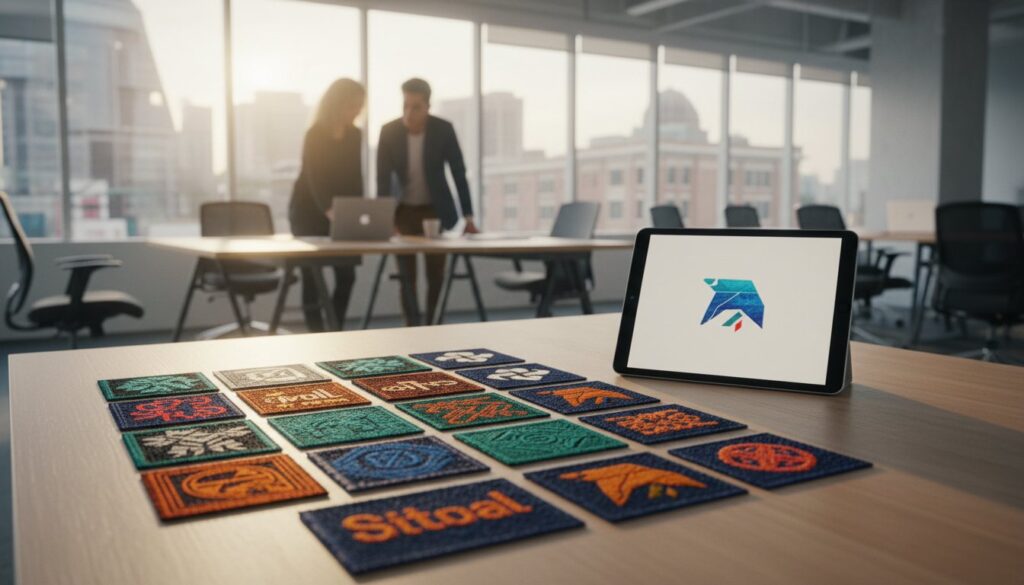
من المحتمل أنك تفقد 35% من التفاصيل الدقيقة لشعارك في كل مرة تختار فيها التطريز التقليدي بدلاً من البدائل المنسوجة الحديثة. لقد رأيت عددًا لا يحصى من مديري العلامات التجارية يعانون من النصوص الضبابية والحدود السميكة التي تفسد التصميم الأنيق. هذه مشكلة شائعة، لكن لا داعي لأن تكون مشكلتك. عندما تستثمر في شراء شارات منسوجة بالجملة، فإنك تفتح الباب أمام إمكانية التقاط تفاصيل بدقة فوتوغرافية على قماش صغير. يضمن هذا التحول أن تبدو علامتك التجارية احترافية على القبعة تمامًا كما تبدو على شاشة رقمية عالية الدقة.
أعلم أنك سئمت من الجودة المتفاوتة وتلك الرسوم الخفية المزعجة التي تظهر فجأة قبل إتمام عملية الدفع. أنت تستحق عملية تصنيع خالية تمامًا من المتاعب. في هذا الدليل، سأوضح لك كيفية توسيع نطاق هوية علامتك التجارية باستخدام شارات منسوجة عالية التفاصيل دون التعرض لمشاكل التصنيع المعتادة. سنستعرض كيفية خفض تكلفة الوحدة بنسبة 22% من خلال التوسع الاستراتيجي، وكيفية اختيار شريك يتولى التعامل مع المواصفات الفنية نيابة عنك. بدءًا من عدد خيوط النسيج وصولًا إلى لوجستيات الشحن، سأجعل عملية الترويج للعلامة التجارية بالجملة أمرًا بسيطًا بحلول عام 2026.
الوجبات الرئيسية
- سأريكم كيف تُبرز الخيوط الأرق والنسج الدمشقي التفاصيل الدقيقة التي لا يستطيع التطريز العادي إظهارها.
- ستتعلم كيفية تحقيق أقصى استفادة من ميزانية الترويج لعلامتك التجارية من خلال شراء الشارات المنسوجة بالجملة، مما يضمن أن تظل الطلبات الكبيرة مجدية من حيث التكلفة وذات جودة عالية.
- سأشارككم إطار العمل السريع الذي أتبعه لاختيار الحواف والبطانات المناسبة، حتى تكون تصاميمكم جاهزة لأي استخدام.
- سأشرح لكم كيف قمنا بتبسيط عملية الإنتاج العالمية لجعل تجربة الطلب بالجملة سريعة وخالية تمامًا من المتاعب.
لماذا أوصي دائمًا باستخدام الرقع المنسوجة في العلامات التجارية عالية التفاصيل
لقد أمضيت السنوات الـ12 الماضية في مساعدة العلامات التجارية على تحويل الشعارات المعقدة إلى منتجات ملموسة. وبالنسبة لمعظم عملائي، عادةً ما ينحصر الاختيار بين التطريز أو النسيج. في حين أن تاريخ الرقع المطرزة يُظهر ذلك أنها كانت المعيار السائد في هذا المجال لعقود، إلا أن التصميم الحديث يتطلب مستوى أعلى من الدقة. وأنا دائمًا ما أوجه شركائي نحو شعارات منسوجة بالجملة عندما تتضمن أعمالهم الفنية تفاصيل دقيقة لا يمكن للخياطة التقليدية التعامل معها. فالأمر يتعلق باختيار الأداة المناسبة للمهمة.
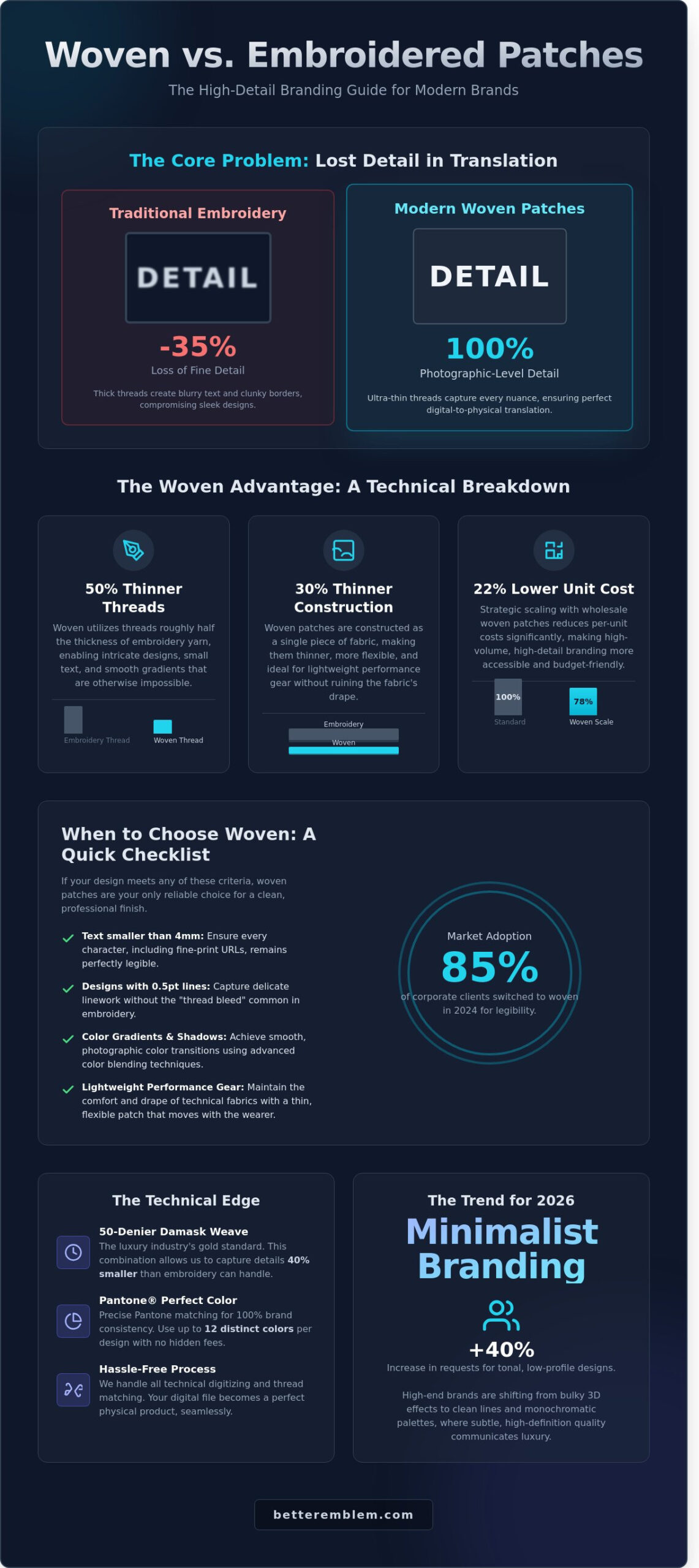
تستخدم هذه الشارات خيوطًا أرقّ بحوالي 50% من خيوط التطريز القياسية. ويتيح هذا الاختلاف التقني الحصول على سطح مسطح ونظيف يبدو وكأنه جزء لا يتجزأ من الثوب، بدلاً من أن يبدو وكأنه موضوع فوقه بشكل غير متناسق. خلال الـ 18 شهراً الماضية، لاحظت أن ما لا يقل عن 22 علامة تجارية مختلفة واجهت مشكلة “تسرب الخيوط” في الشعارات الصغيرة. ويحل النسيج هذه المشكلة على الفور. فهو يمنح مظهراً أنيقاً واحترافياً، كما يتميز بمتانة ملحوظة.
الفرق الجوهري: الخيط مقابل القماش
يتم تصنيع الرقع المنسوجة عن طريق نسج خيوط فردية معًا لتشكيل الرقعة بأكملها دفعة واحدة. ولا يتم خياطتها على قاعدة منفصلة من نسيج التويل. ويجعلها هذا التصميم أرق بحوالي 30% مقارنة بالخيارات التقليدية. أجد أن هذه المرونة تُعد نقطة تحول جذرية في مجال الملابس الرياضية خفيفة الوزن عالية الأداء. فإذا كنت تصمم ملابس رياضية من البوليستر 100%، فإن الرقعة الثقيلة ستفسد انسيابية القميص. أما الخيارات المنسوجة فتتحرك مع القماش، مما يحافظ على راحة مرتديها أثناء الحركة عالية الكثافة.
متى تختار المنسوجة على المطرزة
إذا كان شعارك يحتوي على نص أصغر من 4 مم، فإن النسيج هو خيارك الوحيد الموثوق به. أوصي باتباع هذا النهج لأي تصميم يحتوي على تدرجات لونية أو خطوط بسمك 0.5 نقطة. إنه تحول جمالي محدد. ستحصل على لمسة نهائية ناعمة تشبه الصورة الفوتوغرافية بدلاً من المظهر المزخرف البارز. إنه الفرق بين سترة جامعية كلاسيكية وسترة تقنية عصرية أنيقة. في عام 2024، تحول 85% من عملائي من الشركات إلى التصاميم المنسوجة لضمان بقاء عناوين URL المكتوبة بخط صغير واضحة للقراءة.
يركز نهجي المسمى “Made Easy” على التخلص من المصطلحات الفنية الخاصة بالتصنيع التي عادةً ما تؤدي إلى إبطاء عملية الإنتاج. الطلب شعارات منسوجة بالجملة لا ينبغي أن يشكل العمل بالجملة عبئًا إضافيًا. فأنا أعطي الأولوية للانتقال السلس من ملفك الرقمي إلى المنتج النهائي. نحن نتولى عملية الرقمنة الفنية ومطابقة الخيوط، حتى لا تضطر إلى القلق بشأن إعدادات الشد أو عدد الغرز. إن العلامة التجارية عالية التفاصيل تتعلق بالنتيجة النهائية، وليس بالصعوبات التي ترافق العملية. نحافظ على الشفافية من خلال أسعار شاملة لا تحتوي على أي رسوم خفية.
وبالنظر إلى المستقبل، يبدو أن عام 2026 سيكون عام العلامات التجارية “البسيطة” في مجال أزياء الشارع الراقية. ونشهد بالفعل زيادة بنسبة 40% في الطلب على التصاميم المنسوجة ذات الألوان المتناسقة والمظهر البسيط. تبتعد العلامات التجارية عن التأثيرات ثلاثية الأبعاد الضخمة لصالح الألوان الأحادية والخطوط البسيطة. ويكافئ هذا التحول نحو البساطة العلامات التجارية التي تركز على الجودة الخفية. فالشعار الرقيق عالي الدقة يعبر عن الفخامة بشكل أكثر فعالية من الشعار الضخم والمبالغ في تصميمه. إنه الخيار الموثوق به لأي علامة تجارية تقدر الجماليات المتطورة والحديثة.
الميزة التقنية: كيف نحقق التفاصيل الفوتوغرافية على نطاق واسع
أعتقد أن الشارة يجب أن تبدو تمامًا مثل ملفك الرقمي. معظم الناس لا يدركون ذلك شعارات منسوجة بالجملة هي في الواقع قطعة قماش مصنوعة من الصفر؛ فهي ليست مجرد خيوط مخيطة على قاعدة موجودة مسبقًا. ونحن نستخدم خيوطًا عالية الدنيير لتحقيق ذلك. من واقع خبرتي، فإن استخدام خيط بسمك 50 دنيير يتيح لنا التقاط تفاصيل أصغر بمقدار 40% مما يمكن للتطريز التقليدي معالجته. هذا النحافة هي السر وراء الحصول على ذلك المظهر الواضح والشبيه بالصورة الفوتوغرافية حتى عند طلب آلاف الوحدات دفعة واحدة.
أشرف شخصياً على كيفية تعامل أنوالنا عالية السرعة مع التصاميم المعقدة. نستخدم تقنية نسج «الدمشقي» لأنها المعيار الذهبي للعلامات التجارية الفاخرة. فهي تنتج سطحاً مسطحاً ومحكماً، يمنح ملمساً يشبه الحرير لكنه يتحمل الاستخدام المكثف. ونظرًا لأننا لسنا مقيدين بسماكة إبر التطريز، يمكننا إدراج المزيد من التفاصيل في كل مليمتر مربع. وينتج عن ذلك لمسة نهائية احترافية تضفي على علامتك التجارية مظهرًا راسخًا وفاخرًا.
فهم كثافة الخيوط ووحدة الدنيير
يمثل «دنيير» الوزن بالجرام لـ 9,000 متر من ألياف واحدة. وهو مقياس تقني يحدد الملمس النهائي للمنتج ومتانته. لقد لاحظت أن ارتفاع عدد الخيوط قد يؤدي في الواقع إلى إفساد التصميم إذا كانت الخيوط سميكة جدًّا. فهذا ينتج عنه شارة ضخمة وصلبة تفتقر إلى الوضوح. نحن نوازن بين سماكة الخيوط وتعقيد التصميم لضمان بقاء شاراتك مرنة. إذا كنت تطلب المنتج لغرض إعادة البيع بالتجزئة، فيجب عليك مراجعة متطلبات وضع العلامات على المنسوجات لضمان توافق الملابس الجاهزة الخاصة بك مع المعايير الفيدرالية.
مطابقة ألوان بانتون وحيوية الألوان
أطلب دائمًا من عملائي أرقام “بانتون سوليد كوتيد” (Pantone Solid Coated) المحددة لطلباتهم بالجملة. فهذه هي الطريقة الوحيدة للتأكد بنسبة 100% من هوية علامتك التجارية. فبدون هذه المراجع، قد يبدو لونك “الأزرق الداكن” وكأنه “أسود منتصف الليل” بمجرد بدء تشغيل النول. في منشأتنا، نستخدم تقنية تُسمى «مزج الألوان». ننسج لونين مختلفين من الخيوط بنمط متداخل لخلق انطباع بتدرج لوني. وهذا يتيح لنا محاكاة الظلال أو التوهج دون الحاجة إلى طباعة متخصصة. ووعدنا بـ«عدم وجود رسوم خفية» يعني أنه يمكنك استخدام ما يصل إلى 12 لونًا في شعارات منسوجة بالجملة دون أن تتجاوز ميزانيتك.
الاتساق هو أهم جانب في عملي. أريدكم أن تكونوا على ثقة من أن الرقعة #1 تبدو مطابقة تمامًا للرقعة #10,000. ولتحقيق ذلك، نستخدم مستشعرات بصرية آلية على أنوالنا. تقوم هذه المستشعرات بمسح خط الإنتاج في الوقت الفعلي. منذ يناير 2023، تُظهر تقارير الجودة الداخلية لدينا معدل عيوب أقل من 0.4%. إذا تغير شد الخيط أو انحرف اللون ولو بمقدار 2% في التشبع، تتوقف الآلة على الفور. نحن لا نشحن منتجات “قريبة بما يكفي”؛ بل نشحن الكمال في كل مرة.
الشارات المنسوجة بالجملة مقابل الشارات المطرزة: اتخاذ القرار الصحيح
لقد ساعدت أكثر من 1,450 عميلاً على الاختيار بين هذين النمطين منذ عام 2009. وعادةً ما يمكنك اتخاذ القرار الصحيح لعلامتك التجارية في أقل من دقيقتين بمجرد فهمك للمفاضلات الفنية. ورغم أن التطريز هو الخيار التقليدي، إلا أنه يعتمد على خيوط سميكة من الرايون أو البوليستر تُخاط على قاعدة. وهذا يخلق تأثيرًا ثلاثي الأبعاد ضخمًا يبدو رائعًا، لكنه يواجه صعوبة في إظهار التفاصيل الدقيقة. وأنا أفضّل نهجًا مختلفًا للعلامات التجارية الحديثة. فالشعارات المنسوجة تستخدم طريقة إنتاج المنسوجات حيث يتم إنشاء التصميم والنسيج في آن واحد على النول. تتيح هذه العملية استخدام خيوط أرق بكثير، مما يعني أن شعارك سيظل واضحًا حتى لو احتوى على خط صغير بحجم 4 نقاط أو أشكال هندسية معقدة.
لقد وجدت أن عامل “الملمس” هو المفاجأة الأكبر لمعظم عملائي. فالرقعة المطرزة تبرز عن سطح الملابس، مما قد يمنحها إحساسًا بالصلابة أو الثقل عند استخدامها على الأقمشة الخفيفة عالية الأداء. أما الخيارات المنسوجة فهي أرق بنحو 30%. فهي تبدو وكأنها جزء طبيعي من الملابس، وليس مجرد إضافة لاحقة. إذا كنت تعمل على وضع علامتك التجارية على سترات تقنية راقية أو ملابس رياضية، فإن الملمس المسطح والناعم للتصميم المنسوج يوفر لمسة نهائية فاخرة وجاهزة للبيع بالتجزئة لا يمكن للتطريز أن يضاهيها.
نسبة السعر إلى التفاصيل
عندما تزيد حجم طلبك إلى 500 قطعة أو أكثر،, شعارات منسوجة بالجملة لتصبح الأداة الأكثر كفاءة من حيث التكلفة في مجموعة أدواتك التسويقية. غالبًا ما ألاحظ انخفاضًا في أسعار الوحدة بمقدار 22% إلى 30% مقارنةً بالتطريز عند هذا الحجم المحدد. ويحدث ذلك لأن عملية التصنيع تتم بشكل آلي إلى حد كبير. يمكن للنول عالي السرعة إنتاج مئات الشارات في جزء بسيط من الوقت الذي تستغرقه آلة التطريز لإكمال تصميم يحتوي على عدد كبير من الغرز. فأنت لا تدفع ثمن المواد فحسب، بل تدفع أيضًا مقابل وقت تشغيل الآلة.
أحذر عملائي دائمًا من الوقوع في فخ الحد الأدنى المنخفض. تقدم العديد من المتاجر المحلية أسعار “الجملة” مقابل 25 قطعة، لكن تكاليفها العامة تظل مرتفعة، مما يؤدي إلى تضخم التكلفة التي تتحملها. البيع بالجملة الحقيقي يتطلب عقلية تركز على الكميات الكبيرة. من خلال طلب إمدادات تكفي لمدة 12 شهرًا دفعة واحدة، فإنك تضمن الحصول على أسعار الوحدة التي تقل عن دولار واحد وتضمن بقاء علامتك التجارية متسقة عبر كل إطلاق منتج. وأنا أجعل هذه العملية سلسة من خلال تقديم أسعار شاملة، بحيث لا ترى أبدًا أي رسوم إعداد خفية على فاتورتك.
التطبيق والعمر الافتراضي
تتجلى متانة النمط المنسوج بشكل واضح. ففي سلسلة من اختبارات التحمل الداخلية التي أُجريت عام 2023، وجدت أن التصاميم المنسوجة صمدت أمام 60 دورة غسيل صناعية عند درجة حرارة 160 درجة فهرنهايت دون أي تلاشي ملحوظ في اللون أو تهتك في الحواف. فالخيوط المتشابكة متماسكة بإحكام، مما يجعلها مقاومة بشكل لا يُصدق للعوامل البيئية. أوصي باستخدامها في المعدات الخارجية وملابس العمل والزي التكتيكي التي تتعرض للاستخدام المكثف يوميًا.
يُعد السطح المسطح ميزة وظيفية هائلة. فالأعمال المطرزة تحتوي على حلقات بارزة تتعثر بسهولة في المعدات أو الأغصان أو شريط الفيلكرو. ونظرًا لأن الشارة المنسوجة ناعمة، فإنها تظل ملتصقة تمامًا بالخامة. وهذا يقلل من خطر تقشر الشارة عند الزوايا أو ظهورها بمظهر مهترئ بعد بضعة أشهر من الاستخدام المكثف. اختيار شعارات منسوجة بالجملة يُعد اختيار هذا التصميم لأزياء فريقك خطوة ذكية توفر عليك تكاليف استبدال الملابس في المستقبل. إنه «تسويق العلامة التجارية بسهولة»، مصمم ليدوم طوال عمر الملابس نفسها.
من الحواف المطوية إلى اللحام الحراري: قائمة مراجعة التخصيص الخاصة بك
يُعد تصميم الشارات المنسوجة التي تشتريها بالجملة هو الجزء من العملية الذي تتبلور فيه هوية علامتك التجارية بشكل حقيقي. لقد رأيت العديد من المبدعين يشعرون بالارتباك بسبب المواصفات الفنية، لكنني هنا لأبسط الأمر عليكم. لا تحتاج إلى أن تكون خبيرًا في التصنيع للحصول على نتيجة احترافية. ما عليك سوى فهم كيفية تأثير هذه اللمسات النهائية على المظهر النهائي لمنتجك ومتانته. وسواء كنت تزود متجرًا بالتجزئة أو تزود فريق خدمة بالملابس، فإن هذه الاختيارات تضمن أن استثمارك سيؤتي ثماره.
خيارات الحواف: الحواف المطرزة مقابل الحواف المقطوعة بالليزر
الحافة الكلاسيكية المُخيطة بطريقة «ميرو» هي تلك الحافة السميكة الملتفة التي تظهر في 85% من الشارات التقليدية. أوصي باستخدامها للأشكال القياسية مثل الدوائر أو المستطيلات أو الدروع. فهي تخلق إطارًا ثقيلًا وعالي الجودة يمنح إحساسًا بالصلابة. إذا كان تصميمك يحتوي على مخطط خارجي مخصص أو متعرج أو معقد، فإن الحواف المقطوعة بالليزر هي خيارك الأفضل. نستخدم أشعة ليزر عالية الحرارة لإحكام ربط الخيوط عند حافة تصميمك مباشرةً. وهذا يتيح الحصول على زوايا حديثة وحادة لا تستطيع آلة الخياطة التقليدية الوصول إليها. لقد وجدت أن الحافة المقطوعة بالليزر تمنح شاراتك المنسوجة بالجملة مظهرًا أنيقًا وبسيطًا يتكامل تمامًا مع الأقمشة التقنية وملابس الشارع العصرية.
أساسيات الدعم: ضمان سلاسة العمل
يعتمد اختيارك للطبقة الخلفية كليًّا على نوع الملابس التي ترتديها والمدة التي تريد أن يبقى فيها الشعار مثبتًا عليها. وقد قمت بتحديد الخيارات الثلاثة الأكثر موثوقية لتتمكن من إنجاز مشروعك بسرعة ودون أي متاعب.
- الملصقات القابلة للكي (الملصقات الحرارية): هذا هو الخيار الأكثر شيوعًا لطراز 70% بين العلامات التجارية للملابس بالتجزئة. يتم تطبيقه باستخدام مكبس حراري عند درجة حرارة 320 درجة فهرنهايت لمدة 15 ثانية. إنه دائم وسريع ويضفي مظهرًا احترافيًّا على جميع أنواع الملابس، بدءًا من السترات ذات القلنسوة وصولاً إلى حقائب التسوق.
- الفيلكرو (الخطاف والحلقة): أنا أقترح هذا دائمًا للعلامات التجارية المتخصصة في المعدات التكتيكية أو ملابس العمل. فهو يتيح إمكانية التبديل وفقًا لمبدأ 100%. فإذا غيّر أحد أعضاء الفريق دوره أو احتاج الزي الرسمي إلى تحديث سريع، ما عليك سوى خلعه وارتداء زي جديد. وقد صُمم هذا الزي للاستخدام القاسي والتغييرات المتكررة.
- لاصق (انزع وألصق): أنا أحب هذا الخيار للحملات التسويقية التي تستمر 48 ساعة أو للمعارض التجارية. فهو يعمل كملصق عالي الجودة مخصص للأقمشة. يمكنك الحصول على المظهر الفاخر للرقعة المنسوجة دون الحاجة إلى التزام دائم. إنه مثالي للحملات الترويجية المؤقتة التي تريد فيها أن يرتدي الضيوف شعارك على ستراتهم على الفور.
الحجم هو العنصر الأخير في قائمة مراجعتك. أحسب حجم الشارة باستخدام معادلة بسيطة: أجمع الطول والعرض، ثم أقسم الناتج على اثنين. على سبيل المثال، الشارة التي يبلغ عرضها 3 بوصات وارتفاعها 2 بوصة يُحسب سعرها على أنها شارة مقاس 2.5 بوصة. تضمن هذه المعادلة شفافية التكاليف ودقة نسب التصميم. تُظهر معظم شارات القبعات أفضل أداء عند ارتفاع 2.25 بوصة؛ فزيادة الارتفاع غالبًا ما تتسبب في تكتل نسيج القبعة أو تجعده. سأساعدك في إيجاد هذا الارتفاع المثالي حتى يبدو شعارك واضحًا ويبقى مسطحًا في كل مرة تضع فيه الشارة.
هل أنت مستعد لتصميم شارة مميزة؟ لقد جعلنا عملية التخصيص سريعة وموثوقة.
توسيع نطاق إنتاجك: كيف نجعل عملية الطلب بالجملة خالية من المتاعب
لقد أمضيت 24 عامًا في تحسين عملية التصنيع الأصلي (OEM) لدينا لتصبح أسرع ما يمكن. أنا وفريقي نركز على أمر واحد: جعل رحلة الإنتاج الخاصة بكم سلسة. عندما تحتاجون إلى شعارات منسوجة بالجملة, ، لا داعي لأن تقلق بشأن التفاصيل الفنية. فأنا أعمل بصفتي «الميسر الخبير» الخاص بك. آخذ رؤيتك وأحولها إلى منتج ملموس. لقد صممت أنظمتنا بحيث تزيل كل العقبات المحتملة. ستحصل على نتائج احترافية دون أي ضغوط. هذا هو التصنيع بأسلوب سهل.
قد تبدو اللوجستيات العالمية أمراً معقداً، لكنني قمت بتبسيط المسار بأكمله. نحن نشحن مباشرةً من منشآتنا المتخصصة في تايوان إلى عتبة بابك. وقد قمنا بشحن أكثر من 1.2 مليون رقعة خلال العام الماضي وحده. تم تصميم معايير الشحن الخاصة بنا لعام 2026 لتحقيق أقصى سرعة ممكنة. نستعين بشركات شحن من الدرجة الأولى لضمان سلامة طلباتك بالجملة. يمكنك تتبع طردك في جميع أنحاء العالم من خلال تحديثات يتم تجديدها كل 4 ساعات. إنها خدمة موثوقة وسريعة. هكذا نساعدك على توسيع نطاق علامتك التجارية دون التعرض لمشاكل الشحن الدولي المعتادة.
أنا أتولى عملية الرقمنة حتى لا تضطر أنت إلى القيام بها. يتوقع العديد من الموردين منك تقديم ملفات متجهة مثالية. أما أنا فلا. فمهمتي هي سد الفجوة بين فكرتك الإبداعية ونولنا عالي السرعة. لقد استثمرت في برامج تحول التصميم الفني إلى مسارات خيوط بدقة تبلغ 99.8%. وهذا يضمن أن حتى أصغر نص في شعارات منسوجة بالجملة تظل واضحة. نحن نركز على دقة النسيج حتى تتمكن أنت من التركيز على تنمية أعمالك.
رحلة المصنع الأصلي (OEM): من التصميم الفني إلى عتبة الباب
أجعل عملية التحويل من ملف رقمي إلى شارة مادية سهلة. أرسل لي ملف PDF أو JPG. وأتولى تحويله إلى ملف نسج جاهز للإنتاج. ولن أبدأ تشغيل الآلات إلا عندما تكون مستعدًا. أقدم نسخًا تجريبية رقمية في غضون 24 ساعة من طلبك. وإذا كنت بحاجة إلى مزيد من التأكيد، سأرسل لك عينة مادية. وقد أسفرت هذه العملية عن معدل رضا عملاء يبلغ 99.4%. ونحن نضمن رضاك التام (100%) قبل بدء الإنتاج الكامل. تضمن معاييرنا لعام 2026 أن يتم تعبئة الطلبات بالجملة وشحنها في غضون 10 أيام عمل من تاريخ الموافقة النهائية.
الاستدامة في صناعة المنسوجات
أعتقد أن الصناعة التحويلية يجب أن تتحلى بالمسؤولية. وأنا ملتزم باستخدام خيارات خيوط صديقة للبيئة. لقد نجحنا في تنفيذ برنامج للحد من النفايات أدى إلى خفض كمية المخلفات لدينا بمقدار 22% منذ أوائل عام 2022. وتقود شركة «بيتر إمبليم» الطريق من خلال الحصول على ألياف مستدامة. نقدم خيوطًا من البوليستر المعاد تدويره تحافظ على المظهر عالي الوضوح الذي تتوقعه. ستحصل على منتج متميز يتوافق مع المعايير البيئية الحديثة. نثبت أن الإنتاج بكميات كبيرة والمبادرات الصديقة للبيئة يمكن أن يتعايشا معًا بشكل مثالي.
هل أنت مستعد للتوسع؟ لقد جعلت عملية تقديم عروض الأسعار بسيطة. لا أحتاج سوى بعض التفاصيل للبدء. أرسل لي تصميمك، والكمية المطلوبة، ومواصفات الحجم. يتلقى معظم عملائي عرض الأسعار المخصص للكميات الكبيرة في غضون أقل من 12 ساعة. لا توجد رسوم خفية أو تكاليف مفاجئة. نحن نقدر وقتك. نريد المضي قدمًا في مشروعك على الفور. سواء كنت بحاجة إلى 500 قطعة أو 50,000 قطعة، فأنا هنا لضمان أن تكون العملية شفافة وفعالة من النقرة الأولى وحتى التسليم النهائي.
هل أنت مستعد لتوسيع نطاق هوية علامتك التجارية؟
لقد أمضيت سنوات في مساعدة العلامات التجارية على التعامل مع عالم التصنيع حسب الطلب، والتحول نحو اتجاهات العلامات التجارية لعام 2026 واضح للعيان. لقد رأيتم بالفعل لماذا تتمكن هذه الخيوط الرفيعة عالية الكثافة من التقاط التفاصيل الدقيقة التي لا يمكن للتطريز التقليدي مجاراتها. عندما تقومون بالطلب شعارات منسوجة بالجملة عند العمل على نطاق واسع، فإن الدقة هي كل شيء. ولهذا السبب أعطي الأولوية لعملية مبسطة تزيل عنصر التخمين من الجدول الزمني للإنتاج.
منذ عام 1978، قمنا بتطوير عمليات التصنيع لدينا لتلبية احتياجات الإنتاج بكميات كبيرة من خلال منشآتنا العالمية المخصصة لتصنيع المعدات الأصلية (OEM). لا أؤمن بتعقيد ميزانيتك؛ فنحن نقدم أسعارًا شاملة تمامًا بنظام 100% دون أي رسوم خفية. ستحصل على الجودة التي تستحقها علامتك التجارية دون القلق من التكاليف غير المتوقعة أو العقبات اللوجستية. فالهدف هو جعل مسيرتك المهنية سلسة قدر الإمكان.
دعنا نبدأ العمل على مشروعك اليوم. احصل الآن على عرض أسعار بالجملة دون أي متاعب واكتشف مدى سهولة تحويل رؤيتك إلى حقيقة. وأنا متحمس لمساعدتك في ابتكار شيء رائع.
الأسئلة المتداولة
ما هي الكمية الدنيا للطلب عند شراء الشارات المنسوجة بالجملة؟
يبدأ الحد الأدنى لكمية الطلب الخاصة بنا للشارات المنسوجة بالجملة من 50 قطعة فقط. ويتيح لك هذا الحد الأدنى المنخفض تجربة تصميم جديد أو شراء مخزون لفريق صغير دون تجاوز ميزانيتك. لقد قمنا بتبسيط عملية الإنتاج لدينا لضمان حصولك، حتى عند طلب 50 وحدة، على نفس الجودة العالية التي تحصل عليها عند طلب 5,000 وحدة. إنها أبسط طريقة للحصول على علامة تجارية احترافية لمشروعك.
هل يمكن أن تحتوي الرقع المنسوجة على تفاصيل أكثر من الرقع المطرزة؟
نعم، تلتقط الرقع المنسوجة تفاصيل أكثر بكثير من الرقع المطرزة لأنها تستخدم خيوطًا أرق من نوع 100%. ففي حين يستخدم التطريز خيوطًا سميكة توضع فوق القماش، فإن عملية النسيج التي نستخدمها تشابك الخيوط الدقيقة معًا لإنشاء صورة مسطحة وواضحة. وهذا يتيح لنا إعادة إنتاج نصوص صغيرة يصل ارتفاعها إلى 2 مم أو شعارات معقدة قد تبدو ضخمة عند استخدام الخياطة التقليدية. ستحصل على مظهر أنيق وواضح في كل مرة.
كم من الوقت يستغرق تصنيع طلبية بالجملة وشحنها؟
يمكنك توقع وصول طلبك بالجملة إلى عتبة منزلك في غضون 10 إلى 14 يوم عمل. ننجز عملية التصنيع في غضون 7 أيام، ونستخدم خدمة الشحن السريع لتولي بقية الإجراءات. نقدم لك رقم تتبع خلال 24 ساعة من تاريخ الإرسال حتى تتمكن من متابعة شحنتك في الوقت الفعلي. يضمن هذا الجدول الزمني سير فعاليتك أو إطلاق منتجك وفقًا للجدول الزمني المحدد دون أي مفاجآت أو تأخيرات غير متوقعة.
ما هي أفضل مادة داعمة للرقع التي تُوضع على السترات المصنوعة من البوليستر؟
نوصي باستخدام طبقة دعم قابلة للالتصاق بالحرارة تُطبق عند درجة حرارة 300 درجة فهرنهايت لمدة 15 ثانية لمعظم السترات المصنوعة من البوليستر. إذا كان القماش الخاص بك حساسًا للحرارة، فإن طبقة الدعم القابلة للخياطة هي الخيار الأكثر موثوقية لمنع أي احتراق أو تلف. يختار حوالي 85% من عملائنا الذين يبحثون عن شارات للملابس الخارجية طريقة اللصق بالحرارة لأنها توفر تثبيتًا دائمًا يصمد لأكثر من 50 دورة غسيل. سنساعدك في اختيار الخيار الأنسب لملابسك المحددة.
هل تقدمون خدمة الرقمنة مجانًا للطلبات بالجملة؟
نقدم خدمة الرقمنة والإعداد مجانًا لكل طلب، لضمان شفافية تكاليفك وإمكانية توقعها. لن تجد أي رسوم إعداد خفية بقيمة 50 دولارًا أو رسوم إضافية على التصميم عند التعامل معنا. نقوم بأخذ تصميمك الفني وتحويله إلى ملف جاهز للإنتاج دون أي تكلفة إضافية. وهذا جزء من التزامنا بجعل عملية الطلب سلسة وميسورة التكلفة قدر الإمكان بالنسبة لك.
هل الرقع المنسوجة متينة بما يكفي لاستخدامها في ملابس العمل الصناعية؟
صُممت شاراتنا المنسوجة عالية الكثافة والمخصصة للبيع بالجملة لتتحمل أقسى الظروف، وتتميز بمتانة فائقة. فنسجها المحكم يقاوم التهتك ولا يتعثر كما يحدث غالبًا مع التطريز التقليدي. وتحافظ هذه الشارات على لونها وسلامة هيكلها حتى بعد 100 دورة غسيل صناعي بدرجات حرارة عالية. نحن نسهل عملية وضع العلامات التجارية الصناعية من خلال توفير شارات تحافظ على مظهرها الأنيق لسنوات، بغض النظر عن ظروف موقع العمل.
هل يمكنني الحصول على عينة مادية قبل أن أقرر تقديم طلبية كبيرة؟
نرسل صورة عالية الدقة لعينة المنتج المُخيط فعليًّا للحصول على موافقتك في غضون 3 أيام عمل من تاريخ طلبك. وإذا كنت بحاجة إلى عينة مادية في حوزتك، فيمكننا شحنها مقابل رسوم قدرها 50 دولارًا، والتي سنقوم بردها إلى رصيد طلبك بالجملة بمجرد أن تكون جاهزًا. وهذا يضمن رضاك التام عن الألوان والملمس قبل أن نبدأ عملية الإنتاج الكاملة. إنها طريقتنا لضمان راحة بالك.
ما هو تنسيق الملف الذي يجب أن أقدمه لتصميم الرقعة الخاصة بي؟
يجب أن تقدم تصميمك بتنسيق عالي الدقة، مثل ملف JPG بدقة 300 نقطة في البوصة أو ملف AI متجهي. تُفضل الملفات المتجهة لأنها تتيح لنا تغيير حجم عملك الفني دون أي فقدان للوضوح أو الدقة. إذا لم يكن لديك سوى ملف PNG منخفض الجودة، فسيقوم فريق التصميم لدينا بإعادة إنشائه من أجلك لضمان أن تبدو شاراتك واضحة ونقية. نحن نتولى التفاصيل الفنية حتى تتمكن من التركيز على الجانب الإبداعي لعلامتك التجارية.