
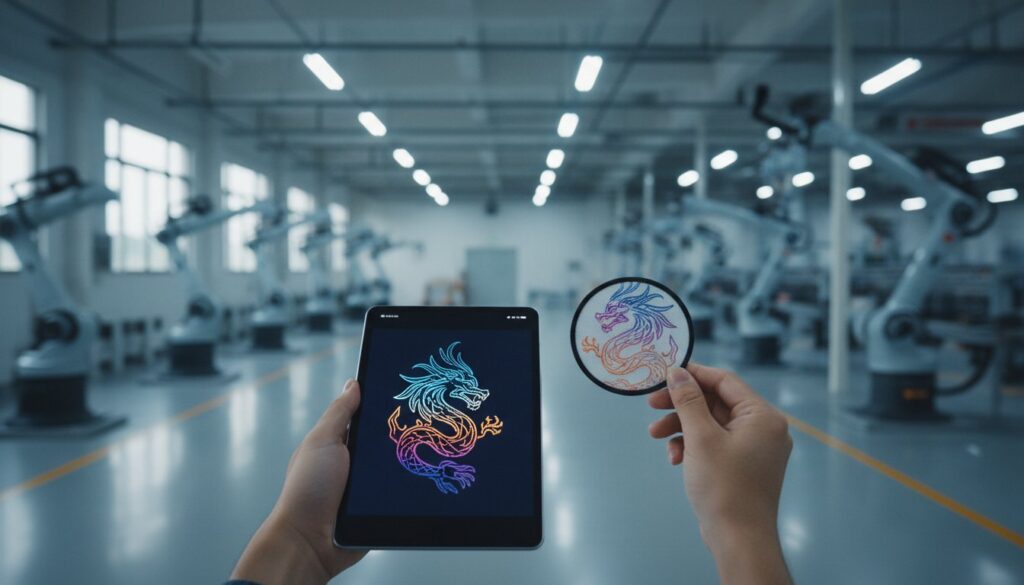
ماذا لو أخبرتكم أن 38% من تصاميم الشارات المخصصة التي راجعتها في الربع الأخير كان من المستحيل عمليًّا تصنيعها دون فقدان التفاصيل؟ إنها تجربة مؤلمة أن ترى رؤية إبداعية تتحول إلى كومة من الخيوط غير المقروءة بسبب بضعة أخطاء فنية بسيطة. لقد أمضيت مسيرتي المهنية داخل مصانع الشركات المصنعة للمعدات الأصلية (OEM)، ورأيتُ بنفسي كيف يفشل الفن الرقمي عندما يواجه إبر الخياطة في العالم الواقعي. إذا كنتَ تريد أن تبرز علامتك التجارية، فعليك معرفة أخطاء تصميم الشارات المخصصة التي يجب تجنبها في عام 2026، حتى يكون طلبك بالجملة التالي ناجحًا بدلاً من أن يكون خسارة كاملة.
أدرك أنك تريد نتيجة احترافية وعالية الجودة دون التعرض لضغوط سوء التفاهم أو إهدار المال. أنت تستحق شريكًا في التصنيع يجعل العملية تبدو بسيطة وسريعة. في هذا الدليل، سأعلمك كيفية تحويل تصميماتك الرقمية إلى منتجات نسيجية خالية من العيوب، وذلك بتجنب الأخطاء الشائعة التي أراها يوميًا. سنتعمق في موضوع كثافة الخيوط، واختيار الألوان، وأنماط الحواف المحددة التي ستجعل شاراتك تبدو أنيقة وتبقى متينة على المدى الطويل.
الوجبات الرئيسية
- سأوضح لك كيفية سد الفجوة بين الشاشة الرقمية والخيط الفعلي لضمان نجاح تصميمك فعليًّا في مرحلة الإنتاج.
- تعرف على سبب توصيتي بإبقاء حجم النص أكبر من 4 مم لتجنب “فخ النص الصغير” الذي يحول الشعارات الواضحة إلى صور ضبابية غير واضحة.
- اكتشف كيفية اختيار الحواف والبطانات المناسبة لتجنب الأخطاء الأكثر شيوعًا في تصميم الرقع المخصصة، وذلك لتفادي حدوثها في عام 2026.
- اكتشف لماذا أعتبر العينات المادية خطوة لا غنى عنها لتجنب كوارث التصنيع المكلفة.
- اكتشف كيف يساعد نهجي القائم على “التصميم أولاً” في اكتشاف الأخطاء الفنية في مرحلة مبكرة، مما يجعل طريقك نحو إصدار تصحيح مثالي خالياً تماماً من المتاعب.
مشهد تحديثات عام 2026: لماذا تفشل تصميماتك الرقمية غالبًا في مرحلة الإنتاج
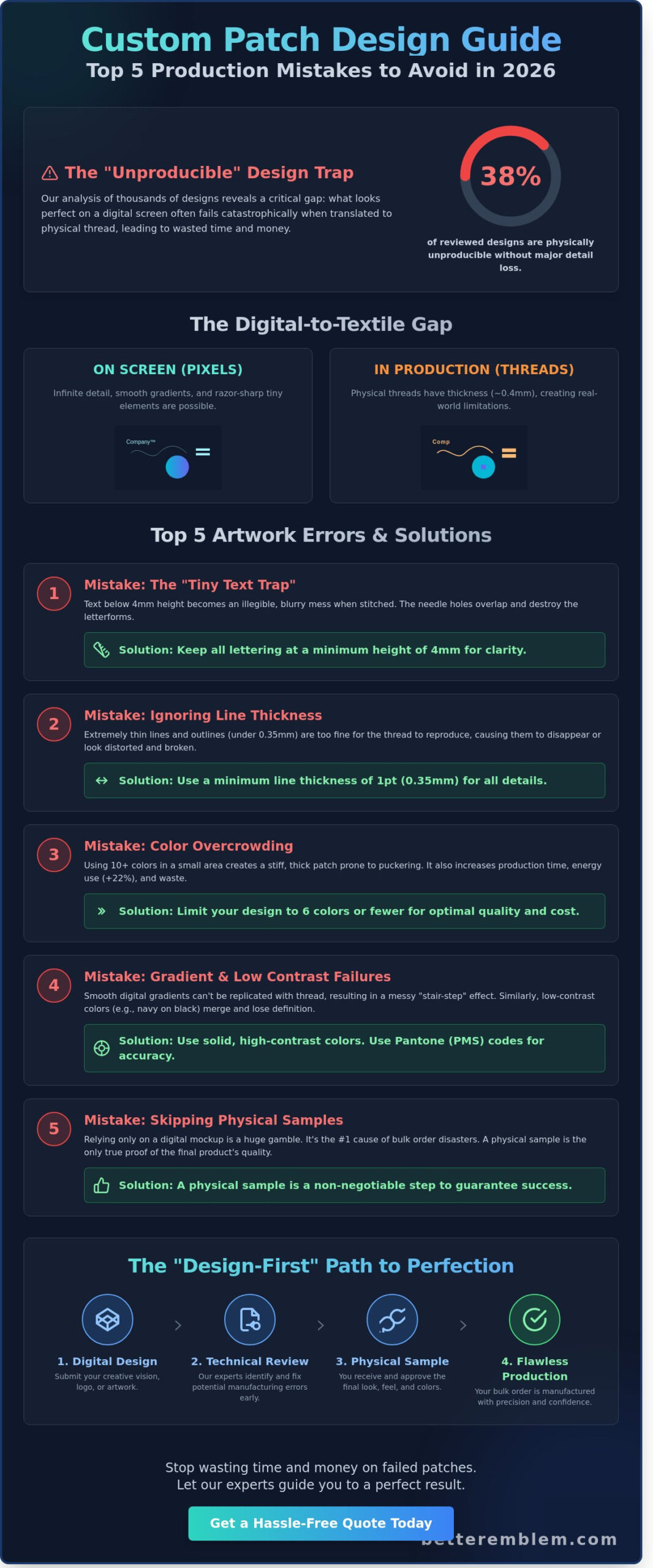
لقد راجعت أكثر من 5,000 نموذج رقمي هذا العام وحده. تبدو معظمها مذهلة على شاشة بدقة 4K. فهي تتميز بخطوط فائقة الوضوح، وتدرجات لونية دقيقة، ونصوص صغيرة تبرز بوضوح على الشاشة. ثم تبدأ مرحلة الإنتاج. وهنا تظهر الفجوة بين “الرقمي والمنسوجات”. تستخدم شاشتك الضوء لإنشاء الصور؛ بينما يستخدم النول الخيوط المادية والشد. إذا لم تأخذ في الاعتبار القيود المادية للوسيط، فسوف ينهار تصميمك تحت الإبرة.
فهم تاريخ الرقع المطرزة يساعدك على إدراك أن هذه حرفة ميكانيكية. ورغم التقدم الذي أحرزته البرمجيات، لا يزال الخيط يتمتع بسماكة ثابتة. في عام 2026، أصبح التصنيع بكميات كبيرة أسرع من أي وقت مضى. تصل الآلات الحديثة الآن إلى سرعات تبلغ 1,200 غرزة في الدقيقة. وتولد هذه السرعة حرارة وتوترًا قد يؤديان إلى تشويه الأعمال الفنية شديدة التعقيد. أحد أكبر أخطاء تصميم الشارات المخصصة التي يجب تجنبها في عام 2026 هو التعامل مع ملفك الرقمي باعتباره منتجًا نهائيًّا وليس مجرد مخطط أولي.
فلسفتي بسيطة. نحن لا نكتفي بتصميم شعار فحسب؛ بل نعمل على بناء أصل علامة تجارية متين. عندما تطلب رقع مخصصة, ، فأنت بحاجة إلى تصميم يتحمل احتكاك الآلة والتآكل الناتج عن الاستخدام اليومي. أريد أن تظل شاراتك تبدو على السترة بعد ثلاث سنوات بنفس جمالها اليوم وهي في العلبة.
البكسلات مقابل الخيوط: الحقيقة الفيزيائية
الصورة بدقة 300 نقطة في البوصة لا تضمن الحصول على شارة عالية الجودة. يبلغ سمك خيط التطريز القياسي حوالي 0.4 ملم. إذا كان تصميمك يحتوي على تفاصيل أصغر من ذلك، فإن الخيط سيغطيها ببساطة أو سيشكل “عشًا من الخيوط” يفسد الدفعة بأكملها. وهنا يأتي دور المُرقم الرقمي. فهم المهندسون المعماريون الذين يترجمون عملك الفني إلى مسارات آلية. وهم من يقررون مسار الإبرة لمنع الشد أو التجعد. تذكر هذا: “في عالم الشارات المخصصة، تصميمك هو الخريطة، لكن الخيط هو التضاريس”.”
لماذا تتطلب اتجاهات عام 2026 تصاميم أبسط
لم يعد البساطة مجرد خيار أسلوبي؛ بل أصبحت ضرورة تصنيعية. بحلول أوائل عام 2026، انتقلت 82% من العلامات التجارية الرائدة في مجال أسلوب الحياة إلى استخدام شعارات أكثر بساطة ووضوحًا. ولا يقتصر هذا التحول على الجانب الجمالي فحسب. فالتصاميم المعقدة التي تتضمن 15 تغييرًا في الألوان أو أكثر تزيد من استهلاك الطاقة بمقدار 22% لكل وحدة وتولد كمية أكبر بكثير من النفايات المادية. وتتميز أنوال النسيج الحديثة عالية السرعة بقدرتها على التعامل مع الخطوط الجريئة والنظيفة بتناسق أفضل بكثير مقارنةً بالأنماط المزدحمة التي كانت سائدة في الماضي. كما أن التصاميم البسيطة أسرع في الإنتاج وأكثر استدامة وموثوقيةً بشكل أكبر بكثير عند إنتاج كميات كبيرة.
الأخطاء في الأعمال الفنية: عندما يتحول التعقيد إلى كابوس في مجال التصنيع
غالبًا ما أضطر إلى إخبار العملاء بأن “تحفتهم الفنية” لا يمكن تنفيذها فعليًّا بمقياس 3 بوصات. تبدو التصاميم الرقمية مذهلة على شاشة مقاس 27 بوصة، لكن الخيوط لها حدود مادية لا توجد لدى البكسلات. أحد العوامل الرئيسية أخطاء تصميم الشارات المخصصة التي يجب تجنبها في عام 2026 هو نسيان أن التطريز عملية ميكانيكية تعتمد على الإبر والألياف المادية. فإذا كان تصميمك مزدحماً للغاية، فستواجه الآلة صعوبة في تنفيذه، وستحصل في النهاية على منتج متصلب ومشوه لا يعكس هوية علامتك التجارية.
يُعد “النص الصغير” أكثر الأخطاء شيوعًا التي ألاحظها. وأوصي بإبقاء ارتفاع جميع الحروف عند 4 مم على الأقل. يبلغ سمك خيط التطريز القياسي حوالي 0.1 مم؛ فإذا حاولت تطريز حرف لا يزيد ارتفاعه عن 2 مم، فإن ثقوب الإبرة ستخترق القماش تمامًا، مما يترك لك نتيجة غير واضحة ومشوشة. إذا كنت تبحث عن أفكار عالية الدقة، فقم بالاطلاع على معايير الشارات العسكرية يُظهر ذلك أن حتى المواصفات المهنية الأكثر صرامة تُعطي الأولوية لوضوح النص والخطوط الجريئة على الزخارف الصغيرة التي يصعب قراءتها.
كما أن الإفراط في استخدام الألوان يقلل من جودة التصميم. ففي كل مرة تغير فيها الآلة لون الخيط، يتعين عليها تنفيذ غرزة ربط. وإذا كان لديك 10 أو 12 لونًا في مساحة صغيرة، فإن تلك العقد تتراكم تحت القماش. وهذا يؤدي إلى ظهور رقعة تبدو وكأنها قطعة من الخشب الرقائقي، وتكون عرضة للتجعد. التزم بـ 6 ألوان أو أقل للحفاظ على سلامة الهيكل وخفض تكاليف الإنتاج. وبالمثل، فإن فشل التدرج اللوني أمر شائع لأن “مزج” الخيوط نادرًا ما يبدو كتدرج رقمي سلس. وعادةً ما ينتج عن ذلك تأثير «درجات السلم» الذي يبدو قديمًا وفوضويًا.
الحد الأدنى لمستوى التفاصيل
تبدأ الدقة بفهم تأثير “الدفع والشد”. فعندما تضرب الإبرة القماش بمعدل 800 غرزة في الدقيقة، يتحرك القماش ويمتد بشكل طبيعي. أنصحك بالحفاظ على سماكة الخط عند 1pt (0.35 مم) على الأقل لمراعاة هذه الحركة. إذا كان شعارك معقدًا للغاية، سأساعدك في تبسيطه عن طريق إزالة الخطوط الخارجية الرفيعة أو دمج التدرجات اللونية المتشابهة. وهذا يضمن بقاء هوية علامتك التجارية واضحة حتى عند مشاهدتها من مسافة بعيدة. يمكنك دائمًا تصفح قوالب التصميم الخاصة بنا لتتعرف على كيفية تبسيطنا للأعمال الفنية المعقدة من أجل الإنتاج.
نظرية الألوان في مجال المنسوجات
لا تعتمد على قيم RGB أو CMYK. فهذه معايير خاصة بالضوء والحبر، وليست معايير خاصة بالخيوط. أطلب دائمًا مطابقة ألوان Pantone (PMS) لأن ألوان الخيوط ثابتة ولا تتغير بناءً على سطوع شاشتك. الألوان عالية التباين أمر لا غنى عنه للتفاصيل الصغيرة. فالشعار ذو اللون الأزرق الداكن على خلفية سوداء سيختفي فور خروجه من الشاشة. إذا كنت ترغب في إضافة عمق دون إضافة عشرات من ألوان الخيوط، ففكر في استخدام تطريز ثلاثي الأبعاد. تعتمد هذه التقنية على استخدام حشوات رغوية لإضفاء ارتفاع مادي، مما يمنح التصميم الخاص بك مظهرًا فاخرًا مع الحفاظ على بساطة ونقاء لوحة الألوان. تجنب هذه التقنيات أخطاء تصميم الشارات المخصصة التي يجب تجنبها في عام 2026 هي أسرع طريقة لضمان سير مشروعك على المسار الصحيح من أجل إطلاق ناجح.
الأخطاء الفنية: اختيار نوع الخلفية أو الحافة أو الرقعة غير المناسب
ألاحظ أن العلامات التجارية تختار “الملصقات القابلة للكي” في كل مشروع. إنه رد فعل تلقائي. لكنه غالبًا ما يكون الخيار الأسوأ بالنسبة لقطعة الملابس المحددة. إذا كنت تضع شارة على نسيج عالي المرونة أو سترة مقاومة للماء، فإن هذا اللاصق لن يثبت. سوف يتقشر بعد ثلاث غسلات. هذا هو أحد الأخطاء الأكثر شيوعًا في تصميم الشارات المخصصة التي يجب تجنبها في عام 2026 إذا كنت تريد أن تدوم علامتك التجارية. عليك مواءمة المواصفات الفنية مع عملية إنتاج الملابس الاحترافية لضمان أن يعمل الرقعة والنسيج كوحدة واحدة.
عدم محاذاة الخلفية والحواف
يتعلق اختيار طريقة التثبيت المناسبة بالمتانة والمنطق البسيط. استخدم الفيلكرو للمعدات التكتيكية أو الزي الرسمي الذي يتطلب التبديل المتكرر. أما المواد اللاصقة فهي مناسبة للفعاليات التي تستغرق يومًا واحدًا أو العناصر الترويجية المؤقتة. ويظل التثبيت بالخياطة هو المعيار الذهبي للاستخدام طوال العمر على السترات ذات القلنسوة والبنطلونات الجينز. كما أن اختيار الحواف أمر بالغ الأهمية أيضًا. فالحافة الكلاسيكية المطرزة سميكة وتوفر الحماية، لكنها لا تناسب سوى الأشكال البسيطة مثل الدوائر أو الدروع.
إذا كان تصميمك يحتوي على زوايا حادة أو فتحات معقدة، فلن تتمكن آلة «ميرو» من تتبع تلك الخطوط. وستحصل في النهاية على مظهر غير مرتب ومتهالك. بالنسبة لهذه الأشكال المعقدة، أوصي باستخدام حافة مقطوعة بالحرارة. فهي تستخدم الليزر لإغلاق الحواف بشكل مثالي. ويجد العديد من العملاء أن رقع منسوجة هي الحل الأمثل في هذه الحالة. فهي تتميز بتصميم أنحف يتيح التعامل مع الحواف المعقدة دون الحجم الضخم الذي يتسم به التطريز التقليدي. وهذا يجعل عملية التطبيق سلسة ويحافظ على مظهر التصميم دقيقًا.
استخدام تقنية التصحيح غير المناسبة لهذه المهمة
لقد رأيت شركات ناشئة في مجال التكنولوجيا تحاول حشر خط بحجم 10 نقاط في ترقيع مخملي. هذا لا ينجح أبدًا. خيط الشينيل مخصص للحروف الكبيرة والجريئة على غرار حروف الجامعات، وليس للشعارات ذات التفاصيل الدقيقة. إذا كان تصميمك يتضمن تدرجات لونية أو عناصر فوتوغرافية، فلا تحاول تحويله إلى تطريز. فعدد الخيوط المطلوب سيجعل الشارة تبدو وكأنها قطعة من الخشب الرقائقي. بدلاً من ذلك، استخدم الطباعة بالنقل الحراري للحفاظ على هذا الواقعية. إنها طريقة سريعة وفعالة للحصول على نتائج عالية التفاصيل دون القيود التقنية التي تفرضها تقنية «ثريد».
يُعد عدم التوافق في الوزن “قاتلًا صامتًا” آخر. فالرقعة المطرزة الثقيلة من نوع 100% ستتسبب في ترهل وتجعد قميص الجري الخفيف الذي يزن 4 أونصات. وهذا يفسد انسيابية القميص. أخيرًا، توخى الحذر عند استخدام المواد “الصديقة للبيئة”. في عام 2025، أظهرت الاختبارات الداخلية أن بعض خيوط البوليستر المعاد تدويرها تتحلل 30% أسرع من النايلون البكر عند تعرضها لحرارة صناعية تزيد عن 160 درجة. إذا كانت ملابسك بحاجة إلى تنظيف مكثف، فلا تضحي بالمتانة من أجل علامة «صديقة للبيئة» لا تؤدي الغرض المطلوب. إن تجنب هذه الأخطاء في تصميم الرقع المخصصة سيضمن بقاء استثمارك في الملابس نفسها، وليس في مصفاة الوبر في المجفف.
فجوة النماذج الأولية: لماذا يُعد تجاهل العينات أغلى خطأ ترتكبه
خلال 40 عامًا من خبرتي في مجال التصنيع، كانت أكبر الكوارث التي شهدتها تشترك في سبب واحد: تجاهل العميل العينة المادية. لقد رأيت علامات تجارية تخسر ميزانيتها الموسمية بالكامل لأنها وافقت على تصميم بناءً على شاشة الكمبيوتر. النموذج الرقمي هو مجرد خدعة. فهو يعرض لك الضوء والبيكسلات، وليس الواقع المادي للخيوط والملمس. لا يمكن للشاشة محاكاة كيفية انعكاس أشعة الشمس على خيط مصنوع من البوليستر بنسبة 100 في المائة، أو كيف قد يؤدي ارتفاع عدد الغرز إلى تجعد الشارة. ويُعد هذا الإغفال أحد أهم أخطاء تصميم الشارات المخصصة التي يجب تجنبها في عام 2026.
أسمي هذا «صدمة الحجم». فقد يبدو خطأ بسيط في كثافة الغرز أو تغير طفيف في اللون تفصيلًا ثانويًّا في عينة واحدة. لكن عندما يتكرر هذا الخطأ في طلب يبلغ 5,000 وحدة، فإنه يتحول إلى أزمة مالية. فأنت لا تدفع ثمن الخيط فحسب؛ بل تدفع أيضًا تكاليف الشحن، ووقت التنفيذ، والمواعيد النهائية التي لم يتم الالتزام بها. تتيح لك مراجعة العينة المادية التحقق من شد الغرز ودقة الألوان في ظروف الإضاءة الواقعية قبل أن تبدأ الآلات في العمل بسرعة عالية.
بروتوكول أخذ العينات المكون من 3 خطوات
أوصي باتباع بروتوكول صارم لكل مشروع. أولاً، أراجع ملف الرقمنة للتأكد من منطق المسار. وهذا يضمن تحرك الإبرة بكفاءة وعدم تكوّن “تكتلات الخيوط”. ثانياً، أحلل النتيجة النهائية للخياطة بحثاً عن أي تجعد. فإذا تجمع القماش عند الحواف، فهذا يعني أن الشد مرتفع للغاية. ثالثًا، أقوم دائمًا باختبار العينة تحت ضغط على الثوب الفعلي. فقد تفشل الرقعة التي تبدو رائعة على الطاولة عند تطبيقها على سترة قماشية ثقيلة أو قميص بولو رياضي رقيق.
التواصل مع الشركة المصنعة
للحصول على أفضل النتائج، عليك التحدث بلغة المصنع. لا تطلب من مسؤول الاتصال لديك أن “يجعلها تبدو أفضل”. فهذه عبارة ذاتية وتؤدي إلى تأخيرات. بدلاً من ذلك، قدم تعليمات محددة مثل “زيادة كثافة الحشو” أو “ضبط عرض غرزة الساتان بمقدار 0.5 مم”. هذا الوضوح يوفر الوقت ويقلل من الحاجة إلى إجراء تعديلات متعددة. بالنسبة لإنتاج OEM بكميات كبيرة، أصر على إنشاء «عينات ذهبية». وهي النسخ النهائية والمعتمدة التي تُستخدم كمعيار للجودة للدفعة بأكملها.
أطلب دائمًا إجراء اختبار تجريبي للمنتجات الجديدة الرقع المخصصة المتخصصة التي تستخدم مواد فريدة مثل البولي فينيل كلوريد (PVC) أو الطبقات الخلفية العاكسة. تتفاعل هذه المواد مع الحرارة والضغط بشكل يختلف عن التطريز العادي. إن تخصيص 48 ساعة إضافية للتحقق من النموذج الأولي الفعلي يمكن أن يوفر عليك أسابيع من المتاعب لاحقًا. إنها الطريقة الوحيدة لضمان ترجمة رؤية علامتك التجارية بشكل مثالي من ملف PDF إلى المنتج النهائي.
اطلب عينتك المادية من شركة «بيتر إمبليم» اليوم والتخلص من التخمينات.
توسيع نطاق علامتك التجارية مع «بيتر إمبليم»: كيف نسهل عليك الطريق نحو الحصول على شارات مثالية
لقد أنشأت شركة “Better Emblem” لأنني رأيت عددًا كبيرًا جدًّا من المبدعين يتعرضون لمصاعب جراء عملية التصنيع التقليدية. لا ينبغي أن يستغرق الأمر أسابيع من المراسلات المتبادلة لمجرد الحصول على عينة تبدو مناسبة. أردت إنشاء نظام نمتلك فيه نحن الخبرة الفنية، بحيث لا تضطر إلى أن تكون مهندسًا نسيجيًا للحصول على منتج رائع. نحن نستخدم نهج «التصميم أولاً» الذي يميزنا عن الموردين العاديين. يقوم فريقي بشكل استباقي بتحديد أخطاء تصميم الشارات المخصصة التي يجب تجنبها في عام 2026; ؛ مثل اختيار البطانة غير المناسبة لأنواع معينة من الأقمشة عالية الأداء، أو الإفراط في تعقيد التفاصيل الصغيرة التي لن تظهر بوضوح عند الحياكة. نحن نكتشف هذه الأخطاء في مرحلة مبكرة. وهذا يوفر عليك الوقت والمال، ويجنبك الإحباط الناجم عن رفض الدفعة.
مزايا "بيتر إمبليم" للمصنعين الأصليين
إن تاريخنا الممتد على مدار 45 عامًا في هذا المجال يمنحنا رؤية تفتقر إليها معظم الشركات الناشئة. لقد قمنا بتحسين سلسلة التوريد لدينا لضمان استفادة علامتك التجارية من أعلى مستوى ممكن من الجودة بسعر معقول. وبالنسبة لعام 2026، قمنا باستثمارات كبيرة في منشآتنا لضمان تلبية 100% من إنتاجنا للمعايير الأخلاقية والبيئية الصارمة. ستحصلون على كفاءة التصنيع الآسيوي ذي الحجم الكبير مقترنة بنموذج خدمة يمنحكم شعورًا بالخدمة المحلية وسرعة الاستجابة. لقد أزلنا العوائق الشائعة التي تعوق نمو العلامات التجارية من خلال تقديم خدمات الرقمنة مجانًا وأسعار شاملة. هذه الشفافية تعني أنه يمكنكم وضع ميزانية لمشاريعكم بثقة تامة، مع العلم أنه لن تكون هناك أي “رسوم معالجة” مفاجئة عند الانتهاء.
نحن نتولى عملية الانتقال من الرسم الأولي الخاص بك إلى التسليم بالجملة دون أي متاعب. وبما أننا مزود خدمات تصنيع المعدات الأصلية (OEM)، فإننا نتحكم في العملية بدءًا من لحظة تحويل تصميمك إلى صيغة رقمية وحتى إغلاق الصندوق الأخير بالشريط اللاصق. ويتيح لنا هذا التكامل الرأسي الحفاظ على معيار “خالٍ من المتاعب” لا تستطيع شركات الوساطة الأخرى مجاراته. نحن ندرك أن شاراتكم تمثل استثمارًا في هوية علامتكم التجارية، ولذلك نتعامل مع كل طلب بنفس القدر من الاحترام.
الخطوات التالية التي عليك اتخاذها للحصول على طلبية خالية من العيوب
لقد سهّلنا عليك الانتقال من الفكرة الأولية إلى المنتج النهائي. يمكنك بدء محادثة مع خبرائنا المختصين الآن لبدء العمل على مشروعك. للحصول على أسرع النتائج، يرجى تضمين ملف التصميم الخاص بك، والأبعاد الدقيقة التي تريدها، والكمية المستهدفة في رسالتك الأولى. عادةً ما يقدم فريقنا عرض أسعار شاملًا في أقل من 24 ساعة. ويضمن لك هذا الرد السريع ألا تقع ضحية للمشاكل الشائعة أخطاء تصميم الشارات المخصصة التي يجب تجنبها في عام 2026 مثل عدم الالتزام بالمواعيد النهائية الموسمية الضيقة بسبب بطء التواصل.
نفتخر بكوننا الشريك الذي يقول “نعم” لرؤيتك الإبداعية مع الحفاظ على السيطرة على التفاصيل الفنية. وفي نهاية المطاف، فإن “Made Easy” ليست مجرد شعار تسويقي، بل هي جوهر أسلوبنا في العمل. نحن على استعداد لمساعدتك في توسيع نطاق علامتك التجارية من خلال شارات تبدو تمامًا كما تصورتها. تواصل معنا اليوم ولنبدأ العمل.
أطلق مجموعتك لعام 2026 بثقة
لا يجب أن يكون التخطيط للعام المقبل مجرد لعبة تخمين. فقد تعلمنا أن المشاريع الأكثر نجاحًا هي تلك التي تركز على تصميمات واضحة ومواصفات تقنية صحيحة منذ اليوم الأول. فعندما تعطي الأولوية للملفات الجاهزة للإنتاج ولا تتخطى مرحلة إنشاء النماذج الأولية أبدًا، فإنك تتخلص من ضغوط فشل الإطلاق. والبقاء على اطلاع على أخطاء تصميم الشارات المخصصة التي يجب تجنبها في عام 2026 يحافظ على تميز علامتك التجارية ويحافظ على ميزانيتك سليمة. نحن خبراء في مجال التصنيع منذ عام 1978، وقد قمنا بتحسين عملياتنا لتسهيل الأمور عليك.
نجمع بين الحس التصميمي الحائز على جائزة «ريد دوت» والالتزام التام بالشفافية. لن تواجه أبدًا أي رسوم خفية، كما نقدم خدمات رقمنة مجانية لتسريع سير مشروعك. هدفنا هو تولي المهام الشاقة حتى تتمكن من التركيز على رؤيتك الإبداعية. ويسعدنا مساعدتك في تحويل أفكارك إلى واقع ملموس.
دعنا نجعل تصميم الشارة الخاصة بك أمرًا سهلاً — احصل على عرض أسعار مجاني من Better Emblem اليوم!
الأسئلة المتداولة
ما هو الخطأ الأكثر شيوعًا في تصميم الشارات المخصصة؟
إن الإفراط في تعقيد التصميم بإضافة تفاصيل أكثر من اللازم هو الخطأ الأكبر الذي أراه يوميًا. يحاول حوالي 40 في المائة من المصممين المبتدئين حشر تدرجات لونية معقدة أو تفاصيل دقيقة في مساحة صغيرة تبلغ 2 بوصة. ويؤدي ذلك إلى تراكم الخيوط، حيث تُحدث الإبرة نتوءًا فوضويًّا بدلًا من صورة واضحة. أوصي بالحفاظ على سمك الخطوط عند 0.5 مم على الأقل لضمان بقاء كل غرزة واضحة ومقروءة.
هل يمكنني استخدام نص صغير الحجم على شارة مطرزة؟
أوصي بتجنب استخدام حجم نص أصغر من 0.125 بوصة في الشارات المطرزة للحفاظ على سهولة القراءة. إذا كانت الحروف صغيرة جدًّا، فستتداخل ثقوب الإبرة وتحوّل الكلمات إلى بقع غير مقروءة. لتجنب أخطاء تصميم الشارات المخصصة في عام 2026، استخدم خطًا بسيطًا بدون زخارف مثل Arial. تحافظ هذه الخطوط على شكلها بشكل أفضل من الخطوط الزخرفية عند حياكتها بخيط بوليستر بنسبة 100 في المائة.
لماذا تبدو الألوان على الملصق الفعلي مختلفة عن تلك التي تظهر على الشاشة؟
تعرض شاشتك الألوان بتقنية RGB، لكنني أستخدم خيوط «نظام مطابقة ألوان بانتون» (Pantone Matching System) الفعلية لتصنيع الشارة الخاصة بك. غالبًا ما يوجد تباين بنسبة 15 في المائة في السطوع بين شاشات الكمبيوتر والمواد الفعلية. لذا، أنصح دائمًا باستخدام دليل «بانتون سوليد كوتيد» (Pantone Solid Coated) الفعلي لاختيار الألوان. وهذا يضمن أن الخيوط التي نستخدمها تتطابق تمامًا مع ما تتخيله، دون أي تشويه رقمي أو مفاجآت.
هل من الأفضل اختيار شارة منسوجة أم مطرزة للحصول على تفاصيل دقيقة؟
اختر شارة منسوجة إذا كان تصميمك يحتوي على خطوط دقيقة تتطلب سطحًا مسطحًا وناعمًا. تستخدم الشارات المنسوجة خيوطًا أرق ونسجًا أكثر إحكامًا، مما يتيح تفاصيل أكثر بنسبة 30 في المائة مقارنةً بالتطريز القياسي. في حين أن الشارات المطرزة توفر ملمسًا ثلاثي الأبعاد كلاسيكيًا، إلا أن الخيط الأكثر سمكًا يحد من مقدار التفاصيل التي يمكنني إدراجها في مساحة صغيرة. تعتبر الرقع المنسوجة الخيار الاحترافي للشعارات المعقدة والحديثة.
كيف أعرف أي نوع من البطانة هو الأنسب لرقع الملابس الخاصة بي؟
يعتمد اختيارك للطبقة الخلفية على نوع القماش ومدى تكرار غسل القطعة. أقترح استخدام الطبقة الخلفية القابلة للكي في 80 في المائة من ملابس الحياة اليومية، لأنها سريعة ودائمة. إذا كنت بحاجة إلى مرونة في المعدات التكتيكية، فإن الشريط اللاصق من نوع «هوك آند لوب» هو المعيار الموثوق به في الصناعة. أما بالنسبة لوضع العلامات التجارية المؤقتة في معارض 2026 التجارية، فإن لاصقًا بسيطًا حساسًا للضغط يعمل مثل ملصق قابل للإزالة عالي الجودة. وبالنسبة للعلامات التجارية التي تحتاج أيضًا إلى ملصقات مخصصة فاخرة،, خبير الملصقات تقدم خيارات متخصصة في القطع بالقالب والقطع الخفيف التي تكمل العلامة التجارية لمنسوجاتك.
هل يمكنني تصميم شارة مخصصة إذا لم أكن فنانًا محترفًا؟
لا داعي لأن تكون محترفًا، لأنني أقدم نماذج رقمية مجانية وتصحيحًا للتصميم مع كل طلب. ما عليك سوى إرسال رسم تخطيطي واضح أو صورة JPG عالية الدقة، وسيقوم فريقي بتحويلها إلى ملف متجه جاهز للإنتاج. نحن نتولى الأمور الفنية مثل حساب عدد الغرز وتحديد المسارات. تساعد هذه الخدمة في تجنب أخطاء تصميم الشارات المخصصة التي تحدث عادةً أثناء الإعداد الأولي للملف.
ما هي الكمية الدنيا للطلب عند شراء الشارات بالجملة في عام 2026؟
يبدأ الحد الأدنى لكمية الطلبات الخاصة بالشعارات بالجملة في عام 2026 من 50 وحدة لكل تصميم. ويتيح لنا هذا الحد الأدنى الحفاظ على انخفاض تكلفة الوحدة مع الحفاظ على معايير التصنيع عالية السرعة. وعادةً ما يوفر طلب 100 وحدة أفضل توازن بين القيمة والكمية لمعظم العلامات التجارية النامية. أحرص على إبقاء إجراءاتنا بسيطة حتى تتمكن من توسيع حجم طلباتك مع توسع مجتمعك أو نشاطك التجاري.
كم تستغرق عملية تصنيع التصحيح المخصص؟
تتراوح مدة التنفيذ القياسية لديّ بين 10 و14 يوم عمل بدءًا من لحظة موافقتك على العينة الرقمية. ويشمل هذا الجدول الزمني 3 أيام اللازمة لإعداد العينة الرقمية و7 أيام للإنتاج على نطاق واسع. أستخدم آلات تطريز «تاجيما» عالية السرعة لضمان مرور طلبك عبر المصنع بسرعة ودقة. ستتلقى رقم تتبع فور مغادرة الشارات منشأتنا للتسليم.