
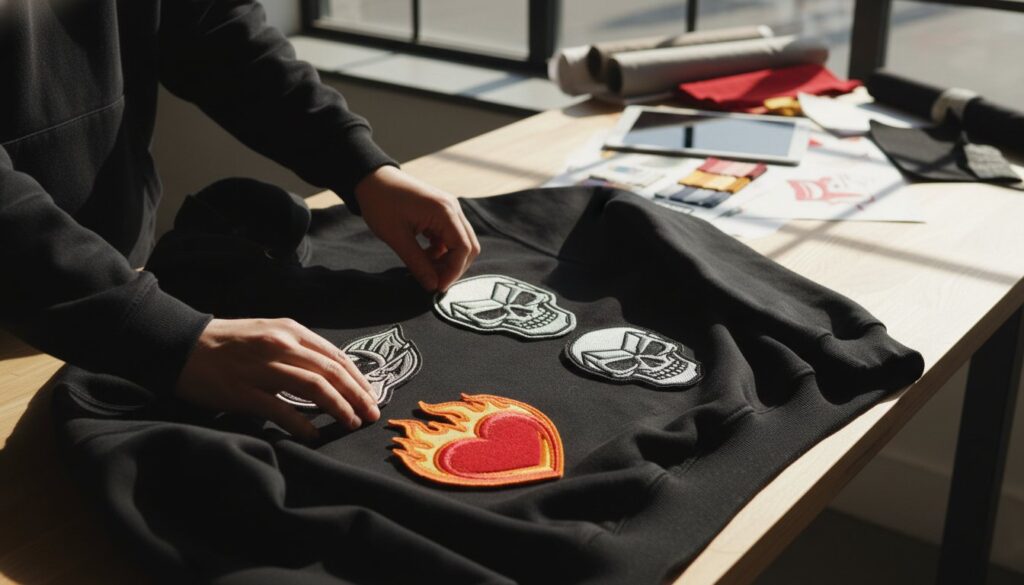
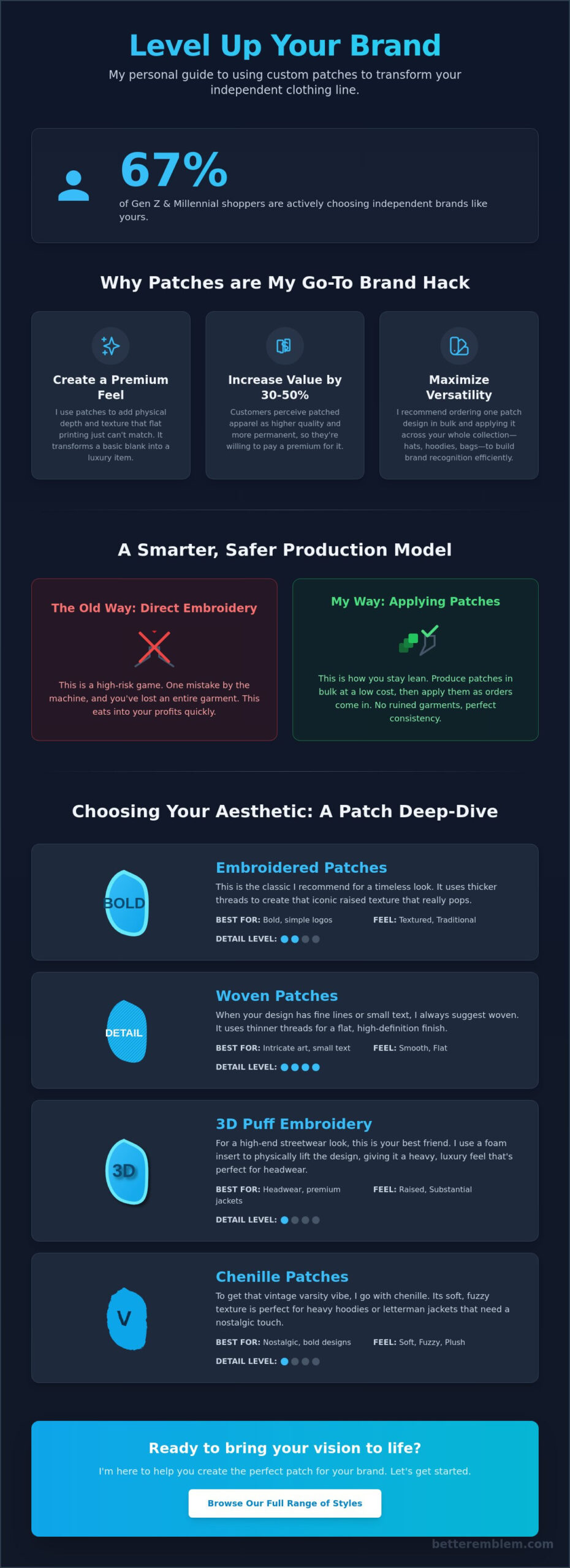
هل تعلم أن 67% من المتسوقين من جيل Z وجيل الألفية يفضلون الآن العلامات التجارية المستقلة على تلك التي تُنتج بكميات ضخمة؟ هذا التحول الهائل في سلوك المستهلكين يعني أن الطلب على الشارات المخصصة عالية الجودة للعلامات التجارية المستقلة للملابس قد وصل إلى أعلى مستوياته على الإطلاق. أعلم مدى الإحباط الذي يسببه التعامل مع المتاجر المحلية التي تتقاضى مبالغ باهظة مقابل الكميات الصغيرة، أو البائعين العشوائيين عبر الإنترنت الذين يشحنون تصميمات غير متسقة وغير واضحة. فأنت تريد أن تبدو ملابسك كملابس شوارع فاخرة، وليس كمشروع صناعته بنفسك. غالبًا ما يكون من الصعب ترجمة الفن المعقد إلى واقع نسيجي دون شريك يفهم رؤيتك حقًا.
أنا هنا لمساعدتك في سد الفجوة بين أفكارك الإبداعية والتصنيع الاحترافي. ستتعلم كيفية الارتقاء بمستوى مجموعتك من خلال استخدام مواد فاخرة مثل التطريز ثلاثي الأبعاد والشينيل، مع الحفاظ على هوامش ربح جيدة. يغطي هذا الدليل كل ما تحتاجه للانتقال من الإنتاج على نطاق صغير إلى سلسلة توريد عالمية تتوسع مع نمو أعمالك. سنلقي نظرة على أحدث اتجاهات عام 2026 في مجال العلامات التجارية المعيارية ونماذج التصنيع المحددة التي ستجعل علامتك التجارية اسمًا مألوفًا.
الوجبات الرئيسية
- سأشرح لماذا توفر الشارات عائد استثمار أعلى بكثير من الطباعة التقليدية، وكيف يمكنها أن تحول قطعة ملابس بسيطة على الفور إلى قطعة فاخرة.
- سأساعدك على التعرف على الفروق بين الأنماط المنسوجة، والأنماط ثلاثية الأبعاد، والأنماط المطرزة، لتتمكن من العثور على الشارات المخصصة المثالية لعلامات الملابس المستقلة.
- سأوضح لك كيفية اختيار الركيزة المناسبة لجعل عملية الإنتاج أسرع وأكثر متانة مع توسع نطاق عملك.
- سأشرح لك خطوات سير العمل من التصميم إلى الإنتاج، حتى تظهر أعمالك الفنية بنفس الوضوح في النسخة المطرزة كما تظهر على شاشة الكمبيوتر.
- سأكشف عن الكيفية التي يمكن بها الانتقال إلى نموذج التصنيع المباشر من قبل المصنعين الأصليين (OEM) أن يقلل تكاليفك بشكل كبير ويحسن اتساق علامتك التجارية.
ما وراء الملصق: لماذا تُعد الشارات المخصصة أفضل حيلة لتعزيز العلامة التجارية
لقد شاهدت عددًا لا يحصى من العلامات التجارية المستقلة وهي تحول قطعة ملابس عادية إلى منتج فاخر وباهظ الثمن، وذلك بمجرد إضافة شارة في المكان المناسب. إنها استراتيجية ناجحة لأنها تغير الطبيعة المادية للثوب. ورغم أن الطباعة المباشرة على الملابس (DTG) تعد نقطة انطلاق رائعة للكثيرين، إلا أنها غالبًا ما تفتقر إلى العمق الهيكلي الذي يتوقعه المستهلكون المعاصرون من ملابس الشارع الفاخرة. عندما تستخدم شعارات مخصصة لعلامات الملابس المستقلة, ، فأنت لا تضيف مجرد شعار؛ بل تضيف عنصرًا ملموسًا إلى النسيج. وتخلق هذه العلامة التجارية الملموسة تجربة فريدة عند فتح العبوة لا يمكن للحبر العادي أن يضاهيها.
يكمن جمال هذا النهج في تنوعه الفائق. يمكنك اختيار تصميم واحد وتطبيقه على مجموعتك بأكملها. فكر في الأمر. يمكنك طلب مجموعة من التطريزات ثلاثية الأبعاد أو الرقع المنسوجة واستخدامها على القبعات والسترات ذات القلنسوة وحتى الحقائب. هذا الاتساق يعزز التعرف على العلامة التجارية بسرعة دون إجبارك على الاحتفاظ بمخزون ضخم لكل نوع محدد من الملابس. ولتوسيع حضور علامتك التجارية بشكل أكبر من خلال المنتجات الترويجية الأخرى،, تفضل بزيارة موقع SwagStore.NET لشراء البضائع بكميات كبيرة التي تحمل علامتك التجارية. إنها طريقة ذكية تركز على الكفاءة لتنمية علامتك التجارية مع الحفاظ على تكاليفك العامة في حدود معقولة.
التحول في القيمة المتصورة
هناك سبب نفسي وراء استعداد العملاء في كثير من الأحيان لدفع مبلغ إضافي يتراوح بين 30% و50% مقابل الملابس المُرقعة. فهي تمنح شعوراً بالديمومة. وتبعث إحساساً بأنها صُنعت عن قصد. إذا ما نظرنا إلى الوراء إلى تاريخ الرقع المطرزة, ، يمكنك أن ترى كيف دأبت هذه الشارات على استخدامها للإشارة إلى الرتبة والانتماء والجودة المتخصصة. ومن خلال استخدام الشارات، فإنك تستفيد من هذا الإحساس بالتراث. ويكون لهذا تأثير قوي بشكل خاص في الإصدارات المحدودة والحصرية. يمكنك خلق إحساس بـ “الإصدار المحدود” باستخدام نسيج فريد مثل الشنيل أو الرقع الجلدية لموسم معين، مما يجعل قطعك تبدو وكأنها قطع تذكارية بدلاً من مجرد قميص آخر.
الرقع مقابل التطريز المباشر
أقول دائمًا لعملائي إن تصنيع الشارات بكميات كبيرة أكثر فعالية من حيث التكلفة بكثير مقارنة بتطريز الملابس بشكل فردي. فإذا أخطأت الآلة في غرزة واحدة على قميص بقلنسوة فارغ من طراز $40، فستكون قد خسرت القطعة بالكامل. أما مع الشارات، فإنك تتجنب هذا الخطر تمامًا. تقوم بإنتاج الشارات بكميات كبيرة بتكلفة أقل بكثير للوحدة وتقوم بتطبيقها فقط عند تقديم الطلب. تتيح لك هذه المرونة الحفاظ على كفاءة التشغيل. بالإضافة إلى ذلك، توفر الرقع تحكمًا فائقًا في الجودة. نظرًا لأنها تُصنع على أنوال أو مكابس متخصصة، فإن كل شعار يكون مطابقًا تمامًا للآخر. لن تضطر إلى القلق بشأن تجعد الخيوط أو تشوهها، بغض النظر عما إذا كانت الرقعة ستُوضع على حقيبة قماشية ثقيلة أو سترة نايلون خفيفة الوزن.
اختيار التصميم الذي تفضله: المنسوج، والمطرز، والمنفوش ثلاثي الأبعاد
إن اختيار المادة المناسبة هو ما يحدد هوية علامتك التجارية بشكل حقيقي. لقد رأيت الكثير من المؤسسين يقعون في فخ “الطباعة حسب الطلب”، حيث تبدو جميع المنتجات متشابهة تمامًا. لكي تبرز حقًا في سوق مزدحم، عليك أن تتبنى نهج “القص والخياطة”. نحن نقدم كل شيء بدءًا من التطريز الكلاسيكي وحتى تقنيات نقل الحرارة المتطورة لمساعدتك في تحقيق تلك اللمسة النهائية الاحترافية. المفتاح هو مطابقة المواصفات الفنية للرقعة مع القصة المحددة التي تحاول علامتك التجارية سردها. عندما تستثمر في شعارات مخصصة لعلامات الملابس المستقلة, ، فأنت لا تشتري مجرد شعار؛ بل تختار السمة المميزة لخط ملابسك.
المنسوج مقابل المطرز: الفرق الفني
يكمن الفرق الأكبر بين هذين النوعين في سماكة الخيوط. تستخدم الرقع المطرزة التقليدية خيوطًا أكثر سماكة، مما يمنحها تلك الملمس البارز المميز الذي نعرفه جميعًا. وهي خيار رائع للشعارات الجريئة والبسيطة التي تحتاج إلى أن تبرز. ومع ذلك، إذا كان تصميمك يحتوي على خطوط معقدة أو نص صغير، فإن تلك الخيوط السميكة قد تجعل المنتج النهائي يبدو غير واضح. وهنا أوصي رقع منسوجة. تستخدم التصاميم المنسوجة خيوطًا أرق بكثير ونسيجًا أكثر إحكامًا، بحيث تعمل أشبه بشاشة عالية الدقة لعرض أعمالك الفنية. فهم هذه الأنواع المختلفة تقنيات التطريز يضمن لك عدم فقدان التفاصيل الدقيقة التي تجعل علامتك التجارية فريدة من نوعها.
خيارات مميزة فاخرة
إذا كنت تسعى إلى إطلالة عصرية راقية،, تطريز ثلاثي الأبعاد هي أفضل صديق لك. تعتمد هذه التقنية على حشوة من الإسفنج لرفع التصميم فعليًّا عن السطح، مما يمنح القبعات والسترات مظهرًا فاخرًا وثقيلًا. وهي المعيار الذهبي للعلامات التجارية الحديثة المتخصصة في القبعات التي ترغب في منافسة العلامات العالمية. وعلى الطرف الآخر من الطيف،, ترقيع مخملي تتميز بنسيج ناعم ومشعّر يبعث على الفور أجواء الجامعات الكلاسيكية. وهي مثالية للسترات ذات القلنسوة السميكة أو سترات «ليترمان» التي تحتاج إلى لمسة من الحنين إلى الماضي. بالنسبة للعلامات التجارية التي تركز على الأنشطة الخارجية، أقترح استكشاف الرقع المخصصة المتخصصة مثل البلاستيك أو الجلد. تتميز هذه المواد بمتانة فائقة، كما أنها تتحمل الظروف الجوية بشكل أفضل بكثير من الأقمشة التقليدية. عندما تكون مستعدًا لبدء تكوين مجموعتك، يمكنك تصفح مجموعتنا الكاملة من التصاميم لترى أيهما يناسب رؤيتك الإبداعية بشكل أفضل.
المتانة والتطبيق: اختيار الطبقة السفلية المناسبة
أقول دائمًا لعملائي إن الجزء الخلفي لا يقل أهمية عن الجزء الأمامي. فإذا فشل المرفق، فإن سمعة علامتك التجارية ستتضرر معه. اختيار الأساس المناسب لـ شعارات مخصصة لعلامات الملابس المستقلة هو خيار استراتيجي يحدد سرعة الإنتاج وعمر المنتج الإجمالي. ففي حين أن التصميم يلفت الأنظار، فإن الطبقة الخلفية تضمن بقاء الشعار في مكانه طوال سنوات من الاستخدام والتآكل.
نقدم عدة خيارات لتناسب سير عملك المحدد. تعتبر الرقع القابلة للكي الخيار الأمثل للتوسع السريع، بينما تضفي الرقع القابلة للخياطة طابعًا كلاسيكيًا وفاخرًا. بالنسبة للعلامات التجارية التي تعمل في مجال المعدات التكتيكية أو الإصدارات المحدودة، توفر الدعامات ذات الفيلكرو واللاصقة المرونة المعيارية التي يتوق إليها المستهلكون في عام 2026. يؤثر كل خيار على كيفية إدراك عميلك لجودة خط ملابسك.
عملية الطباعة بالحرارة للعلامات التجارية المستقلة
إذا كنت تبحث عن أسرع طريقة لتوسيع نطاق إنتاجك في المنزل، فإن الأغطية القابلة للكي هي خيارك الأفضل. لا تحتاج إلى فريق خياطة محترف للبدء، ولكنك تحتاج إلى المعدات المناسبة. أنصح دائمًا باستخدام مكبس حراري مخصص بدلاً من مكواة منزلية عادية. يتيح لك المكبس الحراري التحكم في درجة الحرارة والضغط بدقة، وهو أمر ضروري لتجنب حرق القماش أو الحصول على ربط ضعيف. عندما تكون تسويق علامة تجارية لخط أزياء, ، فلا يمكنك أن تتحمل أن تتقشر الرقع بعد الغسلة الأولى. أقترح اختبار قوة الالتصاق على قطعة قماش صغيرة أولاً. بعد وضعها، انتظر 24 ساعة ثم قم بإجراء “اختبار الشد” على الحواف للتأكد من أن المادة اللاصقة قد اندمجت تمامًا مع ألياف النسيج.
متى تختار البطانات القابلة للخياطة
أعتقد أن الرقع المُخيطة تُعد المعيار المتبع في الصناعة للملابس عالية المتانة والفاخرة. توفر هذه الطريقة جودة “تُورث عبر الأجيال” تُعد مثالية للديمن الثقيل أو الجلد أو الملابس الخارجية. يفضل الخياطون المحترفون والعلامات التجارية الفاخرة طريقة الخياطة لأنها تسمح للرقعة والملابس بالتحرك معًا بشكل طبيعي. كما أنها تتجنب خطر “التجعد” على الأقمشة الرقيقة مثل القمصان، والذي قد يحدث أحيانًا بسبب تأثير التصلب الناتج عن المواد اللاصقة التي يتم تنشيطها بالحرارة. إذا كنت تريد أن يُنظر إلى رقعك المخصصة لعلامات الملابس المستقلة على أنها عناصر استثمارية تدوم لعقود، فإن خياطتها هي الطريقة الأكثر موثوقية. فهي تُظهر لعملائك أنك لم تتخذ أي طرق مختصرة في عملية التصنيع.
مسار العمل من التصميم إلى الإنتاج: تجنب الأخطاء الشائعة
أريد أن يبدو تصميمك جميلاً بالخيط تماماً كما يبدو على الشاشة. عندما تقوم بإنشاء شعارات مخصصة لعلامات الملابس المستقلة, ، فأنت تتعامل مع قيود مادية لا يواجهها الفن الرقمي. لقد أمضيت سنوات في مساعدة المصممين على سد هذه الفجوة، ويكمن السر في إدراك أن الخيوط تتصرف بشكل مختلف عن البكسلات. ومن خلال اتباع سير عمل مبسط، يمكنك تجنب العقبات التصنيعية الشائعة التي غالبًا ما تؤخر إطلاق المجموعة أو تؤدي إلى تباين في الجودة.
الخطوة الأولى هي تبسيط لوحة الألوان الخاصة بك. على عكس الطابعة الرقمية التي يمكنها مزج ملايين الدرجات اللونية، تستخدم آلات التطريز بكرات خيوط منفصلة. فقد يؤدي استخدام عدد كبير جدًا من الألوان إلى جعل الرقعة تبدو ثقيلة ومشوشة. الخطوة الثانية هي الانتباه إلى الحد الأدنى لسمك الخط. أوصي بالحفاظ على سمك كل خط عند 1 مم على الأقل لضمان أن الإبرة يمكنها بالفعل إنشاء الغرزة دون كسر الخيط. تتضمن الخطوة 3 اختيار نمط الحافة. توفر الحافة المزخرفة حافة ملفوفة كلاسيكية ومتينة، في حين أن الحافة المقطوعة بالليزر أفضل بكثير للأشكال المعقدة والمخصصة. أخيرًا، تتمثل الخطوة الرابعة في مراجعة النسخة الرقمية بنظرة نقدية. انظر عن كثب إلى خريطة الغرز لترى كيف سيتشكل التصميم فعليًا قبل أن نبدأ تشغيل الآلات.
تحسين التصميم الفني في صناعة المنسوجات
هناك فرق كبير بين كيفية انعكاس الضوء على الشاشة وكيفية انعكاسه على الخيط. ففي حين تستخدم شاشتك نظام ألوان RGB أو CMYK، فإننا نطابق تصميمك مع ألوان خيوط بانتون محددة لتحقيق تناسق مثالي. وإذا كان تصميمك يتضمن تدرجات لونية معقدة أو تفاصيل فوتوغرافية، فقد لا تكون الخيوط هي الوسيلة المثلى. في هذه الحالات، أقترح غالبًا التحول إلى الطباعة بالحرارة للحفاظ على الوضوح عالي الدقة. للحصول على أفضل النتائج، قم دائمًا بتقديم تصميمك بتنسيق متجه. تعد الملفات مثل .AI أو .EPS هي أفضل خياراتنا لأنها تسمح لنا بتغيير حجم شعارك بشكل غير محدود دون أي فقدان للوضوح.
سر الرقمنة
قبل أن نتمكن من خياطة أي غرزة، يتعين علينا “رقمنة” تصميمك. الرقمنة هي تحويل وحدات البكسل إلى مسارات مادية للإبرة. تنتج هذه العملية خريطة غرز تحدد للآلة بالضبط أين تتحرك، وبأي سرعة، وفي أي اتجاه تسحب الخيط. هذه خطوة حيوية لأن اتجاه الغرز يغير بالفعل كيفية انعكاس الضوء على الشارة. يعرف المحترف في مجال الرقمنة كيفية ضبط زاوية الغرز لإضفاء عمق وحركة على شعارك. إذا كنت تريد التأكد من أن عملك الفني جاهز للتصنيع،, أرسل لنا ملفك لتقييمه بشكل احترافي حتى نتمكن من مساعدتك في إنجاز الأمر بشكل صحيح من المرة الأولى.
توسيع نطاق علامتك التجارية المستقلة بالتعاون مع مصنع مباشر
أعتقد أنه بمجرد بلوغ حجم معين من المبيعات، عليك التوجه مباشرة إلى المصدر. قد يكون الاعتماد على الوسطاء أو المنصات المخصصة للبيع بالتجزئة خيارًا مناسبًا لمشروعك الأول، لكنه يمثل فخًا لأي شركة في طور النمو. فغالبًا ما تضيف هذه الخدمات هوامش ربح خفية تلتهم أرباحك. عندما تعمل مباشرة مع مصنع OEM مثلنا، فإنك تتخلص من تلك الطبقات الإضافية من التكلفة. هكذا تضمن المساحة المالية اللازمة لإعادة الاستثمار في مجموعتك التالية، ربما من خلال الاستفادة من موارد مثل الرئيس التنفيذي للإبداع لبناء سجل ائتماني للشركة أثناء شراء مواد الترويج للعلامة التجارية. باستخدام شعارات مخصصة لعلامات الملابس المستقلة لا تُعد هذه استراتيجية ناجحة إلا إذا تمكنت من الحفاظ على تكاليفك في حدود معقولة مع الحفاظ على جودة منتجاتك في أعلى مستوياتها.
أعلم أن التعامل مع الشحن الدولي والإجراءات الجمركية قد يبدو وكأنه وظيفة بدوام كامل لم تطلبها. نحن نتولى إدارة الشؤون اللوجستية حتى لا تقلق بشأن الرسوم غير المتوقعة أو التأخيرات عند الحدود. إن بناء علاقة طويلة الأمد مع مصنعك هو أفضل طريقة لضمان جودة ثابتة في كل شحنة. عندما نعرف المعايير والجماليات الخاصة بعلامتك التجارية، يمكننا توقع احتياجاتك واكتشاف المشكلات المحتملة قبل أن تصل إلى عملائك. هذا المستوى من الشراكة هو ما يميز الهواة عن العلامات التجارية المحترفة.
فهم نماذج تسعير البيع بالجملة
غالبًا ما ألاحظ أن ظاهرة “انخفاض السعر” تفاجئ المصممين الجدد. إنها حقيقة بسيطة في عالم التصنيع: نظرًا لأن وقت إعداد آلاتنا لا يتغير بغض النظر عن حجم الطلب، فإن طلب 100 شارة قد يكون في كثير من الأحيان أرخص بكثير للوحدة الواحدة مقارنة بطلب 50 شارة. أوصي دائمًا بالتخطيط لعمليات التسليم قبل 4 إلى 6 أسابيع على الأقل. يمنحنا هذا الوقت الكافي لإتقان تصميمك، والتعامل مع التصنيع، وتخليص الجمارك دون أي ضغوط. لن يخفي شريك التصنيع الجيد التكاليف في التفاصيل الدقيقة. سيقدم لك نموذج تسعير شامل يتضمن كل شيء بدءًا من الرقمنة وحتى التسليم. الشفافية في الأسعار هي علامة الشريك الموثوق، لذا يجب أن تعرف دائمًا بالضبط ما تدفع مقابله قبل أن تبدأ الآلات في العمل.
لماذا تُعد شركة "بيتر إمبليم" المحدودة الشريك الأمثل لك
أنا فخور بخبرتنا التي تزيد عن 45 عامًا في هذا المجال. في شركة Better Emblem Company Ltd.، عملنا مع علامات تجارية عالمية ضخمة ومصممين مستقلين صغار على حد سواء، لذا نحن نتفهم العقبات المحددة التي تواجهها عند التوسع. إن التزامنا بالاستدامة وتوريد مواد عالية الجودة يعني أن شاراتك لن تبدو جيدة فحسب؛ بل ستصنع أيضًا بطريقة مسؤولة. لقد شهدنا تغير الصناعة على مدار أربعة عقود، وظللنا في الطليعة من خلال إعطاء الأولوية لنجاح العلامات التجارية التي نخدمها. نحن نتولى الجانب التقني حتى تتمكن من التركيز على الجانب الإبداعي. هل أنت مستعد للارتقاء بمستواك؟ ابدأ اليوم في طلب شاراتك المخصصة من خلالنا.
ارتقِ بعلامتك التجارية إلى مستوى أعلى
لقد تناولنا العديد من الجوانب، بدءًا من التفاصيل الفنية لعملية الرقمنة وصولاً إلى الاختيار الاستراتيجي للخلفية. وأصبح لديك الآن خطة عمل تسمح لك بالانتقال إلى ما هو أبعد من المطبوعات البسيطة والبدء في بناء علامة تجارية تتمتع بعمق ملموس. ومن خلال دمج شعارات مخصصة لعلامات الملابس المستقلة عندما تدمج ذلك في سير عملك، فإنك تختار مسارًا يتسم بالاتساق المهني وهوامش ربح قابلة للتوسع. فالأمر يتعدى مجرد شعار؛ إنه يتعلق بتصميم قطعة ملابس تشعر عميلك بأنها استثمار.
أود مساعدتكم في جعل هذه المرحلة الانتقالية سلسة قدر الإمكان. تعتبر شركة "بيتر إمبليم" المحدودة رائدة في هذا المجال منذ عام 1978، حيث تدير منشآت إنتاج عالمية في آسيا وأمريكا الشمالية. وبصفتنا شريكًا في التصنيع الأصلي (OEM) للعلامات التجارية العالمية، فإننا نمتلك الخبرة اللازمة لضمان تنفيذ تصاميمكم بدقة متناهية. أنت تستحق شريكًا في التصنيع يقدّر وقتك ورؤيتك الإبداعية. هل أنت مستعد لتوسيع نطاق علامتك التجارية؟ احصل على عرض أسعار مخصص من شركة Better Emblem Company Ltd. اليوم!
أنا متحمس لرؤية ما ستبتكره. تتمتع علامتك التجارية بالإمكانيات التي تجعلها مرشحة لتصبح الاسم الكبير التالي في عالم أزياء الشارع، وأنا هنا لمساعدتك في الوصول إلى هذا الهدف خطوة بخطوة.
الأسئلة المتداولة
ما هي الكمية الدنيا للطلب (MOQ) بالنسبة للشارات المخصصة؟
يبدأ الحد الأدنى لكمية الطلب لدينا من 50 قطعة بالنسبة لمعظم الموديلات القياسية. ويتيح لك هذا الحد الأدنى المنخفض تجربة تصاميم جديدة وإصدارات محدودة دون الالتزام بكميات ضخمة من المخزون. ورغم أن بعض المواد المتخصصة قد تتطلب حدًا أدنى أعلى قليلاً، إلا أنني أسعى دائمًا إلى إبقاء هذه العملية في متناول العلامات التجارية الناشئة.
كم من الوقت يستغرق تصنيع وشحن الشارات المخصصة؟
يمكنك عادةً توقع وصول طلبك في غضون 3 إلى 4 أسابيع. ويشمل هذا الجدول الزمني عملية الرقمنة الأولية لأعمالك الفنية، والتصنيع الفعلي على آلاتنا، والشحن النهائي إلى عتبة بابك. وأوصي بالتخطيط لإطلاق مجموعاتك قبل 6 أسابيع على الأقل، لتوفير فترة زمنية كافية للتجهيزات اللوجستية.
هل يمكنني الحصول على عينة فعلية قبل أن أقرر إجراء طلب بالجملة؟
أقدم نموذجًا رقميًا مفصلاً لكل طلب حتى تتمكن من رؤية الشكل الدقيق للخياطة قبل بدء الإنتاج. وإذا كنت ترغب في الحصول على عينة مادية أولاً، فيمكننا بالتأكيد ترتيب ذلك مقابل رسوم رمزية. ويجد معظم المصممين أن النموذج الرقمي عالي الدقة مثالي للتأكد من كل تفاصيل التصميم الذي يتصورونه.
ما هو أفضل نوع من الشارات لسترة هودي من ملابس الشارع؟
يُعد الشنيل والتطريز ثلاثي الأبعاد الخيارين الأكثر شيوعًا لتحقيق مظهر أنيق وعصري لملابس الشارع. يمنحك الشنيل مظهر الملابس الجامعية الكلاسيكي بفضل ملمسه الناعم والمشعر الذي يتناسب تمامًا مع الصوف السميك. أما إذا كنت تبحث عن مظهر أكثر حداثة ووضوحًا في التصميم، فإن التطريز ثلاثي الأبعاد المنفوخ يضفي شعارات مخصصة لعلامات الملابس المستقلة تبدو وكأنها سلع فاخرة.
هل تتساقط الرقع القابلة للكي بعد الغسل المتكرر؟
لن تتساقط الشارات إذا استخدمت مكبس حراري احترافي لتثبيتها بشكل صحيح. يوفر المكبس الحراري درجة الحرارة والضغط الثابتين اللازمين لدمج المادة اللاصقة بعمق في ألياف القماش. ورغم أن المكواة المنزلية قد تفي بالغرض في حالات الإصلاح السريع، فإن التثبيت الصناعي الذي يوفره المكبس هو ما يضمن بقاء علامتك التجارية ثابتة على مدار سنوات من دورات الغسيل.
ما هو تنسيق الملف الذي أحتاج إلى إرساله لتصميم الرقعة الخاص بي؟
تُعد الملفات المتجهة مثل .AI أو .EPS أو ملفات .PDF عالية الجودة المعيار الذهبي في مجال التصنيع. تتيح لي هذه التنسيقات تغيير حجم شعارك بشكل غير محدود دون أي تشويش أو فقدان للتفاصيل. إذا كان لديك ملف نقطي فقط مثل .PNG أو .JPG، فتأكد من أن دقة الوضوح (DPI) لا تقل عن 300 حتى تظل عملية الرقمنة دقيقة قدر الإمكان.
هل يمكنك مساعدتي في تبسيط شعار شركتي لتطريزه؟
يسعدني مراجعة عملك الفني واقتراح تعديلات بسيطة من شأنها تحسين مظهره عند تطريزه. ففي بعض الأحيان، قد يتطلب الأمر زيادة سماكة خط صغير أو خط رفيع جدًا قليلاً حتى تتمكن الإبرة من تشكيل مسار واضح ومرئي. والتأكد من أن شعارات مخصصة لعلامات الملابس المستقلة تجهيزها للاستخدام الفوري هو جزء من الخدمة التي أقدمها لكل عميل.
هل يُعد شراء الشارات أرخص أم التطريز المباشر بالنسبة لشركة ناشئة؟
تُعد الشارات خيارًا أكثر فعالية من حيث التكلفة لأنها توفر مرونة فائقة في إدارة المخزون. فبدلاً من دفع تكاليف باهظة مسبقًا لتطريز كل قطعة ملابس على حدة، يمكنك شراء مجموعة كبيرة من الشارات وتثبيتها فقط عند تلقي طلب من العميل. ويضمن هذا النهج الحفاظ على انخفاض التكاليف العامة ويحميك من الوقوع في مأزق المخزون غير المباع والمزين مسبقًا.