
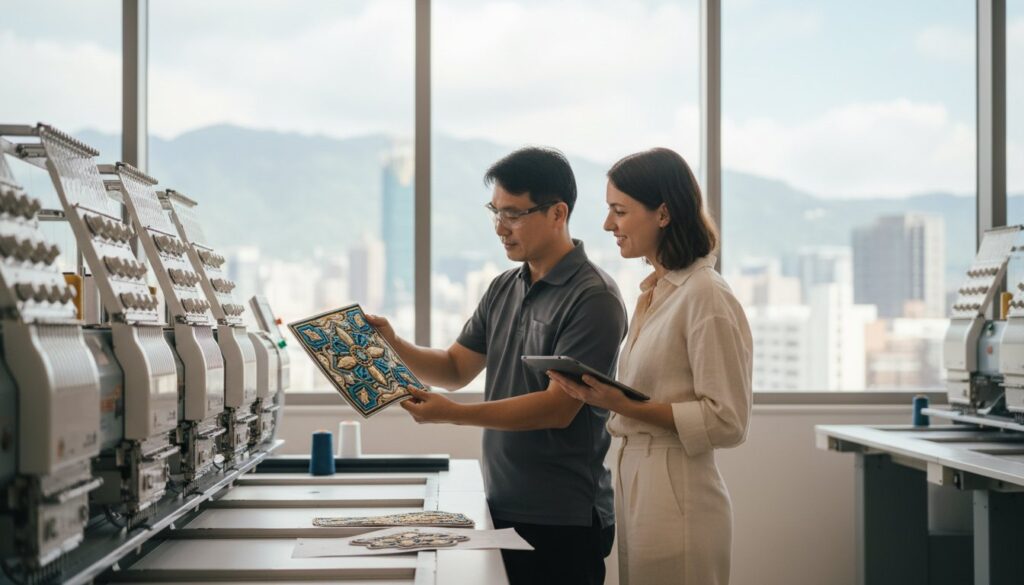
ماذا لو كان الخطر الأكبر الذي يهدد علامتك التجارية ليس التصميم نفسه، بل مصنع التطريز الذي تختاره لتنفيذ التصميم؟ إنها فخ شائع. تجد مصنعًا يعدك بكل شيء، لتتلقى في النهاية شحنة من الشارات ثلاثية الأبعاد التي تفتقر إلى التفاصيل الدقيقة الموجودة في عينتك الأصلية. أعلم مدى إرهاق ملاحقة جهات الاتصال في الخارج أو اكتشاف رسوم شحن خفية تفسد ميزانيتك في اللحظة الأخيرة. أنت تريد شريكًا يقدّر جدولك الزمني بقدر ما تقدّره أنت.
أنا هنا لأغير هذه التجربة بالنسبة لك. سأوضح لك بالضبط كيفية تقييم مصنع تطريز محترف حتى تتمكن من الحصول على شارات عالية الجودة دون التعرض لمشاكل الإنتاج المعتادة. سنتعمق في معايير عام 2026 الخاصة بالرقمنة المدعومة بالذكاء الاصطناعي، وكيفية التعرف على نماذج التسعير الشفافة، ولماذا يعد الدعم الاحترافي في التصميم أفضل وسيلة دفاع لك ضد الجودة الرديئة. كما سنلقي نظرة على كيفية التعامل مع التحولات التجارية الجديدة لعام 2026، مثل آلية تعديل الحدود الكربونية للاتحاد الأوروبي، للحفاظ على استقرار سلسلة التوريد الخاصة بكم. وبنهاية هذا الدليل، ستكون لديكم خارطة طريق واضحة نحو شراكة سلسة وعالية الجودة.
الوجبات الرئيسية
- لا يقتصر اختيار شركة التطريز المناسبة على السعر فحسب؛ بل يتعلق الأمر بإيجاد شريك يستخدم آلات عالية السرعة لضمان جودة علامتك التجارية.
- تعرف على كيفية إتقان عملية الرقمنة، ولماذا يُعد تحويل عملك الفني إلى ملف جاهز للتطريز هو السر وراء الحصول على نتائج متميزة.
- سأوضح لكم لماذا يُعدّ العينة المادية أمرًا لا غنى عنه بالنسبة للشارات ثلاثية الأبعاد والشارات المنسوجة، وذلك لتجنب تباين الجودة في طلباتكم بالجملة.
- اكتشف كيف يمكنك تبسيط عملية الطلب بأكملها من خلال استخدام الملفات المتجهة والعمل مع فريق يضمن لك عدم وجود أي رسوم خفية.
لماذا يُعد العثور على الشركة المصنعة المناسبة للتطريز (刺繡廠商) الخطوة الأهم لعلامتك التجارية
الشارة هي بمثابة “المصافحة” الملموسة لعلامتك التجارية. فغالبًا ما تكون أول ما يلمسه العميل في قطعة الملابس الخاصة بك. وإذا كانت الشارة رقيقة الملمس أو تبدو غير مرتبة، فإنها تحدد مستوى الجودة في نظر العملاء قبل أن يجربوا القطعة حتى. لقد رأيت العديد من العلامات التجارية تقع في فخ اختيار مصنع «رخيص» لتجد نفسها بعد ذلك تواجه مشاكل مثل انقطاع الخيوط، وتهتك الحواف، والألوان التي لا تتطابق مع العينة. هذه المشاكل تستنزف أرباحك وتقضي على زخمك. اختيار مصنع التطريز الخاطئ ليس مجرد خطأ بسيط؛ بل هو كارثة للعلامة التجارية تلتصق بملابسك.
أعتقد أن الشراكة طويلة الأمد مع مصنّع المعدات الأصلية (OEM) هي السبيل الوحيد لتوسيع نطاق أعمالك بفعالية. قد يبدو التبديل بين الموردين مع كل طلب طريقة لتوفير بضعة سنتات، لكنك تفقد بذلك الاتساق الذي يبني ولاء العملاء. يعمل المصنع المحترف بمثابة مستشار تقني لك. فهو لا يقتصر على توريد المنتج فحسب، بل يعمل على حل مشكلات العلامة التجارية الخاصة بك قبل أن تصل إلى خط الإنتاج. وهذا النهج الاستباقي هو ما يميز الإطلاق الناجح عن مستودع مليء بالمخزون المعيب.
الفرق بين المورد والشريك
المورد ينفذ التعليمات دون أي تفكير. أما الشريك فيعمل على تحسين تصاميمك لتناسب مرحلة الإنتاج. أنا أبحث دائمًا عن مصنعين يقدمون ملاحظات حول التصميم قبل قبول دفعة مقدمة. هذا المستوى من التواصل الشفاف يوفر عليك أسابيع من الرسائل الإلكترونية المثيرة للإحباط. في حين أن تاريخ التطريز تعود جذورها إلى فن الخياطة اليدوية القديمة، أما إنتاج عام 2026 فهو علم يعتمد على أحدث التقنيات. أنت بحاجة إلى شخص يفهم كيف يؤثر شد الخيط على الأقمشة المختلفة، حتى يظل شعارك واضحًا ومحترفًا في كل مرة.
ميزة “جودة تايوان” في عام 2026
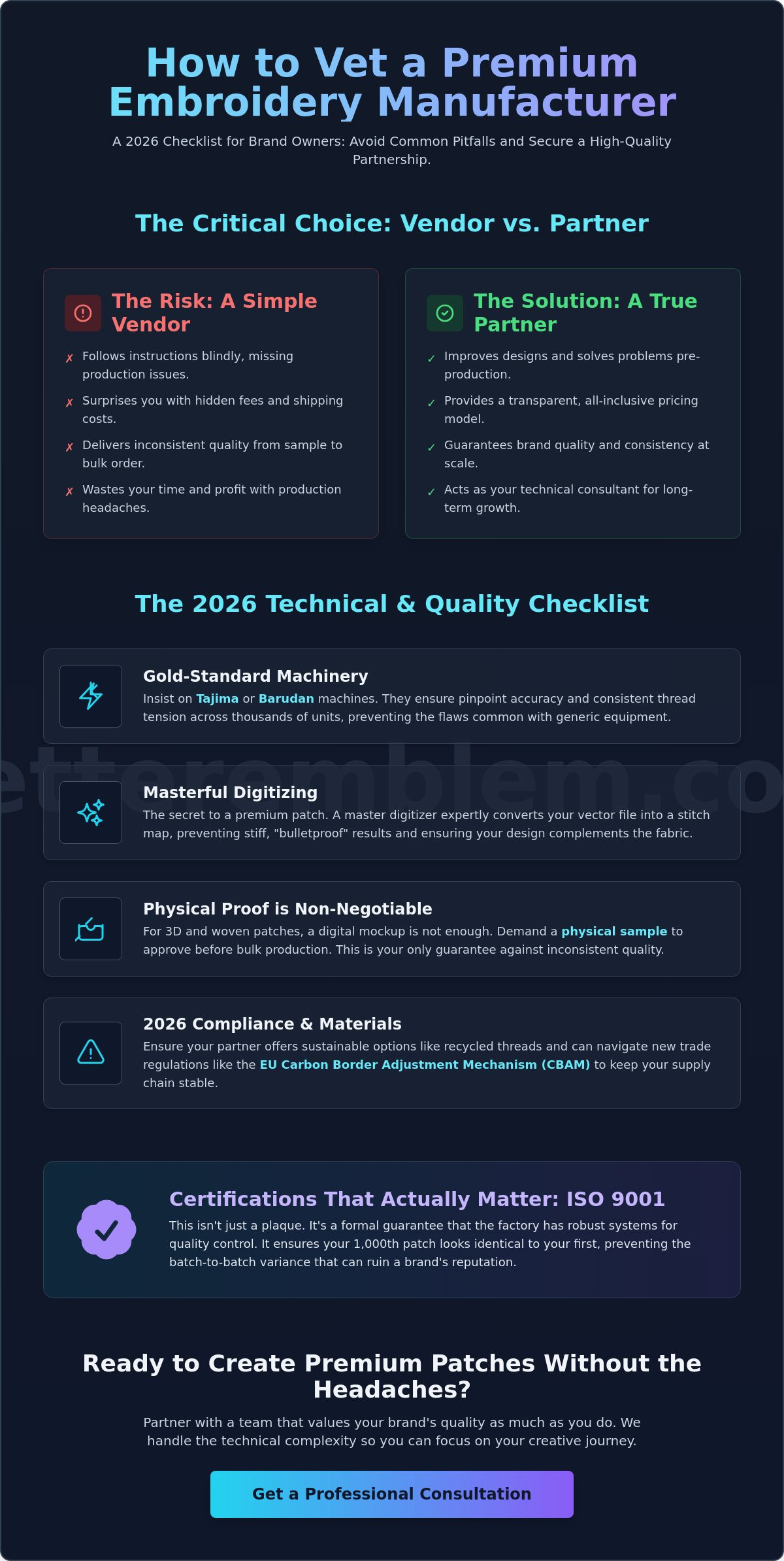
تظل تايوان رائدة عالمياً في مجال الشارات النسيجية الدقيقة. يتولى مقرنا الرئيسي في مدينة نيو تايبيه تنسيق عمليات الإنتاج العالمية لضمان السرعة دون المساس بمعيار “الجودة التايوانية”. واعتباراً من أوائل عام 2026، لم يعد التحول نحو المواد المستدامة أمراً اختيارياً. مع بدء سريان لوائح مثل «آلية تعديل الحدود الكربونية» (CBAM) الخاصة بالاتحاد الأوروبي هذا العام، يتعين على موردي التطريز التابعين لكم توفير خيارات خيوط صديقة للبيئة وتراعي أخلاقيات العمل. نحن نجعل هذا الانتقال سلسًا بالنسبة لكم، ونضمن بقاء علامتكم التجارية متوافقة مع اللوائح مع الحفاظ على مظهرها الفاخر. نحن نتولى التعامل مع التعقيدات حتى تتمكنوا من التركيز على رحلتكم الإبداعية.
قائمة المراجعة الفنية: ما يجب أن يقدمه كل مصنع متخصص في التطريز الفاخر
قد تبدو المواصفات الفنية مربكة. فهي تشكل العمود الفقري للهوية المادية لعلامتك التجارية. عندما تقوم بتقييم مصنع تطريز محتمل، لا ينبغي أن تكتفي بالسؤال عما إذا كان بإمكانه صنع الشارات فحسب. بل عليك أن تعرف كيف يصنعها. أنا أركز على المصنعين الذين يستثمرون في آلات «تاجيما» و«بارودان» عالية السرعة. هذه ليست مجرد أسماء تجارية؛ بل هي المعيار الذهبي للحفاظ على شد خيط محكم ودقة متناهية عبر دفعة تبلغ 5,000 وحدة. إذا كان المصنع يستخدم معدات عادية، فقد تبدو الشارة الأولى رائعة، لكن الشارات المتبقية غالبًا ما تعاني من اختلالات في التوافق أو حلقات فضفاضة.
يكمن السر الحقيقي وراء الشارة عالية الجودة في عملية الرقمنة. وهي فن تحويل ملف JPG المسطح أو الملف المتجه الخاص بك إلى خريطة معقدة من الغرز. يقوم خبير الرقمنة بتحديد المسار الذي تسلكه الإبرة، وكثافة الخيط، و“تعويض الشد” المطلوب لمختلف أنواع الأقمشة. لقد وجدت أن الرقمنة “الرخيصة” هي فخ. فهي تؤدي إلى شارات صلبة ومتينة للغاية لا تنثني مع الملابس، أو الأسوأ من ذلك، تصاميم تتسبب في تجعد القماش. أنت بحاجة إلى شريك يتعامل مع الرقمنة كحرفة، وليس كعملية أتمتة برمجية.
تعد جودة المواد أمرًا لا يقل أهمية عن الماكينة نفسها. في عام 2026، تتجه العلامات التجارية الفاخرة نحو استخدام خيوط البوليستر المعاد تدويرها والبطانات المصنوعة من نسيج التويل المستدام. وسيقدم المصنعون من الدرجة الأولى مجموعة واسعة من الخيارات، بدءًا من اللباد الكلاسيكي وصولاً إلى نسيج التويل العسكري شديد التحمل. قبل اتخاذ قرارك، أوصيك باتباع ما يلي: دليل تفصيلي خطوة بخطوة لإتمام عملية طلب سلسة لضمان التزام المورد الخاص بك بهذه المعايير المتعلقة بالمواد. كما يجب أن يتسم بروتوكول مراقبة الجودة الخاص بك بالشفافية. في منشأتنا، تمر كل رقعة بثلاث نقاط فحص منفصلة قبل أن توضع في صندوق الشحن.
دقة الآلة مقابل التفاصيل المصنوعة يدويًّا
في حين تتولى الآلات ذات السعة الإنتاجية العالية معالجة معظم الطلبات، فإن بعض المشاريع تتطلب لمسة مختلفة. أقترح استخدام التطريز اليدوي بالأسلاك في صناعة الرقع المعدنية لتحقيق تلك الملمس المعدني الثقيل الذي نراه في الشعارات الفاخرة. أما بالنسبة لكل شيء آخر، فإن جهاز الرقمنة هو البطل. فهو يوازن بين كثافة الغرز بحيث تكون الرقع ناعمة الملمس ومتينة في الوقت نفسه. إذا لم تكن متأكدًا من التقنية التي تناسب شعارك، فيمكنك دائمًا اتصل بنا للحصول على استشارة سريعة لمعرفة ما يناسب النسيج الذي تستخدمه بشكل أفضل.
الشهادات التي لها أهمية حقيقية
لا تكتفِ بالاعتماد على كلام الشركة المصنعة. ابحث عن شهادة ISO 9001. فهذه الشهادة ليست مجرد لوحة معلقة على الحائط؛ بل هي ضمان بأن المصنع يطبق أنظمة تضمن أن تكون الشارة رقم 1,000 مطابقة تمامًا للشارة الأولى. في عالم الموضة السريعة، تمنع هذه الأنظمة التباين بين الدفعات الذي يضر بسمعة العلامة التجارية. تحقق دائمًا من صحة هذه الادعاءات من خلال الاطلاع على محفظة عملائهم الأخيرة لترى النتائج الفعلية. سيكون مصنع التطريز الموثوق فخورًا بعرض سجله الحافل بالاتساق عليك.
ما وراء التصاميم القياسية: مقارنة بين التقنيات المختلفة لتعزيز هوية علامتك التجارية
غالبًا ما أرى أصحاب العلامات التجارية يواجهون صعوبة لأنهم يعتقدون أن جميع الشارات متشابهة في الأساس. في الواقع، يجب أن تكون التقنية التي تختارها انعكاسًا مباشرًا لشخصية علامتك التجارية. إن العثور على مصنع التطريز المناسب يعني العثور على فريق قادر على إرشادك عبر هذه الخيارات دون أن تجعل الأمر يبدو وكأنه علم صعب للغاية. ورغم أنني أقدّر دائمًا المظهر الكلاسيكي لـ رقع مخصصة, ، يشهد عام 2026 طفرة هائلة في التصاميم المزخرفة والمتعددة الأبعاد التي تساعد العلامات التجارية على التميز على رفوف المتاجر المزدحمة. هدفي هو جعل عملية الاختيار هذه خالية من المتاعب حتى تحصل على المظهر الذي تريده بالضبط.
إذا كنت تعمل على إنشاء علامة تجارية لملابس الشارع أو تصميم أغطية الرأس الفاخرة،, تطريز ثلاثي الأبعاد تُعدّ الرقع المعيار الذهبي. فهي تضفي عمقًا ملموسًا لا يمكن للخياطة المسطحة أن تضاهيه. ومع ذلك، إذا كان شعارك يحتوي على نص صغير أو تدرجات لونية معقدة، فقد يبدو التطريز التقليدي مزدحمًا. وهنا يأتي دور رقع منسوجة تفوز دائمًا. فهي تستخدم خيوطًا أرق ونسجًا أكثر إحكامًا لالتقاط التفاصيل التي يصل حجمها إلى 1 مم بوضوح تام. وبالنسبة لمن يسعون إلى إطلالة جامعية كلاسيكية، فلا شيء يضاهي الملمس الناعم الشبيه بالمناشفة لـ ترقيع مخملي. شهدنا زيادة قدرها 25% في الطلب على الشينيل في الربع الأول من عام 2026 وحده، مع استمرار هيمنة الأسلوب الجمالي الكلاسيكي على السوق.
النقاش حول التطريز ثلاثي الأبعاد مقابل التطريز المسطح
عادةً ما يتلخص الاختيار بين التطريز ثلاثي الأبعاد (3D Puff) والتطريز المسطح في المقارنة بين التأثير البصري والدقة في التفاصيل. يستخدم التطريز ثلاثي الأبعاد حشوة من الفوم لإبراز شعارك عن السطح، وهو خيار مثالي للأشكال الجريئة والبسيطة. وهو متين بشكل مدهش؛ حيث تُظهر اختباراتنا الداخلية أن هذه الشارات تتحمل ما يزيد عن 50 دورة غسيل صناعية دون أن تفقد شكلها. أما التطريز المسطح فهو أكثر فعالية من حيث التكلفة للتصاميم المعقدة ذات الطبقات المتعددة من الألوان. إذا لم يشرح لك مصنع التطريز هذه المفاضلات، فقد ينتهي بك الأمر بشارة ثقيلة جدًا بالنسبة لوزن النسيج المحدد لملابسك.
خيارات المواد: البولي فينيل كلوريد (PVC)، والجلد، والمعدن الثمين
بالنسبة للعلامات التجارية التي تعتمد على الأنشطة الخارجية، أوصي باستخدام الرقع المصنوعة من مادة PVC. فهي مقاومة للماء تمامًا ولا يتلاشى لونها تحت أشعة الشمس، مما يجعلها الخيار المفضل لمعدات الأنشطة التكتيكية والمغامرات. أما إذا كنت تبحث عن مظهر متين وفاخر للملابس الجينزية أو الحقائب، فإن الرقع الجلدية تضفي طابعًا كلاسيكيًا لا يفقد بريقه مع مرور الزمن بل يزداد جمالًا بمرور السنين. أما في فئة المنتجات الفاخرة، فلا نزال ننتج رقعًا مصنوعة يدويًّا من خيوط معدنية. تُستخدم هذه الخيوط لخلق تأثير ثلاثي الأبعاد فريد من نوعه للسترات العسكرية أو سترات النوادي الراقية. وأنا أُسهّل عملية الاختيار من خلال توفير عينات مادية لكل نوع، حتى تعرف بالضبط كيف سيكون ملمس المنتج النهائي في يدك قبل أن نبدأ في الإنتاج بكميات كبيرة.
تجنب “مشاكل المصنع”: دليل تفصيلي خطوة بخطوة لإنجاز طلبية سلسة
معظم المشاكل التي تواجه عملية الإنتاج لا تنجم عن سوء الحظ، بل عن خلل في سير العملية. لقد أمضيت عقودًا في صقل نظام يزيل الغموض عن عملية اختيار مورد للتطريز. ويتلخص هذا النظام في الانتقال من فكرة غامضة إلى منتج ملموس عبر أربع خطوات واضحة وسهلة التنفيذ. عندما تفهم سير العمل، يمكنك اكتشاف التأخيرات المحتملة قبل أن تكلفك الوقت أو المال. هدفي هو جعل تجربة التصنيع الخاصة بك خالية تمامًا من المتاعب.
تتعلق الخطوة الأولى بإعداد التصميم الفني. أنصح دائمًا باستخدام ملفات متجهة مثل AI أو EPS أو SVG. إذا أرسلت ملف JPG منخفض الدقة، فسيضطر المُرقم إلى تخمين أين تنتهي خطوطك، مما يؤدي غالبًا إلى حواف غير مرتبة. بمجرد الانتهاء من التصميم، ننتقل إلى الخطوة الثانية: مرحلة أخذ العينات. لا أستطيع التأكيد على هذا الأمر بما فيه الكفاية؛ يجب ألا تتخطى أبدًا مرحلة العينة المادية. على الرغم من أن النموذج الرقمي سريع، إلا أنه لا يمكنه أن يظهر لك لمعان الخيط أو الارتفاع الدقيق للنقش ثلاثي الأبعاد. العينة المادية هي ضمانك ضد وقوع خطأ في 5,000 وحدة.
تتضمن الخطوة 3 موازنة فترات التسليم. أقوم بفصلها إلى “وقت الإنتاج” و“وقت الشحن” لتجنب أي لبس. عادةً ما يستغرق الإنتاج من 14 إلى 21 يومًا حسب درجة التعقيد. وأخيرًا، تتمثل الخطوة الرابعة في مراقبة الجودة متعددة المراحل والتوزيع. فنحن لا نكتفي بوضع الشارات في صندوق فحسب. بل يتم فحص كل شارة ومقارنتها بالعينة التي وافقت عليها قبل إرسالها إلى مستودعك. إذا كنت مستعدًا لترى مدى سهولة ذلك، فيمكنك ابدأ طلبك اليوم دون أي متاعب مع فريق الخبراء لدينا.
تسهيل عملية تحضير الأعمال الفنية
قد تؤدي الأخطاء الشائعة، مثل النص الصغير أو الخطوط التي يقل سمكها عن 1 مم، إلى إفساد التصميم. وأنا أساعدك في تبسيط هذه العناصر لضمان ترجمتها بشكل مثالي إلى خيوط. كما نولي أولوية لمطابقة ألوان بانتون في كل طلب. منذ عام 2025، شهدنا انخفاضًا بنسبة 30% في شكاوى “مطابقة الألوان” بمجرد الإصرار على استخدام رموز PMS بدلاً من الرموز السداسية المستمدة من الشاشة. وهذا يضمن الحفاظ على اتساق علامتك التجارية في كل دفعة ننتجها.
اللوجستيات والشحن العالمي
تعد الخدمات اللوجستية الدولية أحد العقبات التي تواجهها العديد من العلامات التجارية. وبصفتنا شركة عالمية متخصصة في التطريز، فإننا ندير عمليات الإنتاج عبر مراكزنا في تايوان وفيتنام والمكسيك بهدف تحسين السرعة والامتثال للوائح التجارية. نساعدك في حساب “التكاليف الإجمالية عند الاستلام”، والتي تشمل الرسوم الجمركية والضرائب، حتى لا تفاجأ بفواتير غير متوقعة عند وصول الشحنة. ستتلقى رقم تتبع فور مغادرة طلبك لمنشأتنا. هذا المستوى من الشفافية هو السبب الذي يجعل عملائنا يثقون بنا لإدارة سلاسل التوريد العالمية الخاصة بهم دون التعرض للضغوط المعتادة المرتبطة بالتعامل مع الأسواق الخارجية.
لماذا أعتقد أن «بيتر إمبليم» هي الشريك الذي كنت تبحث عنه
لقد شاركتُ معكم قوائم المراجعة الفنية والتفاصيل اللوجستية للشحن الدولي، لكن العامل الأهم هو الشخص الموجود على الطرف الآخر من الخط. لا ينبغي أن يكون اختيار شركة تطريز بمثابة مقامرة. لقد أسستُ شركة “Better Emblem” انطلاقًا من فلسفة «Made Easy» (بسهولة تامة)، لأنني أعلم أن لديكم علامة تجارية تديرونها. لا ينبغي أن تضطر إلى أن تصبح خبيرًا في التطريز لمجرد الحصول على شارة عالية الجودة. نحن نتولى التعامل مع تعقيدات عدد الغرز وأنواع البطانات وأنماط الحواف حتى لا تضطر أنت إلى ذلك. هدفنا هو التخلص من ضغوط التصنيع واستبدالها بثقة تامة.
يمتد تاريخنا إلى ما يزيد عن 45 عامًا. لقد شهدنا كل الاتجاهات، بدءًا من ظهور التصميمات ثلاثية الأبعاد (3D puff) وصولًا إلى الطلب الحالي على الخيوط المستدامة. هذه الخبرة العميقة تعني أننا لا نكتفي بالتخمين؛ بل نعرف بالضبط ما يناسب مختلف أوزان الأقمشة وأنواع الملابس. نجمع بين هذه الموثوقية التقليدية وأساليب الإنتاج الحديثة والمتطورة تقنيًّا، مما يضمن أن كل شارة على حدة تفي بمعاييرنا الصارمة. عندما تعمل معنا، فأنت لا تحصل على مجرد مورد. بل تكتسب شريكًا يقدّر سمعة علامتك التجارية بقدر ما تقدّرها أنت.
أحد الأمور التي تميزنا هو التزامنا المطلق بالشفافية. أنا أكره الرسوم الخفية بقدر ما تكرهها أنت. تعني أسعارنا الشاملة أنك لن تتفاجأ بتكاليف رقمنة أو رسوم شحن إضافية غير متوقعة. كل شيء واضح منذ البداية. هذه الصراحة هي السبب في أننا أصبحنا الشركة المفضلة في مجال التطريز للعلامات التجارية العالمية التي تسعى إلى توسيع نطاق برامج منتجاتها دون التعرض لمشاكل الإنتاج المعتادة. نجعل عملية الانتقال من ملف التصميم إلى المنتج المادي سلسة واحترافية.
التزامنا بنجاحكم
أعتقد أن نجاحكم هو نجاحنا. ولهذا السبب نقدم استشارات تصميم مجانية لجميع عملائنا من مصنعي المعدات الأصلية (OEM). ويضمن نهجنا القائم على “الميسر الخبير” أن تتواصلوا مع أشخاص حقيقيين يقدمون حلولاً حقيقية. فإذا كان التصميم لن يُترجم بشكل جيد إلى نسيج، فإننا نبلغكم بذلك على الفور ونساعدكم في تصحيحه. لقد ساعدنا العديد من العلامات التجارية على النمو من عمليات إنتاج محلية صغيرة إلى عمليات توزيع عالمية واسعة النطاق، مع الحفاظ على نفس مستوى الخدمة الشخصية في كل مرحلة من مراحل رحلتهم.
هل أنت مستعد لابتكار شيء مذهل؟
البدء في مشروعك القادم أمر بسيط. تستغرق عملية تقديم عرض الأسعار لدينا ثلاث دقائق بالضبط من وقتك. بمجرد إرسال تصميمك، يمكنك توقع الرد في غضون الـ24 ساعة الأولى. سنقدم لك تفصيلاً واضحاً لخياراتك وجدولاً زمنياً يمكنك الوثوق به فعلاً. لا توجد عقبات ولا نماذج معقدة. دعنا نجعل رحلة بناء علامتك التجارية خالية من المتاعب ونصمم شيئاً سيحب عملاؤك ارتداءه. أنا مستعد لمساعدتك في تحويل رؤيتك إلى حقيقة اليوم.
ارتقِ بهوية علامتك التجارية اليوم
لديك الآن خطة عمل واضحة للانتقال من مفهوم التصميم إلى شارة نهائية عالية الجودة. ويُعد اختيار شركة التطريز المناسبة أهم قرار ستتخذه لضمان الجودة المادية لعلامتك التجارية. أريدك أن تتذكر أن الدقة الفنية في عملية الرقمنة ومرحلة أخذ العينات الصارمة هما أفضل أدواتك لتجنب متاعب الإنتاج. تستحق علامتك التجارية شريكًا يتولى المهام الشاقة حتى تتمكن أنت من التركيز على النمو.
منذ عام 1978، تثق العلامات التجارية العالمية بنا لتولي مشاريع شعاراتها الأكثر تعقيدًا دون أي ضغوط. ونحن نحافظ على جودة حاصلة على شهادة ISO 9001:2015 معايير تضمن اتساق طلباتك بالجملة من القطعة الأولى إلى الأخيرة. نؤمن أنا وفريقي بالشفافية التامة. ولهذا نقدم أسعارًا شاملة لا تحتوي على أي رسوم رقمنة خفية قد تفاجئك لاحقًا. لا ينبغي أن تتعثر رحلتك الإبداعية بسبب عقبات التصنيع. أنا متحمس لرؤية التصاميم المذهلة التي يمكننا إحيائها معًا.
احصل على عرض أسعار مجاني لشاراتك المخصصة: التصنيع أصبح أسهل
الأسئلة المتداولة
كيف يمكنني الاختيار بين مصنع تطريز محلي وآخر في الخارج؟
اختر بناءً على احتياجاتك من الدعم الفني وحجم الإنتاج. غالبًا ما توفر المصانع الخارجية في مراكز مثل تايوان زيادة في الكفاءة تتراوح بين 20% و30% للطلبات بالجملة، مقارنةً بالورش المحلية الصغيرة. أوصي باختيار شركة تطريز دولية تحتفظ بفرق دعم محلية لتجسير أي فجوات في التواصل. وهذا يمنحك المزايا التكلفية للإنتاج العالمي مع موثوقية الشريك الشخصي.
ما هي الكمية الدنيا القياسية للطلب (MOQ) بالنسبة للشارات المخصصة؟
تبدأ كميات الطلب الدنيا عادةً من 50 إلى 100 وحدة لمشاريع تصنيع المعدات الأصلية (OEM) المخصصة. ويتيح لنا هذا الحد الأدنى معايرة الآلات عالية السرعة والحفاظ على اتساق الألوان طوال دورة الإنتاج بأكملها. وإذا عثرت على مصنع لا يفرض حدًا أدنى لكمية الطلب، فمن المرجح أنه يستخدم معدات أبطأ ومخصصة للهواة، والتي لن توفر اللمسة النهائية الاحترافية التي تتطلبها علامتك التجارية للبيع بالتجزئة.
هل يمكنني الاطلاع على عينة مادية قبل أن أقرر الشروع في عملية الإنتاج الكاملة؟
يجب أن تطلب دائمًا عينة مادية قبل بدء الإنتاج بالجملة. أعتبر مرحلة أخذ العينات الخطوة الأكثر أهمية في عملية “Made Easy” الخاصة بنا. فهي الطريقة الوحيدة للتحقق شخصيًا من لمعان الخيوط وارتفاع النتوءات ثلاثية الأبعاد. فإذا اكتفت المصنع بتقديم نماذج رقمية فقط، فإنك تخاطر باستلام شحنة لا تتوافق مع رؤيتك أو مع نسيج ملابسك.
كم من الوقت يستغرق عادةً تصنيع طلبية بالجملة وشحنها؟
عادةً ما يستغرق الإنتاج القياسي ما بين 14 و21 يومًا بعد موافقتك على العينة الفعلية. ويستغرق الشحن من 3 إلى 7 أيام إضافية، اعتمادًا على موقعك العالمي وشركة الشحن التي اخترتها. وأنا أتحكم في هذه الجداول الزمنية من خلال التنسيق بين مراكز الإنتاج المتخصصة لدينا لضمان الالتزام بمواعيدك النهائية دون أي ضغوط في اللحظة الأخيرة أو تأخيرات غير متوقعة.
ما هي صيغ الملفات التي يجب أن أقدمها للحصول على أفضل جودة للتطريز؟
تُعد الملفات المتجهة المعيار الذهبي للحصول على نتائج عالية الجودة. يرجى تقديم تصميماتك بتنسيقات AI أو EPS أو SVG حتى يتمكن فريق التحويل الرقمي لدينا من تحديد موقع كل غرزة بدقة 100%. إذا لم يكن لديك سوى صور نقطية عالية الدقة مثل ملف PNG بدقة 300 نقطة في البوصة، فيمكننا مساعدتك في تحويلها، لكن البدء بالملفات المتجهة هو أسرع طريقة للحصول على نتيجة واضحة واحترافية.
هل تقدم شركات تصنيع التطريز أنواعًا مختلفة من ركائز الرقع؟
نعم، ستقدم شركة التطريز المحترفة أنواعًا مختلفة من الطبقات الخلفية لتناسب الاستخدام المحدد الخاص بك. نحن نوفر طبقات قابلة للكي لتسهيل تثبيتها على الملابس، وطبقات من نوع «هوك آند لوب» للمعدات التكتيكية، وطبقات لاصقة للمناسبات المؤقتة. كما نقدم ركائز بلاستيكية عادية للحفاظ على شكل الشارة، أو بدون ركيزة على الإطلاق للتصاميم التقليدية التي تُخاط يدويًّا والتي تتطلب أقصى قدر من المرونة.
هل هناك حد لعدد الألوان التي يمكنني استخدامها في شارة مطرزة حسب الطلب؟
تستوعب معظم آلات التطريز الصناعية ما بين 12 إلى 15 لونًا مختلفًا من الخيوط في تصميم واحد. ورغم أنه يمكنك من الناحية الفنية استخدام عدد أكبر من الألوان، إلا أن ذلك يزيد من وقت الإنتاج ويؤدي إلى ارتفاع مخاطر انقطاع الخيوط. أقترح أن تقتصر لوحة الألوان الخاصة بك على 9 ألوان كحد أقصى لضمان تحقيق أفضل توازن بين التأثير البصري والمتانة الهيكلية لشعاراتك.
ماذا يحدث إذا كانت جودة الطلب بالجملة لا تتطابق مع العينة؟
يجب أن تتعامل مع مصنع يقدم ضمانًا للجودة استنادًا إلى العينة التي وافقت عليها. ونظرًا لحصولنا على شهادة ISO 9001:2015، فإننا نستخدم معايير فحص موحدة لضمان أن تكون الرقعة رقم 1000 مطابقة للرقعة الأولى. وفي حالة حدوث أي تباين، سيقوم الشريك الموثوق به بتصحيح المشكلة على الفور بدلاً من تركك مع مخزون غير صالح للاستخدام يؤثر سلباً على أرباحك.