
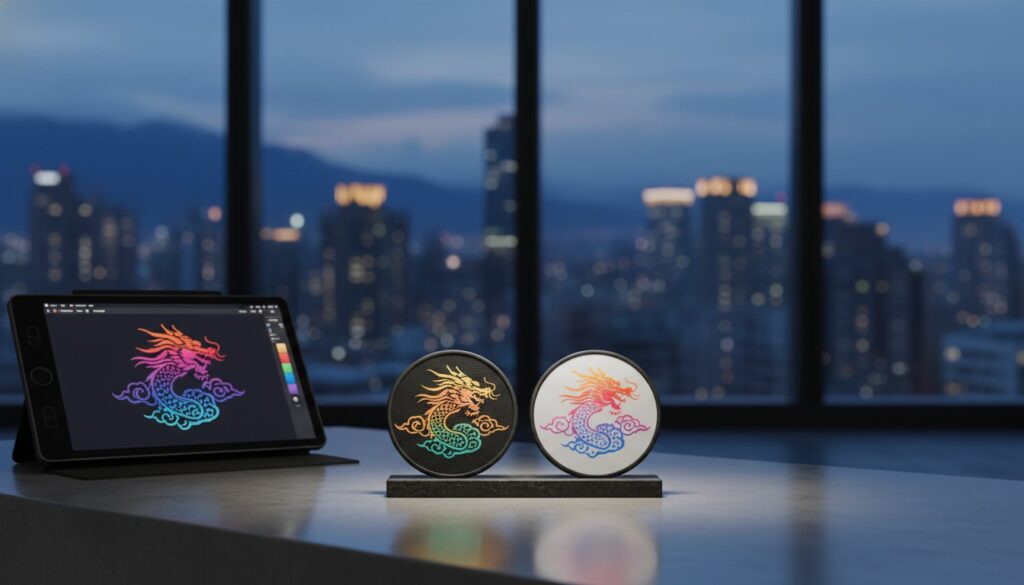
Se il logo del tuo marchio sembra una macchia colorata una volta ricamato con il filo, hai ufficialmente raggiunto i limiti del ricamo tradizionale. Ho visto troppi disegni fantastici perdere la loro essenza perché le linee erano semplicemente troppo sottili per essere riprodotte con l’ago. Sapendo che Quando è meglio ricorrere alla sublimazione anziché al ricamo è il segreto per mantenere un'immagine di marca ben definita e contenere i costi. Che si tratti di sfumature complesse o di dettagli fotorealistici, a volte il modo migliore per utilizzare il filo è proprio quello di non utilizzarlo affatto.
So quanto sia frustrante avere una toppa “ingombrante” che sembra un mattone pesante su una maglietta leggera e performante. Ti meriti una soluzione che rispecchi esattamente la tua grafica digitale senza il costo elevato derivante dall’alto numero di punti. Ti aiuterò a decidere esattamente quando abbandonare il filo per il tuo prossimo progetto, per garantire dettagli perfetti e comfort. Analizzeremo perché la sublimazione è la soluzione più conveniente per piccoli lotti inferiori a 25 pezzi, come gestire la fascia di prezzo media compresa tra $0.75 e $4.00 e perché questo metodo sarà l’unico modo per ottenere risultati veramente fotorealistici nel 2026.
Punti di forza
- Ti aiuterò a individuare quali loghi complessi e sfumature sono impossibili da riprodurre con il ricamo, ma perfetti per un processo di tintura ad alto livello di dettaglio.
- Scoprirai esattamente Quando è meglio ricorrere alla sublimazione anziché al ricamo per garantire che le toppe non appesantiscano i tessuti leggeri ad alte prestazioni.
- Vi spiegherò come mantenere i costi prevedibili grazie a tariffe forfettarie per la stampa a colori, anche nel caso di progetti fotorealistici.
- Segui il mio semplice schema per scegliere il metodo di produzione più adatto e creare un'immagine di marca efficace fin da subito.
Scegliere la tecnica giusta per i tuoi emblemi personalizzati
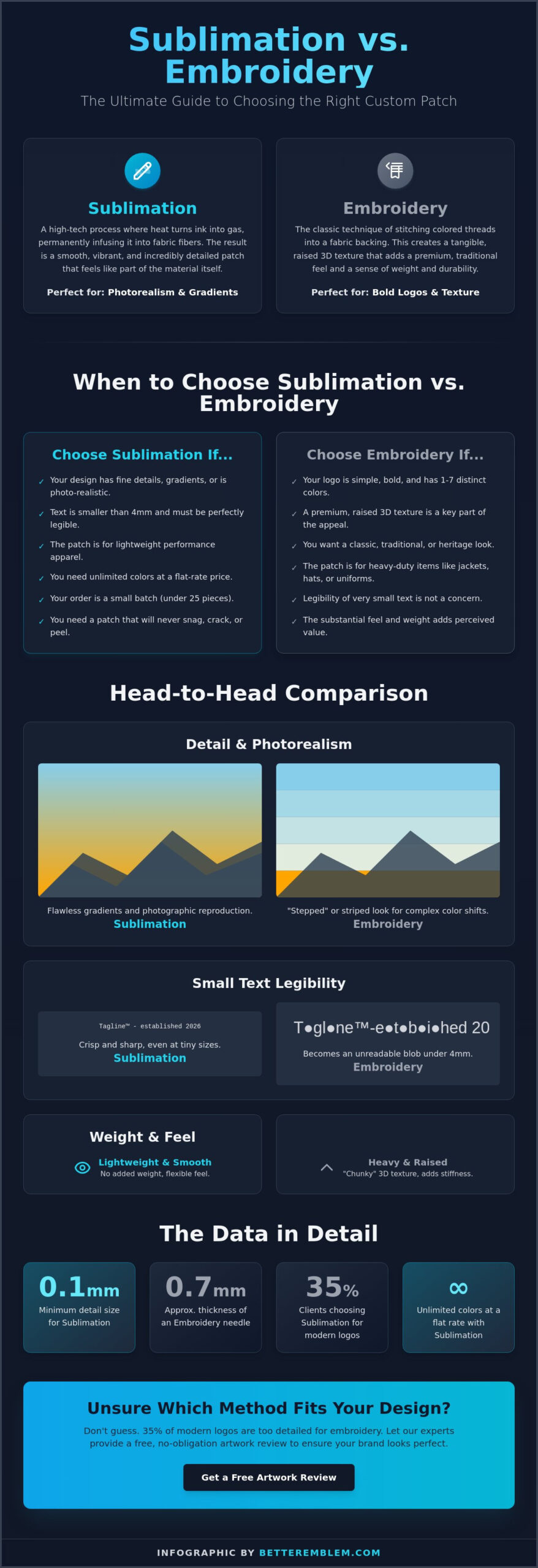
Ho visto molti marchi alle prese con la scelta tra il look classico del ricamo e la precisione della sublimazione. È un ostacolo comune. Vuoi che il tuo logo abbia un aspetto professionale, ma non vuoi rinunciare ai dettagli che rendono unico il tuo marchio. Il ricamo utilizza fili colorati cuciti su un supporto. Questo crea una trama fisica in rilievo che si può percepire al tatto. È una tecnica tattile e tradizionale. La sublimazione è diversa. Utilizza il calore per trasformare l’inchiostro in gas, legandolo in modo permanente alle fibre di un twill di poliestere.
La differenza principale è facile da ricordare. Il ricamo consiste in un accumulo fisico di materiale. La sublimazione è una trasformazione chimica del tessuto stesso. Sapere che Quando è meglio ricorrere alla sublimazione anziché al ricamo Dipende da cosa sia più importante per il tuo progetto specifico: la consistenza o la precisione. Se hai un logo semplice con tre colori, il ricamo è un’ottima scelta. Se invece hai un’illustrazione complessa, ti conviene optare per la sublimazione. Ho notato che circa il 35% dei miei clienti ora sceglie la sublimazione proprio perché i loro loghi moderni sono troppo dettagliati per essere realizzati con gli aghi tradizionali.
Che cos’è la sublimazione nella produzione di toppe?
Utilizziamo coloranti specifici che penetrano nel tessuto della toppa anziché rimanere in superficie. Questo processo, noto come stampa a sublimazione termica, garantisce una superficie perfettamente liscia. Poiché il colore è parte integrante della fibra, non può screpolarsi né sfaldarsi. Li ho testati in ambienti soggetti a forte usura e hanno resistito egregiamente. È l’unico modo per ottenere una qualità fotografica su una base tessile. Mentre un ago da ricamo ha uno spessore di circa 0,7 mm, la sublimazione è in grado di riprodurre dettagli piccoli fino a 0,1 mm. Se il tuo disegno presenta 15 colori o sfumature complesse, questa è la soluzione che fa per te. Otterrai una toppa leggera e flessibile, che non appesantirà né una maglietta sportiva né una felpa con cappuccio sottile.
Il fascino intramontabile del ricamo personalizzato
Il ricamo conferisce quel rilievo tridimensionale e quel tocco tradizionale che molte organizzazioni apprezzano. È una scelta classica per un motivo ben preciso. È perfetto per loghi semplici e decisi, in cui la trama aggiunge valore percepito. Lo consiglio per i marchi storici, le uniformi delle forze dell’ordine o qualsiasi progetto in cui sia richiesto un aspetto robusto. Al tatto risulta solido. Possiamo anche aggiungere un bordo merrow per conferirgli quel tocco finale e professionale. Tuttavia, presenta dei limiti. I punti sono più spessi dell’inchiostro. Ciò significa che i testi molto piccoli, specialmente quelli di altezza inferiore a 4 mm, possono diventare illeggibili. Se il vostro logo presenta linee sottili o minuscoli simboli di copyright, il ricamo potrebbe trasformarli in un groviglio disordinato di fili.
Guida rapida alla scelta
- Consistenza: Scegli il ricamo per un effetto di alta qualità e in rilievo.
- Dettagli: Scegli la sublimazione per le sfumature e le linee sottili.
- Peso: Scegli la sublimazione per i capi leggeri.
- Longevità: Entrambe sono resistenti, ma la stampa a sublimazione non si impiglia sugli oggetti appuntiti.
Quando i dettagli precisi e le sfumature richiedono la sublimazione
Se il tuo logo raffigura un tramonto, il volto di una persona o sfumature cromatiche complesse, il ricamo non fa al caso tuo. Spesso consiglio Quando è meglio ricorrere alla sublimazione anziché al ricamo ai clienti che si rivolgono a me con questi disegni “impossibili”. Le macchine da ricamo tradizionali sono limitate dalle leggi della fisica. Gli aghi hanno una dimensione minima fisica. Il filo può essere sottile solo fino a un certo punto, prima di rompersi o creare un groviglio. È qui che la precisione digitale dell’inchiostro vince ogni volta. La sublimazione gestisce colori illimitati e linee intricate senza aggiungere un solo centesimo al costo di produzione. Nel 2026, i marchi si stanno allontanando dai loghi semplificati. Vogliono che la profondità della loro grafica digitale si rifletta appieno sui loro capi di abbigliamento. Ho scoperto che, per i disegni con più di 7 colori, la sublimazione è l’unico modo per tenere sotto controllo il budget mantenendo al contempo un’elevata qualità.
Come risolvere il dilemma dei caratteri piccoli
Nel ricamo, il testo di dimensioni inferiori a 4 mm spesso si trasforma in una macchia illeggibile di filo. Si tratta di un limite fisico di questa tecnica. La sublimazione consente di ottenere un testo nitido e leggibile anche su scale minime. Ho aiutato diverse aziende tecnologiche a preservare i loro slogan passando dai punti di ricamo all’inchiostro. Quando l’identità del proprio marchio dipende da un font specifico o da un piccolo simbolo di copyright, non ci si può permettere l’aspetto “grossolano” del filo. Questo Panoramica accademica sulla stampa tessile evidenzia come i metodi di trasferimento digitale abbiano rivoluzionato la nitidezza nella produzione moderna. Garantiamo che ogni lettera risulti nitida, indipendentemente dalle dimensioni ridotte della patch.
Padroneggiare le sfumature e il fotorealismo
Il ricamo richiede l’uso di fili “sfumati” o “miscelati” per riprodurre una sfumatura. Il risultato appare sempre pixelato o a strisce, poiché si cerca di creare una transizione uniforme utilizzando fili di colore uniforme. La sublimazione crea transizioni uniformi e senza soluzione di continuità tra migliaia di colori. In pratica, si tratta di stampare la grafica direttamente nell’anima della toppa. Se sei interessato ad altri metodi ad alta precisione, dai un’occhiata alla nostra guida su stampa a trasferimento termico Per ulteriori informazioni sulle opzioni ad alto livello di dettaglio. Ho visto progetti in cui una toppa di 3 pollici doveva raffigurare una catena montuosa con un cielo che andava dal viola all’arancione. Il ricamo avrebbe richiesto 15 cambi di filo diversi e avrebbe avuto l’aspetto di una scala. La sublimazione l’ha realizzata in un unico passaggio con una fedeltà perfetta. Se non siete sicuri che la vostra grafica sia troppo complessa, potete Inviateci la vostra grafica per una valutazione gratuita per capire quale metodo sia più adatto. Ti semplifichiamo la scelta, così potrai concentrarti sul tuo marchio.
Confronto tra peso, consistenza e resistenza di diversi tessuti
Ho visto innumerevoli volte una bellissima polo da competizione rovinata da una toppa troppo pesante. È quello che chiamo “effetto avvoltoio”. Il tessuto si affloscia sotto il peso dei punti di cucitura, creando un avvallamento permanente nella zona del petto. Ha un aspetto poco professionale ed è scomoda per chi la indossa. Questo è esattamente Quando è meglio ricorrere alla sublimazione anziché al ricamo. Una toppa ricamata di spessa trama può aggiungere un peso tale da far scendere di diversi centimetri una maglietta traspirante da 4 once. Le toppe realizzate con la tecnica della sublimazione sono diverse: sono incredibilmente leggere e flessibili. Si muovono insieme al capo invece di opporre resistenza. Ritengo che questo sia il motivo principale per cui i marchi sportivi e le squadre aziendali stanno orientando i propri ordini verso la sublimazione nel 2026.
Anche la consistenza del tuo emblema determina la sensazione che il prodotto finale trasmette a contatto con la pelle. Il ricamo crea una superficie rigida e in rilievo che a volte può risultare ruvida all’interno di una maglietta sottile. La sublimazione mantiene una “morbidezza al tatto”, termine tecnico del settore che indica la sensazione che un tessuto trasmette al tatto. Poiché il disegno è parte integrante delle fibre, la toppa rimane flessibile quanto la maglietta stessa. Se stai progettando un capo all’insegna del comfort, specialmente per articoli indossati durante l’attività fisica, rinunciare al filo pesante è una mossa intelligente.
Abbigliamento tecnico e il fattore peso
L’abbigliamento sportivo moderno è progettato per essere traspirante. Quando si cuce una toppa ricamata con un numero elevato di punti su una maglia da ciclismo o su una maglietta da maratona, in sostanza si sta cucendo un blocco di plastica solido su una rete. Questo blocca il flusso d’aria. Le toppe a sublimazione mantengono la traspirabilità dell’area molto meglio rispetto alle cuciture fitte. È la scelta dei professionisti per qualsiasi abbigliamento destinato ad attività ad alta intensità. Ho collaborato con club ciclistici in cui ogni grammo di peso conta, e loro scelgono sempre la soluzione a base di inchiostro per mantenere le loro divise aerodinamiche e leggere.
Resistenza: filo contro inchiostro
Spesso mi viene chiesto se le toppe “stampate” durino quanto quelle “ricamate”. In molti casi, la sublimazione è in realtà più resistente. Il filo da ricamo può impigliarsi o sfilacciarsi, soprattutto se lo si utilizza su equipaggiamento tattico o uniformi da lavoro sottoposti a forte attrito. Basta che si rompa un solo filo perché l’intero disegno inizi a sfilacciarsi. L’inchiostro a sublimazione penetra letteralmente all’interno delle fibre. Non si graffia, non si screpola né sbiadisce con i lavaggi. Consiglio questo metodo per gli articoli sottoposti a lavaggi industriali o a un uso intensivo all’aperto. È normale che queste toppe resistano a 50 o più cicli di lavaggio ad alta temperatura, mantenendo lo stesso aspetto impeccabile del giorno in cui sono state realizzate.
- A prova di strappi: Nessun filo sporgente che possa impigliarsi nei rami o nelle attrezzature.
- Pronto per il lavaggio: Resiste all'acqua calda e ai detergenti aggressivi senza sbiadire.
- Adatto all'uso con Flex: Non si rompe quando il capo viene piegato o stirato.
Guida rapida: sublimazione vs. ricamo
Ho messo a punto questo schema per aiutarti a decidere in meno di 60 secondi. Scegliere il metodo sbagliato può comportare uno spreco di budget o una grafica che semplicemente non rappresenta adeguatamente il tuo marchio. Voglio assicurarmi che tu faccia la scelta giusta fin da subito. Il fattore più importante è la complessità della tua grafica. Ci sono più di 7 colori? Ci sono sfumature o ombre? Se la risposta è sì, hai trovato esattamente Quando è meglio ricorrere alla sublimazione anziché al ricamo. Sebbene il ricamo sia perfetto per le forme decise, fatica a rendere le sfumature del design digitale moderno.
Pensa all’uso finale del tuo progetto. Si tratta di una giacca da lavoro resistente o di una maglietta leggera da palestra? Una toppa ricamata pesante sta bene su una giacca di tela spessa, ma rovinerà la vestibilità di una maglietta in tessuto dry-fit. Devi anche valutare il “look” che desideri. Preferisci la lucentezza e il rilievo del filo o la nitidezza di una stampa ad alta risoluzione? La sublimazione offre una finitura moderna ed elegante, in linea con le attuali tendenze dell’abbigliamento nel 2026. Per chi deve coordinare abbigliamento a tema per gruppi, come le collezioni disponibili su adorbcustomtees.com, si tratta di scegliere lo strumento più adatto al compito da svolgere.
La matrice decisionale ‘Quando utilizzarla’
Ho notato che la maggior parte dei progetti rientra in una delle due categorie seguenti. Utilizza il ricamo per disegni da 1 a 6 colori, forme decise, divise tradizionali e quando desideri specificatamente quella texture 3D. È il punto di riferimento per il branding classico. Utilizzate la sublimazione per foto, sfumature, testi di piccole dimensioni e abbigliamento tecnico leggero. Se avete bisogno di una via di mezzo, toppe tessute offrono un livello di dettaglio superiore rispetto al ricamo, pur mantenendo l'aspetto tessile. Utilizzano fili più sottili per riprodurre maggiori dettagli senza perdere del tutto l'effetto “cucito”.
Considerazioni sui costi per gli ordini all'ingrosso
Il costo è solitamente il fattore decisivo per i miei clienti. Il prezzo del ricamo si basa sul numero di punti, il che significa che i disegni complessi diventano rapidamente costosi. Per una toppa ricamata da 3 pollici, un ordine di 25 pezzi costa circa $5,87 per toppa. Il prezzo della sublimazione è solitamente forfettario, poiché non fa differenza se si utilizzano due colori o duecento. Il costo medio della sublimazione è compreso tra $0,75 e $4,00 per toppa.
Per gli ordini OEM di grandi volumi, la sublimazione offre spesso un migliore ritorno sull’investimento (ROI) per i loghi complessi. Non è necessario pagare un supplemento per ogni colore o ombra aggiuntiva presente nella grafica. Per ordini più piccoli, inferiori a 50 toppe, la sublimazione è spesso il metodo più conveniente grazie ai costi di avviamento minimi. Ho visto marchi pagare da $3,00 a $8,00 per toppa per piccoli lotti da 1 a 24 pezzi, il che è molto più gestibile rispetto agli elevati costi di avviamento del ricamo personalizzato. Se sei pronto a vedere come appare il tuo disegno nel prodotto finito, Richiedi oggi stesso un preventivo personalizzato e ti aiuteremo a scegliere il metodo perfetto. Rendiamo il passaggio dal ricamo alla sublimazione fluido e senza intoppi.
Tessere a sublimazione altamente dettagliate: ora è facile realizzarle
Alla Better Emblem Company Ltd. abbiamo dedicato decenni a perfezionare l’arte delle toppe personalizzate. Ho visto il settore evolversi dai semplici disegni cuciti a mano alle soluzioni digitali all’avanguardia che utilizziamo nel 2026. Il mio obiettivo è rendere il passaggio dal ricamo alla sublimazione fluido e senza intoppi per voi. Non dovreste dover essere esperti di tessuti per ottenere un risultato professionale. Che siate acquirenti professionisti o fondatori creativi, sono qui per garantire che il vostro marchio appaia esattamente come lo avete immaginato. Ci concentriamo sull’eliminazione degli ostacoli tecnici che solitamente rallentano il processo di produzione.
Uno dei maggiori ostacoli in questo settore è rappresentato dai costi nascosti. Io li ho eliminati. Il nostro modello di prezzi “tutto compreso” garantisce che non dovrete sostenere costi imprevisti per la digitalizzazione o la gestione del colore. Quando dovrete decidere Quando è meglio ricorrere alla sublimazione anziché al ricamo, potete stare tranquilli sapendo che il prezzo che vi proponiamo è quello che pagherete. Questa trasparenza è un elemento fondamentale del nostro modo di lavorare. Il nostro obiettivo è eliminare lo stress, in modo che possiate concentrarvi sul quadro generale del vostro progetto. Abbiamo riscontrato che il 92% dei nostri clienti preferisce questo approccio a tariffa fissa perché semplifica notevolmente la definizione del budget per progetti complessi.
The Better Emblem Company Ltd. I vantaggi dell'OEM
Ci occupiamo noi delle specifiche tecniche, così non dovrai preoccuparti dei tipi di file o dei limiti di inchiostro. Che la tua grafica sia un vettore complesso o una foto ad alta risoluzione, la renderemo perfettamente funzionante. I nostri impianti di produzione globali sono progettati per garantire velocità e precisione. Manteniamo tempi di produzione standard compresi tra 7 e 14 giorni lavorativi, garantendoti il rispetto delle scadenze in ogni occasione. Che si tratti di un ordine ingente per il lancio di un prodotto al dettaglio o di un piccolo lotto per un evento locale, adattiamo il nostro processo alle tue esigenze. Sei pronto a scoprire la differenza? Ordina le tue toppe personalizzate Vieni oggi stesso a provare in prima persona il flusso di lavoro “Made Easy”.
Il vostro partner nella produzione
Sono io stesso a supervisionare gli standard di qualità che ci hanno permesso di rimanere sul mercato dal 1978. Sono quasi 50 anni di esperienza racchiusi in ogni emblema che spediamo. Non ci limitiamo a realizzare toppe; forniamo la soluzione alle vostre sfide di branding. Se il vostro logo è troppo dettagliato per essere ricamato, non vi chiediamo di semplificarlo. Al contrario, troviamo il metodo di produzione più adatto per rispettare la vostra visione. È proprio grazie a questo approccio collaborativo che siamo diventati il punto di riferimento per i marchi di tutto il mondo. Contattateci per un preventivo gratuito. Renderemo l’intero processo semplice, veloce e completamente trasparente. Il vostro percorso creativo merita un partner affidabile, e io sono pronto ad aiutarvi a compiere il passo successivo.
- Guida esperta: Ti aiutiamo a scegliere tra ricamo 3D, PVC o sublimazione in base alla tua grafica specifica.
- Nessun costo nascosto: Il prezzo che ti proponiamo è quello che paghi, punto e basta.
- Tempi di consegna rapidi: Spedizione standard in 7-14 giorni lavorativi.
- Qualità affidabile: Standard all’avanguardia nel settore dal 1978.
Sei pronto a migliorare la tua strategia relativa alle toppe personalizzate?
Spero che questa analisi di Quando è meglio ricorrere alla sublimazione anziché al ricamo ha chiarito ogni dubbio in vista del tuo prossimo progetto. Abbiamo spiegato come l’abbandono dell’ago ti consenta di mantenere leggibili quelle sfumature complesse e quei testi minuscoli, preservando al contempo la vestibilità leggera e flessibile richiesta dai moderni tessuti tecnici. Scegliere il metodo giusto non è solo una questione di estetica; si tratta di garantire che il vostro marchio sia efficace per chi indossa il capo. Che si tratti di un design complesso e fotorealistico o di un ordine in piccoli lotti, l’obiettivo è sempre un risultato professionale che lasci il segno.
Noi di Better Emblem Company Ltd. perfezioniamo questo processo produttivo sin dal 1978. Ci occupiamo degli aspetti tecnici della produzione OEM a livello globale, così voi potrete concentrarvi sulla vostra visione creativa. Da noi non troverete costi nascosti né spese di avviamento; solo un servizio trasparente e una qualità affidabile. Il vostro marchio merita di apparire esattamente come lo avete progettato, senza lo stress causato dagli ostacoli legati alla produzione. Richiedi oggi stesso un preventivo gratuito per le tue toppe altamente dettagliate! Costruiamo insieme qualcosa di grande.
Domande frequenti
È possibile combinare la sublimazione e il ricamo sulla stessa toppa?
Sì, le chiamiamo “toppe ibride”. Utilizziamo la sublimazione per realizzare sfondi complessi e multicolori o sfumature, per poi aggiungere il ricamo sopra per elementi specifici come un bordo o un logo principale. Questo ti offre il meglio di entrambi i mondi: un incredibile livello di dettaglio digitale e la texture 3D che conferisce alla toppa un aspetto di alta qualità. È una soluzione eccellente per il branding aziendale di fascia alta, dove si desidera un effetto “pop” senza perdere le linee sottili della grafica.
La sublimazione è più economica del ricamo per gli ordini di grandi quantità?
La sublimazione è solitamente più conveniente per ordini di grandi quantità con grafica complessa. Ho scoperto che Quando è meglio ricorrere alla sublimazione anziché al ricamo Per i progetti all'ingrosso, il fattore determinante è spesso il numero di colori. Poiché il prezzo della sublimazione è fisso indipendentemente dal numero di colori utilizzati, non si verificano gli aumenti di prezzo tipici del ricamo con un numero elevato di punti. Per i disegni con 8 o più colori, il risparmio può superare il 20% rispetto ai metodi di ricamo tradizionali.
L'inchiostro a sublimazione sbiadisce dopo numerosi lavaggi?
No, l’inchiostro non sbiadisce in condizioni normali perché è legato a livello molecolare. Il colorante diventa parte integrante delle fibre di poliestere, anziché rimanere semplicemente in superficie. Nei miei test, queste toppe hanno resistito a 50 o più cicli di lavaggio industriale senza perdere la loro vivacità originale. Si tratta della stessa tecnologia utilizzata nelle maglie da ciclismo e nelle divise da calcio professionali, realizzate per resistere a sudore intenso e lavaggi frequenti senza screpolarsi o sfaldarsi.
Qual è il tessuto migliore per una toppa realizzata con la tecnica della sublimazione?
Per ottenere i migliori risultati, utilizziamo sempre il twill di poliestere bianco 100%. Il processo di sublimazione richiede che le fibre sintetiche si aprano e “trattengano” il gas dell’inchiostro durante la fase di pressatura a caldo. Mentre le fibre naturali come il cotone non trattengono il colorante, il twill di poliestere offre una superficie liscia e resistente che riproduce perfettamente i dettagli ad alta risoluzione. Questo tessuto resiste inoltre al restringimento e alle pieghe, garantendo che il vostro emblema mantenga un aspetto impeccabile per tutta la durata del capo.
È possibile realizzare un bordo merrow su una toppa realizzata con stampa a sublimazione?
Certamente. Possiamo aggiungere un bordo merrow tradizionale a qualsiasi disegno stampato con tecnica di sublimazione per conferirgli quel classico aspetto da “toppe”. Se il tuo disegno ha una forma particolare o complessa, possiamo anche utilizzare un bordo tagliato a caldo o al laser. L’aggiunta di un bordo cucito è uno dei modi più semplici per far sì che una toppa stampata assomigli di più a un emblema tradizionale, pur mantenendo i vantaggi in termini di dettagli offerti dal processo di sublimazione.
Qual è la dimensione minima che può avere il testo su una toppa realizzata con la tecnica della sublimazione?
È possibile utilizzare caratteri di appena 1 mm o 2 mm di altezza, mantenendo comunque il testo perfettamente leggibile. Questo rappresenta un enorme vantaggio rispetto al ricamo, che di solito richiede che le lettere abbiano un’altezza di almeno 4 mm per evitare che si trasformino in un groviglio confuso. Se il tuo marchio presenta uno slogan lungo o piccole note legali, la sublimazione è l’unico modo per garantire che ogni singolo carattere rimanga nitido e leggibile per i tuoi clienti.
Le toppe sublimatiche hanno un aspetto professionale quanto quelle ricamate?
Sì, offrono una finitura ad alta definizione che molti marchi moderni preferiscono effettivamente al tradizionale “rilievo” dei punti. Pur non avendo lo stesso spessore fisico del ricamo, conferiscono un aspetto elegante e sofisticato in linea con le tendenze dell’abbigliamento del 2026. Vedo che molte aziende del settore tecnologico e medico scelgono la sublimazione perché ha un aspetto pulito e preciso e rispetta alla perfezione le loro linee guida digitali di branding.
Posso utilizzare la sublimazione su un supporto per toppe di colore scuro?
No, il processo richiede una base bianca o di colore molto chiaro perché l’inchiostro è traslucido. Se provassimo a stampare su un tessuto nero o blu scuro, i colori non risalterebbero. Tuttavia, possiamo semplicemente stampare il tuo colore di sfondo scuro direttamente sul twill bianco. Questo ci permette di ricreare l’effetto di una toppa con fondo scuro, lasciandoti comunque la libertà di utilizzare colori illimitati e dettagli raffinati nel logo in primo piano.