
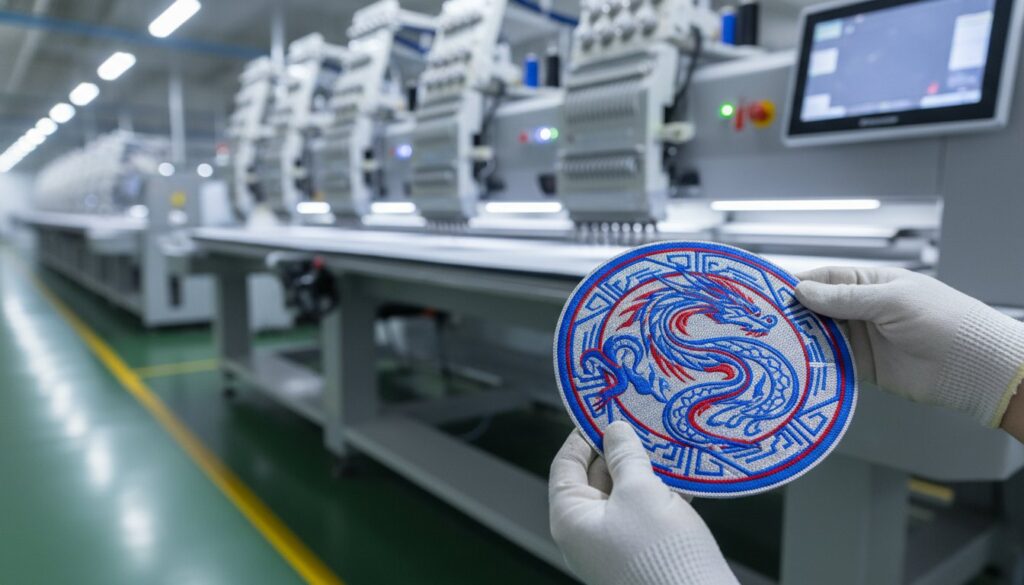
生産拠点を東南アジアに移すことは、単に価格競争の底辺への競争に過ぎないと考えるかもしれませんが、2026年の現実は実際にはその正反対です。ベトナムは、世界中のどの競合他社にも引けを取らない、高精度な製造と倫理的な生産を行う主要な拠点へと変貌を遂げました。もしあなたが ベトナムのカスタムパッチ製造工場, 、おそらく、3D刺繍のシャープなラインやPVCパッチの耐久性を損なうことなく、生産コストを削減する方法をお探しなのではないでしょうか。品質にばらつきがあったり、利益率を圧迫する隠れた送料に悩まされたりするのは、どれほど苛立たしいことか、私もよく理解しています。.
ブランドの評判がかかっている状況では、「海外への進出」はリスクが高いと感じるのも当然だと思います。そこで、完全な透明性と専門的なノウハウを兼ね備えた製造パートナーを見つけるお手伝いをするため、このガイドを作成しました。 本ガイドでは、2026年の最新の貿易動向をどのように活用すべきか、そしてなぜ当社がアジアにおける高品質な生産への最適な架け橋となるのかについて解説します。 各地域の最低賃金の最新動向、2026年の中小企業向け法人税の段階別税率、そしてコミュニケーションの壁に悩まされることなく、シェニールや金糸パッチといった高付加価値商品を確実に調達するための最善の方法を、順を追ってご説明します。.
要点
- ベトナムがなぜ今や世界の繊維産業の中心地となっているのか、そして2026年に予定されている大規模なインフラ整備の拡大から、どのように利益を得ることができるのかをご確認ください。.
- ここでは、その見極め方を ベトナムのカスタムパッチ製造工場 譲れない倫理基準およびISO 9001認証の要件を確実に満たすため。.
- 貴金属パッチの製作において、職人の手作業によるワイヤーワークではなく、ハイテクなOEM精密加工を選ぶべき具体的なケースについて理解しましょう。.
- 海外からの注文を管理するための、私独自の確実なシステムを活用して、3D刺繍やPVCパッチが、デザイン通りに確実に届くようにしましょう。.
- 当社の台湾主導の生産体制が、アジアにおける製造の複雑さを解消するために必要な信頼性と実績を備えている理由をご覧ください。.
2026年、なぜブランド各社がベトナムのオーダーメイドパッチ工場へと移行しているのか
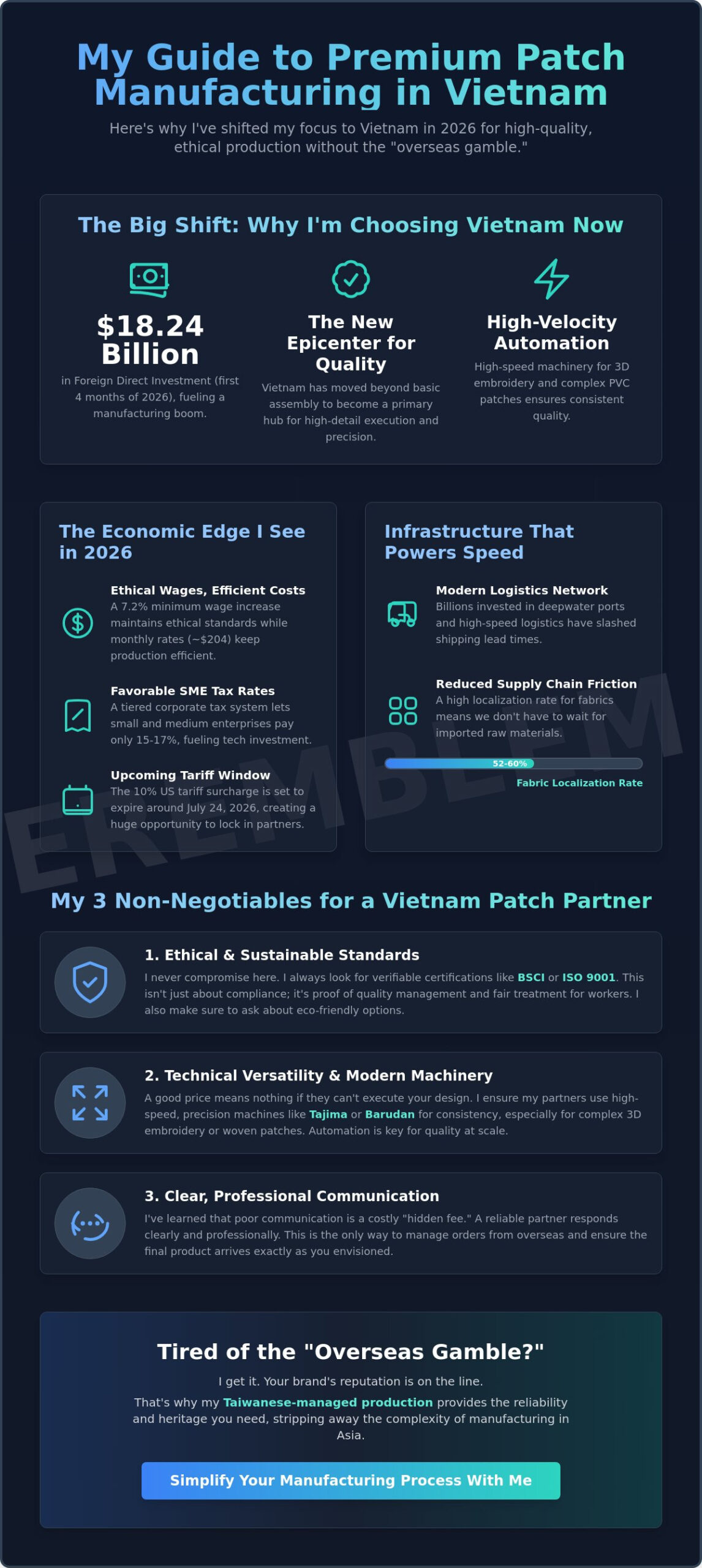
私はこれまでのキャリアを通じて、世界の繊維産業の地図が再構築されていく様子を見てきました。長年にわたり、ほとんどのブランドは当然のように中国を頼りにしていましたが、もはやそうではありません。2026年、ベトナムは二次的な選択肢から、高品質な生産の主要な拠点へと変貌を遂げました。あなたが ベトナムのカスタムパッチ製造工場, 、あなたは、信じられないほど急速に成熟した市場に足を踏み入れようとしているのです。. ベトナムの経済成長 2026年の最初の4か月だけで、$18.24億の対外直接投資が流入している。その資金の大部分は、製造・加工拠点に直接流入している。.
私はこの変化を、伝統的な技術と現代の自動化が見事に調和したものだと捉えています。 この地域の工場は、もはや単純な組み立て作業の段階を脱しています。現在では、3D刺繍から複雑なPVCパッチに至るまで、あらゆる工程で高速かつ高精度な機械が導入されています。政府の政策が産業の成長を積極的に後押ししている、信頼性の高い環境です。これにより、予期せぬ障害に悩まされることなく、クリエイティブな取り組みにおいて、予測可能で迅速な対応が可能なパートナーを得ることができます。.
アパレルブランドにとっての経済的メリット
この変化の背景にある数字は無視できない。2025年政令第293/2025/ND-CP号に基づき、2026年1月から地域の最低賃金が平均7.2%引き上げられたにもかかわらず、生産効率は依然として極めて高い水準を維持している。 例えば、第I地域の最低賃金は月額約$204米ドルです。これにより、予算を圧迫することなく、倫理的な製造基準を維持することが可能となります。 また、税制の動向についても見てみると、2025年末に導入された段階的な法人所得税制度により、中小企業は15%から17%のみを支払うことになっています。.
こうしたコスト削減により、工場はシェニールパッチや昇華プリントパッチなどの製品向けに、より優れた技術への投資が可能になります。 また、第122条に基づく一時的な10%米国関税追加課徴金は、2026年7月24日頃に失効する予定であることも付記しておきます。これにより、世界的な需要が再び急増する前に、長期的なパートナーを確保するための大きな好機が生まれます。重要なのは、持続的な価値を見出すことなのです。.
インフラと転送速度
輸送コンテナを待つばかりでは、グローバルブランドを築くことはできません。 ベトナムはこの問題を解決するため、深水港や物流ネットワークに数十億を投じてきました。こうした近代化により、2026年までのリードタイムは大幅に短縮されました。また、生地の現地調達率が52~60%まで向上したため、工場は輸入原材料を待つことなくプロジェクトを開始できるようになりました。 こうしたハブへの近接性は、サプライチェーンの摩擦を大幅に軽減します。レザーパッチであれ刺繍入りキーホルダーであれ、「Made in Vietnam」は、グローバルブランドが信頼を寄せる精密さの証となっています。.
ベトナムのパッチパートナー選びにおける3つの必須条件
私はクライアントにはいつもこう言っています。「価格だけを見て決めないでください」。物件を探しているときは、最も安い業者を選んでしまいたくなる誘惑に駆られがちですが、 ベトナムのカスタムパッチ製造工場, ……とはいえ、あまりにも好条件すぎる見積もりには、通常、負担しきれないリスクが潜んでいます。 私の経験上、格安のベンダーによる「コスト削減」は、品質のばらつきや納期遅延に見舞われると、あっという間に帳消しになってしまいます。2026年の投資を保護するためには、倫理的な認証、技術的な汎用性、そして明確なコミュニケーションという3つの基準を満たすパートナーを探す必要があります。.
認証の確認は必須です。BSCIまたはISO 9001の認証を取得していない工場は、候補リストから除外すべきです。これらは単なる紙切れではなく、その施設が高品質な管理体制を維持し、労働者を公正に扱っていることの証です。 大手小売ブランドに製品を販売する場合、それらのブランドは自社のコンプライアンスチェックの一環として、こうした監査を要求してくる可能性が高いでしょう。書類上の要件だけでなく、工場が実際にその能力を備えているかを確認する必要があります。鮮明な3D刺繍であれ、耐久性に優れたPVCパッチであれ、価格と同様に機械設備の質も重要な要素となります。.
倫理的かつ持続可能な製造基準
現在、社会的コンプライアンスは、ほとんどのグローバルブランドにとって必須の要件となっています。自社のブランドが劣悪な労働慣行と結びつけられることは避けたいものです。最近の第三者監査報告書の提出を求めることをお勧めします。SedexやAmforiなどのプラットフォームを通じて、ハノイやホーチミンまで足を運ぶことなく、これらの報告書を確認できる場合がほとんどです。また、現代の工場では、持続可能な素材への移行が進んでいます。 パートナー企業に、環境に優しい糸やリサイクル素材の裏地を用意しているかどうかを尋ねてみてください。こうした細かな配慮が、環境意識の高い市場において、ブランドに対する評価を大きく左右するのです。.
技術的な汎用性と専用機械
手作業による刺繍に頼る工場と、タジマやバルダンなどの高速・高精度な機械を使用する工場とを区別する必要があります。手作業にも魅力はありますが、工業的な均一性を確保するには自動化が不可欠です。特に、ロゴに微細な文字や複雑なグラデーションが含まれている場合はなおさらです。そのような場合、私はよく次のような選択肢を提案しています。 織りパッチ 細部までこだわったブランドロゴの刺繍に最適です。適切な工場であれば、専門のデジタル化ソフトウェアを使用して、お客様のベクターファイルが糸で完璧に再現されるよう配慮します。もし、 製造工程を簡素化する, 、このレベルの技術的専門性を持つパートナーを見つけることが、第一歩となります。.
最後に、コミュニケーション不足による「隠れたコスト」を決して過小評価してはいけません。工場側があなたの言語を話せなかったり、技術仕様を理解できなかったりすると、ミスの修正に何週間も費やすことになってしまいます。 信頼できるパートナーは、あなたのチームの延長線上の存在として機能します。彼らは、ブリオンパッチと昇華プリントパッチの違いを明確に説明でき、あなたが求める「見た目」を、何の支障もなく確実に実現してくれるはずです。.
生産品質の評価:手作業によるスモッキングとハイテクOEMの比較
ブランディングプロジェクトでどのような「イメージ」を目指したいか、話し合う必要があります。それは「職人技」のようなものか、それとも「精密さ」のようなものか? 候補地を探しているときは、 ベトナムのカスタムパッチ製造工場, …すると、まったく異なる2つの製造の世界に出くわすことになるでしょう。1つはハンドメイドの高級品の世界、もう1つはハイテクなOEMによる精密製造の世界です。どちらも市場においてその存在意義がありますが、自社のブランドに合わない方を選んでしまうと、思わぬ結果を招く恐れがあります。 工業的な均一性が求められるプロジェクトで「ハンドメイド」のベンダーを選んでしまい、その結果、すべての衣類でロゴの見た目がわずかに異なってしまうなど、苦戦するブランドを私は数多く見てきました。.
この2つのスタイルのどちらを選ぶかは、通常、ターゲット層によって決まります。高級感あふれる軍事ガラの参加者向けなのか、それともテンポの速いストリートウェア愛好家向けなのか。選択する製造方法によって、糸の質感から、日常的に着用した場合のパッチの耐久性に至るまで、あらゆる要素が決まります。 2026年現在、ベトナムのトップクラスの工場では、これらのサービスが明確に区別されているため、予期せぬ問題に悩まされることなく、用途に最適な製造方法を選ぶことができます。.
貴金属細工と手作りのワイヤー細工の技法
デザインによっては、人間の手でしか表現できない質感や重みが必要とされる場合があります。 特に高級なブリオンパッチには、手作りのワイヤー刺繍をお勧めします。これらは、軍服や名門社交クラブのブレザー、あるいは高級ファッションコレクションに見られる金糸や銀糸を使った作品です。その質感は、テキスタイルというよりはむしろジュエリーに近いものです。製作に時間がかかるため、機械製のものとは納期が異なります。当社のガイドをご覧ください。 特注ワッペン この職人技のスタイルが、あなたのクリエイティブな道のりに合うかどうか確かめてみてください。ただ、これらは手作業で製作されているため、機械生産のような「そっくりな」仕上がりにはならないことを覚えておいてください。実は、そここそがこれらの製品が持つ高級感あふれる魅力の一部なのです。.
グローバルブランドに向けた産業用精密技術
企業ブランドや成長中のアパレルブランドであれば、おそらく数千点に及ぶ製品すべてにおいて、ピクセル単位の精度が求められることでしょう。こうした場面こそ、ハイテクなOEM機械が真価を発揮するところです。私は実際に、その様子を目の当たりにしてきました。 立体刺繍 手作業のスモッキングでは到底実現できない規模で、高級感のある「ふっくらとした」仕上がりを作り出します。当サイトからご注文いただくと、 ベトナムのカスタムパッチ製造工場 田島式の機械を使用することで、パッチ「#1」がパッチ「#10,000」とまったく同じ外観になることを保証できます。.
この工業レベルの精度は、カラーマッチングにおいても不可欠です。当社はデジタルデジタイジングソフトウェアを使用し、お客様のパントーンカラーを毎回正確に再現することを保証します。この一貫性は耐久性にも及んでいます。 当社の織りパッチやPVCパッチなどの機械製造品は、工業用洗濯や激しい摩擦にも耐えられるよう設計されています。一方、ブリオンパッチは美しい反面、デリケートです。ギアを現場で使用したり、頻繁に洗濯したりする場合は、ハイテクなOEM製造を採用してこそ、長期にわたりブランドイメージを鮮明に保つことができます。.
海外からベトナムのパッチを注文する際の管理方法
地球の反対側からの生産管理は、まるでブラックボックスのように感じられるかもしれません。 私は長年にわたり何千件もの注文を管理してきましたが、そのストレスを解消するための確実なシステムを確立しました。すべてはお客様のデザインデータから始まります。AIまたはEPS形式の高解像度ベクターファイルをご提供いただく必要があります。もしぼやけたJPEGファイルを送ってしまわれると、 ベトナムのカスタムパッチ製造工場 は当てずっぽうになってしまうでしょう。私はいつもクライアントに、「整ったファイルこそが、きめ細やかなパッチ作成の基礎だ」と伝えています。ここでは、制作をスムーズに進めるための4つのステップをご紹介します:
- 手順 1: 3D刺繍のすべての線がくっきりと仕上がるよう、高解像度のベクター画像をご提出ください。.
- ステップ 2: 実物のサンプルをご請求ください。デジタルモックアップでは、糸の張り具合やレザーパッチの実際の質感はわかりません。.
- ステップ3: 「余裕日」を含めた明確なスケジュールを立てましょう。配送状況は予測できないこともあるため、期限をきつく設定しすぎないようにしましょう。.
- ステップ4: 裏地は早めに決めておきましょう。アイロン接着タイプ、マジックテープ、粘着タイプなど、どのタイプを選ぶかによって、最終的な重量や送料が変わってきます。.
これらの基本を身につければ、そのプロセスははるかにスムーズに進められるようになります。あなたは単なる顧客ではなく、自分自身の生産ラインの責任者なのです。この仕組みに従うことで、海外生産でしばしば問題となる「隠れたハードル」を取り除くことができます。.
サンプリング段階:あなたの安全策
大量生産に入る前には、必ず実物のサンプルを確認するようにしています。特に注意すべき点は、糸のループが緩んでいる、縁の仕上がりが不均一、あるいはパントーンの仕様と色が完全に一致していないといった具体的な問題点です。今、デジタル化ファイルを修正する方が、後で5,000点をやり直すよりもはるかに簡単です。 この段階を急いで済ませた結果、最終的な商品が届いた後に後悔するブランドを数多く見てきました。技術的な要件についてさらに詳しく知りたい場合は、当社の 注文の完全ガイド ワークフローを効率化し、よくあるミスを防ぐために。.
2026年の物流と海運
商品を自宅まで届けるには、主に「航空便」と「海上便」の2つの選択肢があります。刺繍入りキーホルダーや少量の織りパッチには航空便が最適で、通常1週間以内に到着します。大量注文の場合は海上便が適していますが、リードタイムが長くなります。また、インコタームズについても理解しておく必要があります。 私は通常、クライアントにはDDP(Delivered Duty Paid:関税・税金込み渡し)を提案しています。これは、工場側が税金や通関手続きを処理してくれるため、商品が届いた際に予期せぬ請求書に驚かされることがないというものです。箱が工場を出荷される前には、最終的な品質管理チェックが必須です。もし、よくあるトラブルを回避する準備ができているなら、 当社と提携して、生産管理をお任せください 最初から最後まで。.
なぜベター・エンブレム・カンパニー・リミテッドが、アジアにおけるお客様の戦略的パートナーとなるのか
〜を見つけるのは難しいことは分かっていますが、 ベトナムのカスタムパッチ製造工場 は戦いの半分に過ぎません。真の課題は、品質や納期について心配することなく、その関係をうまく管理することです。そこで私が出番となります。Better Emblem Company Ltd.では、厳格な台湾式管理体制に支えられた、高効率なアジア生産という、両方の長所を兼ね備えたサービスを提供しています。 この組み合わせこそが、当社の「秘訣」です。これにより、この地域ならではのコストメリットを提供しつつ、グローバルパートナーに期待される厳格な品質基準を維持することが可能になります。多くの現地ベンダーには、このような国際的な監督体制が欠けています。だからこそ、当社は精度を重視するブランドにとっての架け橋となっているのです。.
当社の歴史は1978年にさかのぼります。この数十年にわたり、私はどの単一の工場にも匹敵しないネットワークの構築に貢献してきました。私たちは単に製造機械をご紹介するだけでなく、工場現場の複雑な業務全般を代行いたします。これにより、お客様は糸の番手や裏地用接着剤などの心配をせずに、ブランドの成長に全力を注ぐことができます。 透明性こそが私たちの特徴です。隠れた費用のない明確な価格設定により、お客様の投資が、私たちが作り出す製品と同様に信頼できるものであることを保証します。私たちは、プレミアム製品への道のりを可能な限り直接的なものにするため、あらゆる障壁を取り除くことを信条としています。お客様には、最初から確実に仕事を成し遂げるパートナーが必要です。.
ベター・エンブレム・カンパニー株式会社の強み
当社は、グローバル企業様向けの専門ファシリテーターとして活動しています。プロジェクトで、PVCパッチの頑丈な耐久性が求められる場合でも、シェニールパッチの柔らかな質感が求められる場合でも、当社にはそれを実現するための専用機械が揃っています。 当社の施設は、3D刺繍、織りパッチ、さらには精巧なエポレットの製造にも対応できる設備を完備しています。また、写真のような細部まで再現が必要なデザインには、熱転写印刷や昇華転写パッチの製造も得意としています。2026年に向けて、アジア全拠点において最新のサステナビリティ基準を満たすことにも取り組んでいます。 当社は、現代のESG目標に沿った高品質で信頼性の高い素材を使用しており、お客様のブランドが責任ある倫理的な方法で生産されていることを安心してお任せいただけます。.
生産規模を拡大する準備はできていますか?
製造がいかにシンプルであるかを、ぜひご体験ください。従来の海外調達に伴う煩わしさに悩まされる必要はありません。当社は迅速な対応と、お客様のビジョンを現実のものにするプロフェッショナルなデジタル化サービスを提供いたします。 プロモーションイベント用の刺繍入りキーホルダーから、ラグジュアリーライン向けのレザーパッチまで、お客様の具体的なニーズに合わせて生産規模を柔軟に調整いたします。当社のチームは、何よりもお客様の時間を大切にする、実直な姿勢を貫いています。クリエイティブな旅の次のステップへ進む準備が整いましたら、, 今すぐ、大量注文のパッチプロジェクトに関するお見積もりをご依頼ください! 私たちは、お客様のブランディングに関する課題を、完成度の高い高品質なソリューションへと導くお手伝いをいたします。.
精密製造でブランドを拡大する
製造業界の様相がどのように変化してきたかは、すでにご存じでしょう。ベトナムはもはや単なる代替案ではなく、2026年の高品質アパレルブランドにとっての主要な原動力となっています。適切な ベトナムのカスタムパッチ製造工場, 、そうすることで、熟練した労働力と近代化された港湾のネットワークを活用し、リードタイムを短縮することができます。成功の鍵は、技術的な精度と倫理的な透明性との間で、その絶妙なバランスを見出すことにかかっています。.
私は長年にわたり、お客様が海外生産に伴うストレスを一人で抱え込むことがないように、当社のプロセスを磨き上げてきました。1978年の創業以来、当社は世界的に有名なブランドとアジアのハイクオリティな生産体制との間を繋ぐ、専門的な架け橋としての役割を果たしてきました。 当社の台湾人経営陣が、世界中の拠点におけるあらゆる細部を監督し、お客様の3D刺繍やPVCパッチが最高水準を満たすよう徹底しています。品質に賭けるのはもうやめ、信頼できるサプライチェーンの構築を始めましょう。. 次回のパッチの大量注文は、Better Emblemにご依頼ください そして、あなたのクリエイティブなビジョンを、確かな自信を持って形にしていきましょう。.
よくある質問
ベトナムのオーダーメイドパッチ工場の一般的な最小発注数量(MOQ)はどれくらいですか?
ベトナムの工業用工場の多くは、デザインごとに最低発注数量(MOQ)を50~100個に設定していることがわかりました。この範囲に設定することで、工場側は高速機械を効率的に稼働させつつ、単位あたりのコストを適正な水準に抑えることができます。小規模な工場の中には、これより少ない数量を受け入れるところもありますが、プロフェッショナルな ベトナムのカスタムパッチ製造工場 通常、生産工程全体を通じて一貫した品質を確保するために、こうした大量生産に重点を置いています。.
ベトナムから米国やヨーロッパへパッチを発送する場合、配送にはどれくらい時間がかかりますか?
航空便は通常、5~7営業日で米国や欧州に到着するため、緊急の発売には最適な選択肢です。大量の注文を処理しており、コストを抑えたい場合は、海上輸送も選択肢の一つですが、3~6週間かかります。 スケジュールに遅れが生じず、ストレスなく進められるよう、通関手続きに数日分の余裕を持たせることを常にお勧めしています。.
ベトナムの工場では、複雑な3D刺繍のデザインに対応できますか?
はい、ここの最新鋭の施設では、世界有数の繊維産業の中心地で見られるのと同じ、タジマやバルダン製のハイエンドな機械が使用されています。 私は、これらの工場が、プレミアムブランドが求める「パフ」のような質感を持つ、驚くほどシャープな3D刺繍を仕上げるのを実際に目にしてきました。クリーンなベクターファイルさえ提供していただければ、デジタイジングソフトウェアは、どんなに複雑なロゴであっても、高精細な刺繍パターンに簡単に変換することができます。.
ベトナムと中国では、オーダーメイドのパッチの価格にどのような違いがありますか?
ベトナムは、専門的な繊維加工において人件費が中国よりも安い場合が多いため、中国に代わる主要な選択肢となっています。具体的な価格については言及しませんが、現在の貿易情勢や中小企業向けの法人税率が低いことなどから、多くのクライアントがベトナムの方が総合的なコストパフォーマンスに優れていると感じています。 これは、ブランドイメージにふさわしい高品質な仕上がりを実現しつつ、生産コストを削減できる戦略的な一手です。.
ベトナムの工場が倫理基準を遵守しているかどうかを確認するにはどうすればよいですか?
BSCI、Sedex、ISO 9001などの公認された第三者認証の提示を求めることをお勧めします。これらの監査は、工場が厳格な労働法や品質管理システムを遵守していることを証明するものです。評判の良いパートナー企業の多くは、透明性が即座に信頼を築くことを理解しているため、2026年の監査報告書を快く提示してくれます。 さらに、監査機関の公式ポータルを通じてこれらの文書を確認し、100%確実にその内容を確認することも可能です。.
ベトナム製のパッチには輸入関税を支払う必要がありますか?
おそらく、標準的な繊維製品の関税を支払う必要がありますが、その金額は国やパッチの素材によって異なります。例えば、米国の購入者は、2026年7月に一部の一時的な税率が失効する予定であるため、セクション122の追加課税に関する最新の情報を確認する必要があります。 私は常に、DDPなどのインコタームズに精通したパートナーと協力し、荷物がお客様の元へ届く前にこれらの税金を処理しておくことをお勧めしています。.
工場にはどのようなファイル形式を送ればよいですか?
私は常に、AI、EPS、PDFなどの高解像度のベクターファイルの提出を徹底しています。これらの形式は、工場がピクセル化や細部の劣化を招くことなく、アートワークを拡大・縮小できるようにするため、不可欠です。低品質のJPEGを送ると、デジタイザーが線の位置を推測せざるを得なくなり、その結果、仕上がりが雑になってしまうことがよくあります。ベクターファイルを使用することで、 ベトナムのカスタムパッチ製造工場 完璧な仕上がりを実現します。.
本格生産に入る前に、サンプルを入手することは可能ですか?
大量注文を確定する前に、実物のサンプルを請求することを強くお勧めします。 デジタルモックアップはざっと確認するには役立ちますが、実際の糸の張り具合や裏地の重さまでは把握できません。実物の試作品を実際に手にとって確認することが、最も確実な安全策となります。そうすることで、色のマッチングから縁の太さまで、あらゆる細部がご想像通りの仕上がりになっていることを確実に確認できます。.