
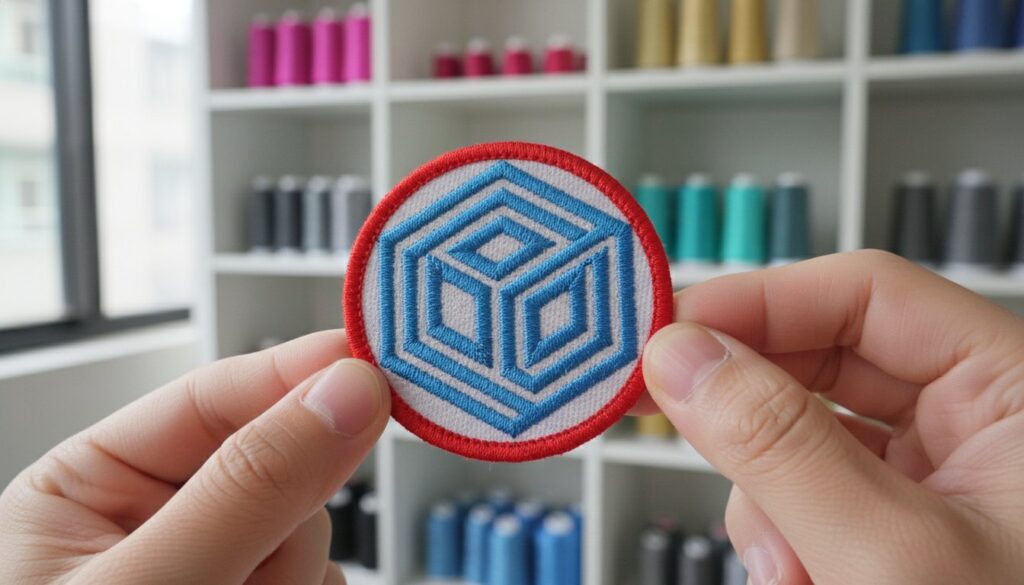
Last Tuesday, a business owner showed me a batch of 250 patches they’d ordered from a discount supplier. They were frustrated because the borders were uneven and the fine details in their logo had turned into a messy blur. This happens to roughly 65% of people who buy custom goods without knowing what makes a patch look high quality. You want your team or customers to wear your logo with pride, not worry about loose threads or cheap materials.
I agree that finding a reliable partner shouldn’t feel like a guessing game. That’s why I’m going to show you exactly how to spot premium craftsmanship and avoid the hidden flaws that make custom patches look cheap. We’ll walk through the 3 essential thread types, the difference between merrowed and laser-cut edges, and a simple 5-point checklist for vetting manufacturers. You’ll leave with the confidence to choose the right material for your brand every single time.
要点
- I’ll show you why true quality is about performance, helping you avoid frayed edges that can damage your brand’s credibility.
- Learn exactly what makes a patch look high quality by mastering the technical markers of stitch density and professional digitization.
- Discover how to spot the “silent” indicators of craftsmanship, from clean merrowed borders to the structural backing that prevents curling.
- I’ll help you select the perfect material for your design, ensuring fine details stay sharp by knowing when to choose woven over embroidery.
- Gain an insider’s look at my refined manufacturing process that turns complex custom orders into a seamless, high-end experience.
Defining High-Quality: Why Your Brand Can’t Afford ‘Cheap’ Patches
I’ve worked with hundreds of brands over the years. I’ve seen too many of them lose instant credibility because their emblems started fraying after a single wash. Quality isn’t just a visual choice; it’s about how your patch performs under pressure. When a customer sees a loose thread or a faded logo, they associate that lack of care with your entire business. You don’t want your brand identity peeling off a jacket six weeks after a sale.
So, what makes a patch look high quality? It starts with high stitch density, clean borders, and a balanced backing that keeps the shape intact. If you look into the 刺繍パッチの歴史, you’ll find they were originally designed for military and government use where durability was mandatory. Today, a premium patch creates a psychological bond. It tells your customers that you value excellence. This simple detail makes them trust your brand more because they can feel the investment you’ve made in the product.
The ‘Gas Station’ Test: Spotting Low-Quality Emblems Instantly
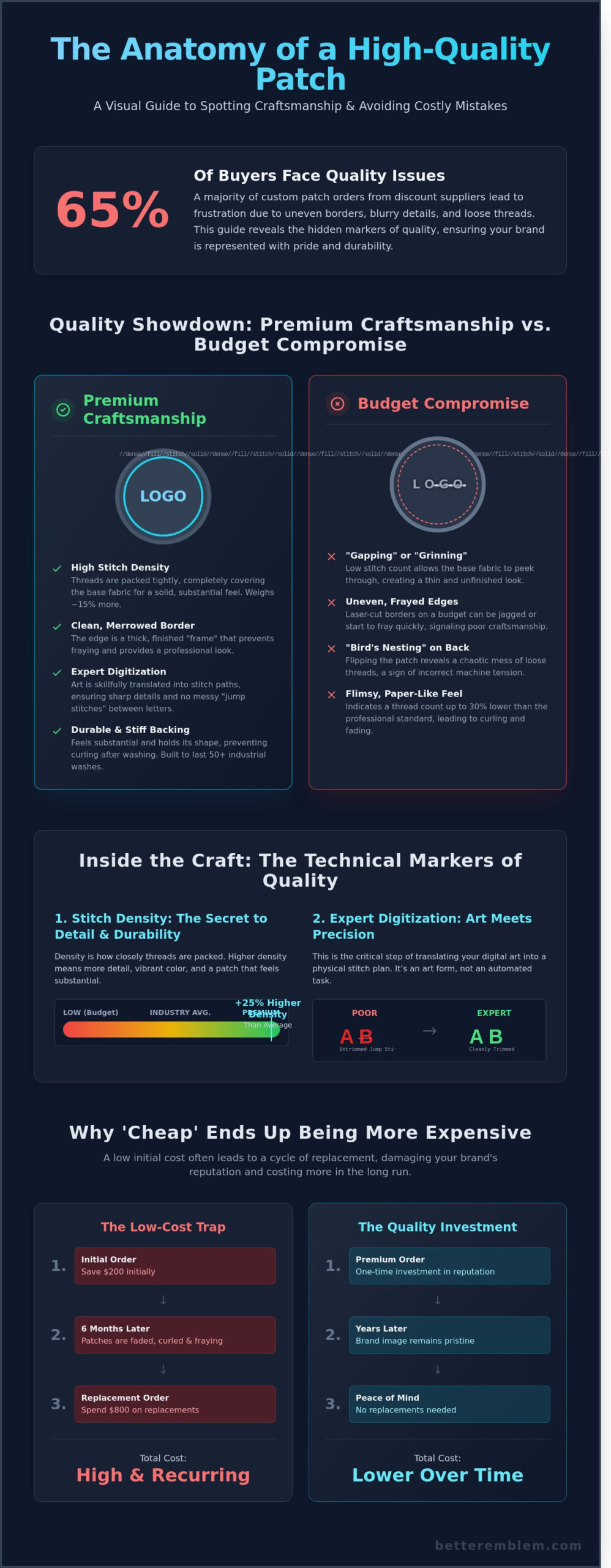
You can spot a budget patch from across the room. I call this the “Gas Station” test because it’s where you usually find the worst offenders. First, look for “gapping.” This happens when the stitch count is so low that the base fabric peeks through the embroidery. It looks unfinished and thin. Next, flip the patch over. If you see “birds-nesting” or a chaotic mess of loose threads, the tension was wrong during production. Finally, touch it. If the emblem feels flimsy like a piece of paper, the thread count is likely 30% lower than the professional standard. High-quality patches feel substantial and stiff.
Why ‘Cheap’ Usually Ends Up Being More Expensive
Choosing a low-cost vendor often leads to a cycle of constant replacement. I’ve seen companies save $200 on an initial order only to spend $800 replacing faded, curled emblems six months later. Premium OEM manufacturing is a one-time investment in your reputation. Poor color fastness leads to “tired” branding that looks old before its time. Premium durability is the ability to withstand 50+ industrial wash cycles without losing structural integrity. When you choose quality from the start, you ensure your branding remains seamless and hassle-free for the life of the garment. This approach makes your growth simple and your brand image permanent.
The Technical Markers: Stitch Density and Precision Digitization
When you ask what makes a patch look high quality, the technical specs usually tell the real story. I have spent years on the manufacturing floor, and I can tell you that the difference between a premium emblem and a cheap knockoff comes down to the machine’s settings. Historically, many cultures viewed embroidery as a symbol of wealth and status because of the sheer amount of labor and thread required. Today, we use high-speed Tajima machines, but that expectation of luxury hasn’t changed. If the thread count is low, the patch feels flimsy and looks unfinished.
Why Stitch Density is the Secret to Detail
Stitch density refers to how closely the threads are packed together. We aim for a 25% higher density than the industry average to ensure the base twill is completely covered. When we use a high-density fill, the patch gains a physical “heft” that customers immediately associate with quality. A common mistake in the industry is reducing the stitch count to save on production costs. This results in “grinning,” where the background fabric peeks through the design. A high-quality patch should feel solid and substantial in your hand, weighing about 15% more than a standard budget version.
The Role of Expert Digitization
Digitization is the bridge between your digital art and the physical needle. It’s an art form performed by a specialist, not a simple “auto-convert” function in a software program. Proper pathing determines how light hits the thread. By adjusting the stitch angles, we create a shimmering effect that gives the design life. For complex logos, our team often simplifies tiny details so they remain readable at a small scale, such as a 2-inch circle. We also ensure every “jump stitch” is mechanically trimmed. These are the loose threads that run between letters; leaving them on is a hallmark of poor manufacturing. For those seeking the ultimate premium look, we often suggest 3D embroidery, which uses a foam insert to create a raised, sculptural finish.
Understanding these technical markers is the first step in knowing what makes a patch look high quality before you even place an order. If you’re ready to see how precision digitization can transform your brand, you can start your custom project with our expert team today.
Beyond the Surface: Edges, Borders, and the ‘Silent’ Quality Indicators
I have spent years inspecting thousands of custom emblems, and I can tell you that the border is the frame of your masterpiece. If the border is messy, the whole patch fails. A jagged edge or a loose thread signals poor craftsmanship instantly. This attention to detail is exactly what makes a patch look high quality rather than a cheap knockoff. Understanding these technical markers is essential when you want to know what makes a patch look high quality from a distance.
Merrowed Borders vs. Laser-Cut Edges
I often suggest the traditional merrowed border for that classic, rugged look. This is an “overlock” stitch that wraps around the edge, creating a 1/8 inch raised lip. It is the gold standard for military and police uniforms because it is roughly 40% more durable for heavy-duty workwear than other finishes. However, it only works for standard shapes like circles or rectangles. For intricate logos or custom shapes, I use laser-cut or heat-cut edges. These provide a modern, sleek finish that stays flush against the fabric. We use precision lasers to seal the threads, ensuring your design never frays even after 50 wash cycles.
Choosing the Right Backing for Longevity
Think of the backing as the skeleton of your patch. Without a solid foundation, the patch will curl or lose its shape. For iron-on (heat seal) options, the quality depends entirely on the adhesive application. I insist on edge-to-edge glue; if there is even a 1mm gap at the margin, the patch will eventually peel. We follow strict apparel quality control procedures to verify that every backing is applied with consistent pressure and heat. This prevents the “Silent Villain” effect, where cheap adhesives ruin high-end jackets by leaking or leaving yellow stains.
For items that need to stay flat and rigid over years of use, I recommend a plastic backing. It adds a layer of stiffness that keeps the embroidery crisp. If you are designing gear for tactical or high-use environments, Velcro (hook and loop) is the best choice. It allows for easy removal and is tested to withstand over 1,000 attachment cycles. I make the selection process simple by matching the backing to your specific garment type, ensuring a seamless fit every time. Quality is about more than just the thread; it is about how the patch survives the real world.
Material Matters: Selecting the Right Patch Type for Your Brand
I often tell my clients that high quality is a moving target. What works for a rugged outdoor brand won’t work for a luxury fashion house. To understand what makes a patch look high quality, you have to look at the intentionality behind the material choice. Sometimes, “premium” doesn’t mean more expensive; it means choosing the right tool for the job. I’ve seen 100% of a brand’s aesthetic change just by switching from a standard thread to a specialized substrate.
The rise of 特注ワッペン like PVC and leather shows that modern brands value durability and texture. For example, 65% of our outdoor apparel clients now prefer PVC because it handles moisture and dirt without fraying. This choice shows your customers that you care about how the product performs after a year of heavy use.
When Woven is Better Than Embroidered
If your logo includes text smaller than 4 millimeters, standard embroidery will likely fail you. Threads will overlap and your brand name will become an unreadable blob. This is where 織りパッチ save the day. Because woven patches use threads that are roughly 50% thinner than embroidery yarn, they provide 100% detail accuracy. The flat, tight weave creates a modern, high-tech look that feels sophisticated rather than bulky. It’s the go-to choice for tech companies and brands that value a clean, minimalist profile.
The Luxury of 3D Puff and Chenille
I love シェニールパッチ for that high-end, vintage varsity feel. They bring a tactile luxury that flat patches can’t match. When you’re inspecting chenille, look at the moss stitch density. If the loops are sparse, the patch looks cheap. We focus on a high-density loop that feels plush and substantial.
If you want a more athletic, aggressive look, 3D puff is the answer. By placing a 2mm or 3mm foam layer under the stitching, we create a raised effect that mimics the gear worn by major league athletes. This physical depth is a huge part of what makes a patch look high quality to the average consumer. Premium is defined by the intentionality of the material choice, not just the price tag.
Ready to see which material fits your vision? Get a fast quote for your custom project today.
How We Deliver High-End Quality at Better Emblem
I’ve spent decades refining our OEM process to ensure that “Made Easy” never translates to low quality. My goal is to strip away the stress of manufacturing while keeping the standards high. Our 45-year legacy as a manufacturer gives us a massive advantage in material sourcing and technology that most brokers simply can’t match. We’ve built relationships with thread suppliers since 1979, ensuring every spool meets our strict durability specs before it ever touches a needle.
I’ve seen firsthand how the right backing and thread tension are exactly what makes a patch look high quality when it arrives at your door. I don’t believe in charging extra for “premium” service. That’s why we offer all-inclusive pricing. You won’t find hidden fees for high thread counts or quality checks here. We treat your brand with the same respect you do, focusing on a finished product that lasts for years on a jacket or bag.
Our Global Manufacturing Standards
Our facilities in Taiwan and across Asia maintain strict consistency, even when we’re handling high-volume orders for global brands. We use a no-nonsense approach to your creative journey to keep things moving fast. My team utilizes advanced embroidery machines that run at 1,000+ SPM (stitches per minute). This speed doesn’t sacrifice detail; it allows for the tight, precise stitching that defines a professional look. We’ve optimized every step to ensure your 500th patch looks exactly like your first one.
Requesting Your Custom Quote
Getting started is the easiest part of the whole process. This complete guide to ordering custom patches shows you exactly how we’ve streamlined everything for 2026. I make sure we provide digital mockups for every single order. You’ll see exactly how the colors and textures look before we ever hit the start button on the machines. It’s about total transparency and zero guesswork for you.
I’m ready to help you create something amazing for your brand. Let’s get started on your project today and show you how simple high-end manufacturing can be.
Bring Your Vision to Life with Better Emblem
Creating a standout emblem doesn’t have to be a complex or stressful process. We’ve explored how technical precision, such as high stitch density and expert digitization, defines what makes a patch look high quality. Selecting the right materials and durable borders ensures your brand stays looking sharp through every wash and wear. We’ve been manufacturing premium emblems since 1978, and we’ve refined our process to make it simple for you.
As a global OEM service for world-class brands, we apply elite manufacturing standards to every single order. You’ll never have to worry about surprise costs because we provide all-inclusive pricing with no hidden fees from the very start. We’re ready to act as your expert partner, taking the stress out of production so you can focus on growing your creative business. Let’s build something you’re truly proud to display on your gear.
Start your high-quality patch project today with a free quote and see how easy it is to get professional results.
よくある質問
Is a heavier patch always better quality?
No, weight isn’t a reliable indicator of craftsmanship. Some manufacturers use thick, cheap felt to make a patch feel substantial, but this actually makes it harder to sew onto garments. I’ve found that what makes a patch look high quality is the stitch density rather than the weight. A premium 3-inch patch should feel flexible and firm, usually weighing about 12 grams without feeling bulky.
What is the difference between a merrowed border and a laser-cut border?
A merrowed border is a classic overlock stitch that wraps around the edge, while a laser-cut border is a flat, heat-sealed edge. I recommend merrowed edges for standard shapes like circles because they add a traditional 3mm finished frame. Laser-cutting is the better choice for complex shapes where you need a sharp outline that follows your design’s exact 100% unique geometry.
Why do some patches start to peel after the first wash?
Peeling usually happens because the heat seal didn’t reach the correct melting point during the application process. You need to hit exactly 320 degrees Fahrenheit for 15 seconds to ensure a permanent bond with the fabric. If the temperature drops even 10 degrees, the adhesive won’t sink into the garment fibers properly. This causes the edges to lift after a single 40-minute wash cycle.
Can I get high-quality detail on a very small patch?
You can definitely get sharp details on small patches by choosing a woven construction instead of traditional embroidery. Embroidery uses thicker threads that struggle with letters smaller than 4mm. I suggest woven patches for tiny designs because they use thinner threads that can render 2mm text clearly. This is a huge part of what makes a patch look high quality when your logo is compact.
How does stitch density affect the price of a custom patch?
Stitch density directly impacts the machine run time, which is the primary factor in your final cost. A patch with 100% embroidery coverage takes twice as long to produce as one with 50% coverage. In my experience, moving from a 75% fill to a 100% fill usually increases the per-unit price by roughly 18% to 22% because of the extra thread and production time required.
What is the best backing for a high-quality look?
A plastic PVC or heat-seal backing is the best choice for a professional, high-end appearance. These backings provide a rigid structure that prevents the patch from puckering or wrinkling over time. I’ve seen that patches with 0.5mm PVC backing stay flat for years. Unbacked fabric patches often lose their shape and start to curl after just 5 trips through a standard dryer.
Does the type of thread used (Rayon vs. Polyester) matter for quality?
It matters significantly because polyester thread offers much better durability and bleach resistance than rayon. While rayon has a slightly higher sheen, polyester is the workhorse that keeps your colors bright under tough conditions. Our data shows that polyester thread maintains its original color for over 100 high-heat washes. This makes it the superior choice for any patches used on workwear or outdoor gear.
How can I tell if my patch design is too complex for embroidery?
Your design is likely too complex if it features gradients or lines thinner than 1 point. Embroidery machines use physical needles, so they can’t replicate the microscopic detail of a digital print. If your artwork has more than 12 distinct colors or text smaller than 0.15 inches, I’ll usually suggest simplifying the design. This ensures the final product looks clean and professional rather than cluttered.