
จะอย่างไรหากความมุ่งมั่นของแบรนด์คุณต่อสิ่งแวดล้อมไม่จำเป็นต้องมาพร้อมกับการลดทอนความคมชัดของดีไซน์? คุณคงเคยกังวลว่า การเปลี่ยนมาใช้ผ้าที่ยั่งยืน จะทำให้ต้องรับมือกับงานปักที่ดูไม่คมชัด หรือวัสดุที่รู้สึกถูกกว่าเมื่อเทียบกับของจริง นี่เป็นความกังวลที่พบบ่อยเมื่อคุณกำลังมองหาแพทช์จากวัสดุรีไซเคิลแบบขายส่งสำหรับโครงการระดับไฮเอนด์ คุณต้องการติดฉลาก “สีเขียว” แต่ไม่สามารถยอมเสียเนื้อผ้าที่คมชัดหรือสีสันสดใส ซึ่งเป็นเอกลักษณ์ของแบรนด์คุณได้.
ผมเข้าใจความกังวลนั้นอย่างเต็มที่ ผมมาที่นี่เพื่อแสดงให้คุณเห็นวิธีเปลี่ยนแบรนด์ของคุณให้ใช้สัญลักษณ์ที่เป็นมิตรต่อสิ่งแวดล้อม โดยไม่ต้องเสียรายละเอียดที่ซับซ้อนหรือความทนทานที่การออกแบบของคุณต้องการ เราจะช่วยคลี่คลายความสับสนระหว่างวัสดุรองหลัง rPET และวัสดุรองหลังออร์แกนิก พร้อมทั้งพิจารณาว่าอุตสาหกรรมกำลังเปลี่ยนผ่านจากมาตรฐาน GRS ไปสู่มาตรฐาน Materials Matter ใหม่ ซึ่งมีผลบังคับใช้ตั้งแต่เดือนธันวาคม 2026 เมื่ออ่านคู่มือนี้จนจบ คุณจะได้รับแผนงานที่ชัดเจนในการเลือกวัสดุที่ยั่งยืนซึ่งตรงตามมาตรฐานระดับพรีเมียม รวมถึงวิธีการที่เชื่อถือได้ในการนำวัสดุเหล่านั้นเข้าสู่กระบวนการผลิต โดยไม่ต้องเผชิญกับปัญหาในการผลิตที่มักเกิดขึ้น.
ประเด็นสำคัญ
- เข้าใจว่าทำไมการเปลี่ยนสู่การสร้างแบรนด์ที่ยั่งยืนจึงกำลังกลายเป็นข้อจำเป็นสำหรับตลาดเสื้อผ้าในปี 2026 และมันส่งผลต่อเรื่องราวของแบรนด์คุณอย่างไร.
- ระบุเส้นด้าย rPET และฐานผ้าที่ผลิตจากวัสดุรีไซเคิล ซึ่งสามารถรักษาความละเอียดระดับสูงได้ เพื่อให้การออกแบบของคุณไม่ดู “ถูก” หรือไม่สมบูรณ์.
- เปรียบเทียบความทนทานและความแข็งแรงในการดึงของวัสดุรีไซเคิลกับด้ายแบบดั้งเดิม เพื่อรับประกันว่าแพทช์ของคุณจะคงทนไปตลอดอายุการใช้งานของเสื้อผ้า.
- ทำตามแผนงานง่ายๆ ของผมในการหาซื้อชิ้นวัสดุรีไซเคิลแบบขายส่ง เพื่อช่วยให้กระบวนการแปลงงานศิลปะเป็นรูปแบบดิจิทัลและการเลือกวัสดุของคุณเป็นไปอย่างราบรื่น.
- เรียนรู้ว่าวิธีการผลิตที่นำโดยพันธมิตรสามารถช่วยลดความซับซ้อนในการเปลี่ยนมาใช้ตราสัญลักษณ์ที่ออกแบบตามสั่งและเป็นมิตรต่อสิ่งแวดล้อมได้อย่างไร.
ทำไมแบรนด์ของคุณจึงจำเป็นต้องใช้ชิ้นส่วนที่ทำจากวัสดุรีไซเคิลในปี 2026
ผมได้ทำงานในอุตสาหกรรมสิ่งทอมาหลายทศวรรษ และสามารถบอกคุณได้ว่า การเปลี่ยนแปลงที่เรากำลังเห็นในขณะนี้ ไม่เหมือนกับสิ่งใดที่เคยเกิดขึ้นมาก่อน ในปี 2026 ความยั่งยืนไม่ใช่เพียง “สิ่งที่ดีที่จะมี” ในกลยุทธ์การตลาดอีกต่อไป แต่เป็นข้อกำหนดที่จำเป็น หากท่านกำลังค้นหาแพทช์ทำจากวัสดุรีไซเคิลแบบขายส่ง ท่านคงตระหนักแล้วว่าลูกค้าของท่านไม่พอใจเพียงแค่การออกแบบที่ยอดเยี่ยมอีกต่อไป พวกเขาต้องการมั่นใจว่าแพทช์บนแขนเสื้อของพวกเขาไม่ได้เป็นส่วนหนึ่งของกองขยะสิ่งทอระดับโลกที่เพิ่มขึ้นเรื่อยๆ พวกเขาต้องการหลักฐานที่แสดงถึงแนวคิดเศรษฐกิจหมุนเวียน.
การเลือกใช้สัญลักษณ์ที่ทำจากวัสดุรีไซเคิลเป็นหนึ่งในวิธีที่เห็นได้ชัดที่สุดในการเสริมสร้างเรื่องราวของแบรนด์ แพทช์เป็นจุดดึงดูดสายตาหลัก ซึ่งเป็นจุดที่สายตาจะจับจ้องไปโดยธรรมชาติบนเสื้อผ้า เมื่อคุณใช้วัสดุที่นำมาจากขยะในหลุมฝังกลบ คุณก็เปลี่ยนชิ้นส่วนเล็กๆ ของแบรนด์นี้ให้กลายเป็นข้อความที่แสดงถึงความรับผิดชอบอย่างทรงพลัง ซึ่งแสดงให้เห็นว่าคุณใส่ใจในรายละเอียด ที่สำคัญที่สุดคือ ด้วยกระบวนการผลิตสมัยใหม่ คุณสามารถทำสิ่งนี้ได้โดยไม่ต้องเปลี่ยนแปลงสไตล์การออกแบบ หรือต้องยอมรับ “รูปลักษณ์แบบรีไซเคิล” ที่ดูหยาบหรือยังไม่เสร็จสมบูรณ์.
ปัจจุบันเรากำลังเห็นการผลักดันอย่างกว้างขวางสู่เศรษฐกิจหมุนเวียน ซึ่งหมายความว่าเรากำลังย้ายออกจากโมเดล “ใช้-ผลิต-ทิ้ง” และก้าวสู่ระบบที่วัสดุยังคงถูกใช้งานต่อไป โดยการเข้าใจว่า กระบวนการรีไซเคิลสิ่งทอ, คุณจะเห็นได้ว่าพลาสติกที่ถูกทิ้งและเศษผ้าถูกแปรรูปเป็นเส้นด้ายที่มีความทนทานสูงอย่างไร เส้นด้ายเหล่านี้ถูกนำมาใช้เพื่อสร้างงานปัก 3 มิติหรือแพทช์ทอที่คุณชื่นชอบมาตลอด แต่ด้วยผลกระทบต่อสิ่งแวดล้อมที่น้อยลงอย่างมาก.
การปฏิบัติตามมาตรฐานความยั่งยืนระดับโลก
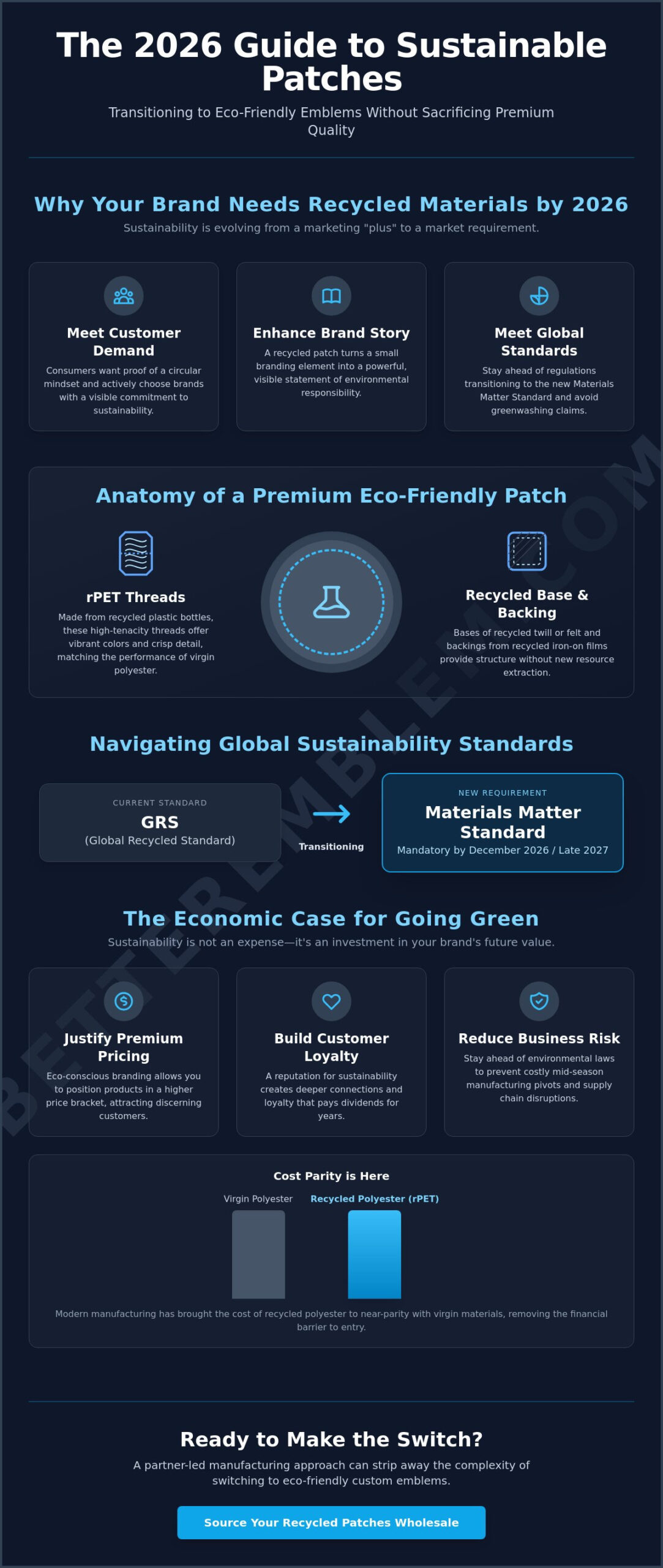
ผมพูดคุยกับผู้จัดการแบรนด์ทุกวัน ซึ่งพวกเขากังวลเรื่องการปฏิบัติตามกฎระเบียบใหม่ ในปี 2026 สถานการณ์กำลังเปลี่ยนแปลงอย่างรวดเร็ว เรากำลังเห็นการเปลี่ยนผ่านจาก Global Recycled Standard (GRS) ไปสู่ Materials Matter Standard ใหม่ ซึ่งจะมีผลบังคับใช้อย่างเป็นทางการในช่วงปลายปี 2027 การเลิกใช้โพลีเอสเตอร์บริสุทธิ์ตั้งแต่ตอนนี้จะช่วยให้คุณบรรลุเป้าหมาย ESG ของบริษัทได้เร็วขึ้น นอกจากนี้ยังช่วยปกป้องแบรนด์ของคุณจากข้อกล่าวหาเรื่อง “greenwashing” ที่มักเกิดขึ้นตามมาจากการอ้างอิงด้านสิ่งแวดล้อมที่ไม่ชัดเจน ผมมีหน้าที่ช่วยคุณนำทางผ่านกระบวนการรับรองมาตรฐานเหล่านี้ เพื่อให้ตราสัญลักษณ์ของคุณพร้อมสำหรับตลาดโลก.
เหตุผลทางเศรษฐกิจในการใช้ชิ้นส่วนรีไซเคิลแบบขายส่ง
คุณอาจกังวลว่าการเปลี่ยนมาใช้วัสดุที่เป็นมิตรต่อสิ่งแวดล้อมจะส่งผลให้กำไรของคุณลดลง แต่ความเป็นจริงทางเศรษฐกิจได้เปลี่ยนแปลงไปแล้ว การสั่งซื้อวัสดุที่ยั่งยืนในปริมาณมากนั้นมีความคุ้มค่าทางต้นทุนมากกว่าเมื่อสองปีที่แล้ว รายงานในอุตสาหกรรมหลายฉบับชี้ให้เห็นว่า โพลีเอสเตอร์รีไซเคิลมีต้นทุนการผลิตที่ใกล้เคียงกับวัสดุใหม่แล้ว นี่คือเหตุผลที่การเปลี่ยนมาใช้วัสดุดังกล่าวมีประโยชน์ต่อผลกำไรของคุณ:
- เหตุผลที่ราคาพรีเมียมมีความเหมาะสม: การสร้างภาพลักษณ์แบรนด์ที่เป็นมิตรต่อสิ่งแวดล้อมช่วยให้คุณสามารถวางตำแหน่งผลิตภัณฑ์ของคุณในระดับราคาที่สูงขึ้นได้.
- มูลค่าในระยะยาว: การสร้างชื่อเสียงด้านความยั่งยืนจะช่วยสร้างความภักดีของลูกค้าที่ลึกซึ้งยิ่งขึ้น และคงอยู่ได้นานหลายปี.
- ลดความเสี่ยง: การปฏิบัติตามกฎหมายด้านสิ่งแวดล้อมอย่างทันท่วงทีจะช่วยป้องกันการปรับเปลี่ยนกระบวนการผลิตในช่วงกลางฤดูกาล ซึ่งอาจก่อให้เกิดค่าใช้จ่ายสูง.
ผมเชื่อว่าแบรนด์ที่ประสบความสำเร็จมากที่สุดในปี 2026 คือแบรนด์ที่มองความยั่งยืนเป็นการลงทุนในคุณภาพ ไม่ใช่ค่าใช้จ่ายเพิ่มเติม เมื่อคุณสั่งซื้อสัญลักษณ์ในปริมาณขายส่ง คุณจะได้รับประโยชน์จากวัสดุคุณภาพระดับมืออาชีพ ในราคาที่ช่วยให้ธุรกิจของคุณดำเนินไปได้อย่างมั่นคง และทำให้คุณรู้สึกสบายใจ.
โครงสร้างของแพตช์ที่เป็นมิตรต่อสิ่งแวดล้อม: เส้นด้ายและชั้นรอง
ผมเชื่อว่าแพทช์ที่ดีคือผลรวมของทุกส่วนประกอบ เมื่อคุณกำลังหาซื้อแพทช์ที่ทำจากวัสดุรีไซเคิลแบบขายส่ง คุณต้องดูให้ลึกกว่าผิวเผิน เพื่อมั่นใจว่าทุกส่วนประกอบสอดคล้องกับเป้าหมายด้านสิ่งแวดล้อมของแบรนด์คุณ แพทช์ไม่ใช่เพียงชิ้นผ้าธรรมดา แต่เป็นการประกอบที่ซับซ้อนของเส้นด้าย วัสดุฐาน และสารยึดติด หากแม้แต่ส่วนประกอบเพียงส่วนเดียวก็พึ่งพาพลาสติกใหม่หรือสารเคมีที่เป็นพิษ คำกล่าวอ้างด้านความยั่งยืนของคุณก็จะสูญเสียความน่าเชื่อถือ ผมต้องการอธิบายอย่างละเอียดว่าอะไรคือส่วนประกอบของตราสัญลักษณ์ระดับพรีเมียมที่เป็นมิตรต่อสิ่งแวดล้อม เพื่อให้คุณรู้ว่าจะต้องมองหาอะไรในพันธมิตรผู้ผลิต.
พื้นฐานของการออกแบบที่ยั่งยืนทุกชนิดเริ่มต้นจากวัสดุพื้นฐาน โดยทั่วไปเราใช้ผ้าทวิลหรือผ้าเฟลต์ที่รีไซเคิลจากขยะสิ่งทอหลังการบริโภค วัสดุพื้นฐานเหล่านี้ให้ความแข็งแรงทางโครงสร้างเทียบเท่ากับผ้าแบบดั้งเดิม แต่ไม่ต้องแลกมาด้วยต้นทุนทางสิ่งแวดล้อมจากการสกัดทรัพยากรใหม่ เพื่อให้กระบวนการผลิตเป็นมิตรต่อสิ่งแวดล้อม ผมแนะนำให้ค้นหาผู้ผลิตที่ใช้สีย้อมแบบน้ำและสารเคมีที่ไม่เป็นพิษในการผลิตแพทช์วัสดุรีไซเคิลแบบขายส่ง การเลือกใช้วัสดุเหล่านี้จะช่วยให้สีสันสดใสของโลโก้คุณไม่ก่อให้เกิดผลกระทบต่อแหล่งน้ำในท้องถิ่นระหว่างกระบวนการย้อมสี.
ส่วน “ที่มองไม่เห็น” ของแพทช์มักเป็นความท้าทายที่ใหญ่ที่สุด แพทช์มาตรฐานหลายชนิดใช้ชั้นหลังทำจากพลาสติกหนักหรือกาวเคมีที่รุนแรง ซึ่งยากต่อการรีไซเคิล เรากำลังเห็นการเปลี่ยนทิศทางอย่างใหญ่หลวงสู่การใช้ฟิล์มรีไซเคิลแบบรีดติดและกาวที่ย่อยสลายได้ทางชีวภาพในปี 2026 สิ่งนี้กำลังกลายเป็นมากกว่าแค่เทรนด์ ในบางรัฐ การทิ้งผ้าลงในหลุมฝังกลบถูกห้ามแล้ว การใช้ส่วนประกอบที่รีไซเคิลอย่างเต็มตัวจะช่วยให้เสื้อผ้าของคุณเป็นไปตามกฎระเบียบด้านขยะที่กำลังพัฒนาอย่างต่อเนื่อง หากคุณพร้อมที่จะดูว่าวัสดุเทคโนโลยีสูงเหล่านี้ดูเป็นอย่างไรในการใช้งานจริง คุณสามารถ ค้นพบตัวเลือกแพทช์ที่ออกแบบตามความต้องการของคุณ เพื่อหาตัวเลือกที่เหมาะสมที่สุดสำหรับโครงการต่อไปของคุณ.
เส้นด้าย rPET: ประสิทธิภาพสูง ผลกระทบต่อสิ่งแวดล้อมต่ำ
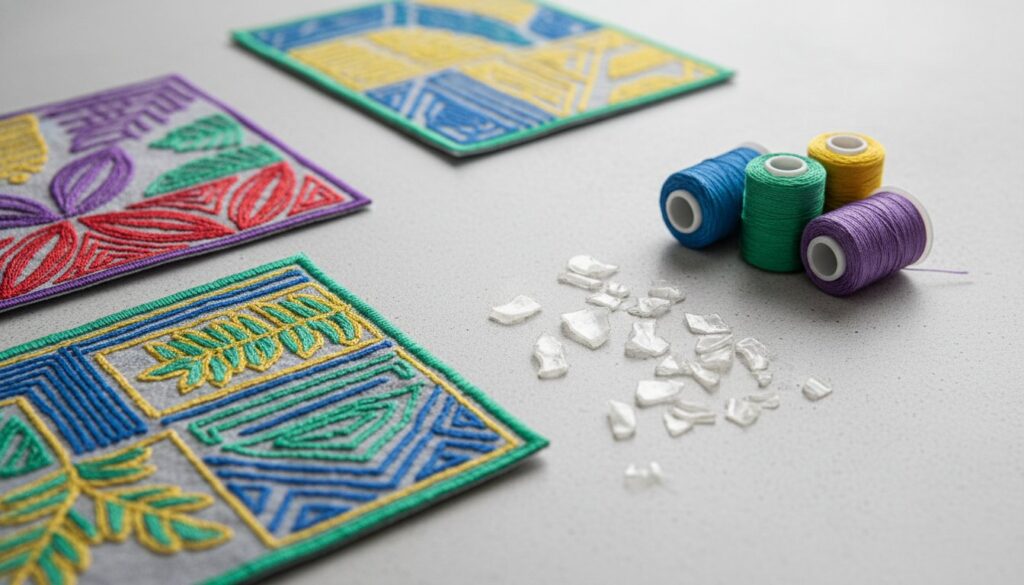
rPET คือตัวย่อของ Recycled Polyethylene Terephthalate (โพลีเอทิลีน เทเรฟทาเลต ที่ผ่านกระบวนการรีไซเคิล) ฟังดูอาจดูเป็นคำทางเทคนิค แต่แนวคิดนั้นเรียบง่าย เราเก็บขวดพลาสติกที่ถูกทิ้งแล้ว บดให้เป็นชิ้นเล็ก ๆ แล้วหลอมให้กลายเป็นด้ายปักที่มีความทนทานสูง ผมพบว่าเส้นใยรีไซเคิลเหล่านี้มีคุณสมบัติเทียบเท่ากับโพลีเอสเตอร์บริสุทธิ์ในทุกด้าน พวกมันมีความแข็งแรงในการดึงที่น่าทึ่ง ซึ่งเป็นสิ่งสำคัญสำหรับเครื่องปักความเร็วสูง ไม่ขาดง่าย และไม่ยืดจนเสียรูป นอกจากนี้ เรายังสามารถรักษาความแม่นยำของสีตามมาตรฐาน Pantone ด้วย rPET ได้ ซึ่งช่วยให้สีของแบรนด์คุณคงที่และดูมืออาชีพในทุกล็อตการผลิต.
ส่วนหลังและส่วนขอบที่ยั่งยืน
ขอบของแพทช์ของคุณควรได้รับความสนใจไม่แพ้ส่วนกลาง คุณสามารถเลือกระหว่างขอบแบบเมโรว์รีไซเคิลแบบคลาสสิก หรือขอบที่ตัดด้วยเลเซอร์ให้ดูเรียบเนียน ทั้งสองตัวเลือกนี้สามารถผลิตได้โดยใช้เนื้อวัสดุรีไซเคิล 100% การเลือกวิธีการติดที่เหมาะสมเป็นสิ่งสำคัญยิ่ง การเปลี่ยนมาใช้กาวติดแบบความร้อนที่เป็นมิตรต่อสิ่งแวดล้อมและกาว “ลอกแล้วติด” ได้สร้างการเปลี่ยนแปลงครั้งสำคัญ กาวสมัยใหม่เหล่านี้ให้การยึดติดถาวรที่ทนต่อการซักล้างแบบอุตสาหกรรมได้ พร้อมทั้งปราศจากสารฟทาเลตที่พบในวิธีการผลิตแบบเก่า ทุกชั้นของแพทช์ของคุณควรเล่าเรื่องราวเดียวกันเกี่ยวกับคุณภาพและความรับผิดชอบ.
แผ่นปะจากวัสดุรีไซเคิลเทียบกับแผ่นปะแบบดั้งเดิม: การเปรียบเทียบคุณภาพและความทนทาน
หนึ่งในคำถามแรกๆ ที่ผมได้รับจากเจ้าของแบรนด์คือว่าวัสดุรีไซเคิลจะทนต่อแรงกดได้หรือไม่ มีความกังวลทั่วไปว่า การเปลี่ยนมาใช้ทางเลือกที่เป็นมิตรต่อสิ่งแวดล้อม หมายถึงการต้องยอมรับรูปลักษณ์ที่ “ไม่เรียบเนียน” หรือ “ดูถูก” จากประสบการณ์หลายปี ผมสามารถยืนยันได้ว่านี่เป็นความเข้าใจผิด เมื่อคุณซื้อแพทช์จากวัสดุรีไซเคิลแบบขายส่ง คุณจะได้รับผลิตภัณฑ์ที่มักไม่สามารถแยกแยะได้จากโพลีเอสเตอร์บริสุทธิ์ ที่จริงแล้ว rPET (โพลีเอสเตอร์รีไซเคิล) ได้รับการออกแบบมาโดยเฉพาะเพื่อให้ตรงกับมาตรฐานอุตสาหกรรมเดียวกันกับด้ายแบบดั้งเดิม เรากำลังเห็นการเปลี่ยนแปลงครั้งใหญ่ในทิศทางนี้เพราะ อัตราการรีไซเคิลสิ่งทอในสหรัฐอเมริกา ได้กลายเป็นจุดสนใจหลักสำหรับแบรนด์ต่าง ๆ ที่ต้องการแสดงให้เห็นถึงความมุ่งมั่นด้านสิ่งแวดล้อม โดยไม่สูญเสียความโดดเด่นของตนเอง.
มาทำลายความเชื่อผิดๆ เกี่ยวกับการหลุดลุ่ยกันเถอะ หลายคนกังวลว่าเส้นใยรีไซเคิลจะมีความแข็งแรงน้อยกว่าหรือมีแนวโน้มเกิดขุย แต่สิ่งนี้ไม่เป็นความจริงสำหรับ rPET ระดับมืออาชีพ เราได้นำเส้นด้ายเหล่านี้ผ่านการทดสอบความแข็งแรงในการดึงอย่างเข้มงวด เพื่อรับรองว่าสามารถทนต่อแรงดึงความเร็วสูงจากเครื่องปักของเราได้ โดยไม่ขาด มันไม่ยืดจนเสียรูปทรง นอกจากนี้ยังดูดซับสีได้ดีอย่างน่าทึ่ง คุณจะได้รับคุณสมบัติต้านทานรังสี UV และความคงทนต่อการซักที่เทียบเท่ากับแพทช์คุณภาพสูงทั่วไป สีจะไม่เลอะเมื่อซัก และจะไม่ซีดจางแม้หลังจากถูกแสงแดดส่องเป็นเวลาหลายสัปดาห์บนหมวกหรือแจ็กเก็ต.
ลูกค้าของคุณก็ไม่สามารถสังเกตเห็นความแตกต่างในเนื้อผ้าได้เช่นกัน ความรู้สึกเมื่อสัมผัสผ้าทวิลหรือผ้าเฟลต์ที่ทำจากวัสดุรีไซเคิลนั้นเหมือนกับวัสดุใหม่ทุกประการ คุณจะได้ผลลัพธ์ที่คมชัดและดูมืออาชีพ ซึ่งช่วยทำให้แบรนด์ดูมีระดับสูง ผมพบว่าสิ่งเดียวที่เปลี่ยนแปลงคือเรื่องราวที่คุณสามารถเล่าเกี่ยวกับแหล่งที่มาของวัตถุดิบได้ คุณกำลังส่งมอบผลิตภัณฑ์ที่ทนทานและสวยงาม ซึ่งยังช่วยลดปริมาณขยะพลาสติกในมหาสมุทรและพื้นที่ฝังกลบได้อีกด้วย.
ความทนทานในสภาพสุดขั้ว
ผมได้เห็นแพทช์เหล่านี้ใช้งานได้ดีกับทุกสิ่ง ตั้งแต่แจ็กเก็ตทำงานหนักไปจนถึงอุปกรณ์กลางแจ้งประสิทธิภาพสูง พวกมันทนต่อกระบวนการซักล้างแบบอุตสาหกรรมและอุณหภูมิสูงจากเครื่องกดความร้อนเชิงพาณิชย์ เพื่อความทนทานสูงสุด ผมมักแนะนำให้ใช้ผ้าทวิลที่มีเนื้อผ้าแน่น ซึ่งให้ฐานที่มั่นคง ทำให้ดีไซน์ดูคมชัดตลอดอายุการใช้งานของเสื้อผ้า ไม่ว่าอุปกรณ์ของคุณจะถูกนำไปใช้บนเส้นทางเดินป่าหรือในไซต์ก่อสร้าง วัสดุเหล่านี้ถูกออกแบบมาเพื่อคงทนไม่หลุดลอก.
ความแม่นยำทางภาพและรายละเอียดที่ละเอียดอ่อน
ความแม่นยำทางภาพคือจุดที่คนส่วนใหญ่คาดว่าจะมีการลดลง แต่ในความเป็นจริง นี่คือจุดที่ด้ายรีไซเคิลแสดงศักยภาพได้อย่างโดดเด่น คุณยังสามารถสร้างเส้นที่ละเอียดมากและข้อความขนาดเล็กได้อย่างชัดเจน หากการออกแบบของคุณมีรายละเอียดที่ซับซ้อนมาก, แพทช์ทอ มักเป็นตัวเลือกที่ดีที่สุดสำหรับงานออกแบบจากวัสดุรีไซเคิล เนื่องจากใช้ด้ายที่บางกว่าเพื่อจับทุกรูปทรงโค้งได้อย่างละเอียด แม้แต่ในการปัก 3D เราก็ใช้โฟมรีไซเคิลและด้าย rPET เพื่อให้ได้เอฟเฟกต์ “ป๊อป” ที่เป็นเอกลักษณ์ โดยไม่ต้องกังวลต่อผลกระทบต่อสิ่งแวดล้อม คุณจะได้รูปลักษณ์ที่สะอาดตาและโดดเด่นด้วยเหตุผลที่ถูกต้องทุกประการ.
แผนงานของคุณในการจัดหาแพทช์ที่ยั่งยืนในระดับขายส่ง
การเปลี่ยนผ่านจากโครงการออกแบบขนาดเล็กสู่การผลิตในปริมาณใหญ่ มักเป็นจุดที่ความเครียดเริ่มเกิดขึ้น ผมได้ใช้เวลาหลายปีในการปรับปรุงกระบวนการ OEM เพื่อขจัดความไม่แน่นอนออกจากกระบวนการ เมื่อคุณพร้อมที่จะสั่งซื้อแพทช์จากวัสดุรีไซเคิลแบบขายส่ง คุณจำเป็นต้องมีพันธมิตรที่เข้าใจว่า การผลิตในปริมาณใหญ่ต้องการความแม่นยำ ไม่ใช่แค่การผลิตตัวอย่างที่ดีเพียงชิ้นเดียว แต่คือการผลิตสัญลักษณ์ที่สมบูรณ์แบบถึง 10,000 ชิ้น ซึ่งส่งถึงมือคุณตรงเวลาและอยู่ในงบประมาณที่กำหนด ผมได้สร้างแผนงานนี้ขึ้นเพื่อรับประกันว่าการเปลี่ยนผ่านสู่การสร้างแบรนด์ที่ยั่งยืนของคุณจะดำเนินไปอย่างราบรื่นที่สุดเท่าที่จะเป็นไปได้.
กระบวนการของผมประกอบด้วย 5 ขั้นตอนที่ชัดเจน เพื่อนำแบบออกแบบของคุณจากหน้าจอไปยังคลังสินค้าของคุณ ขั้นแรก ผมจะแปลงงานออกแบบของคุณเป็นรูปแบบดิจิทัลโดยเฉพาะสำหรับจำนวนเส้นด้าย rPET เพื่อป้องกันการเกิดรอยย่น ขั้นที่สอง เราจะเลือกวัสดุตามวัตถุประสงค์การใช้งานของเสื้อผ้าคุณ ไม่ว่าจะเป็นเสื้อผ้าทำงานที่ทนทานหรือแฟชั่นระดับสูง ขั้นที่สาม ผมจะยืนยันเสมอว่าต้องมีการอนุมัติตัวอย่างจริงสำหรับคำสั่งซื้อจำนวนมาก คุณจำเป็นต้องสัมผัสเนื้อผ้าและตรวจสอบสีด้วยตาตนเองก่อนที่เราจะเริ่มการผลิตในปริมาณมากที่โรงงานของเราในเอเชียหรืออเมริกาเหนือ สุดท้าย เราจัดการด้านโลจิสติกส์ระดับโลกเพื่อให้คุณได้รับข้อมูลกำหนดเวลาการส่งสินค้าที่ชัดเจนตั้งแต่ต้นจนจบ.
ผมเชื่อว่าอุปสรรคหลักในการเข้าสู่ตลาดสำหรับแบรนด์ส่วนใหญ่คือความซับซ้อนที่ผู้คนมักเข้าใจผิดเกี่ยวกับกระบวนการผลิต นั่นคือเหตุผลที่ผมทำหน้าที่เป็นผู้ประสานงานผู้เชี่ยวชาญ เพื่อจัดการกับอุปสรรคทางเทคนิคให้คุณได้มุ่งเน้นไปที่วิสัยทัศน์สร้างสรรค์ของคุณ หากคุณพร้อมที่จะก้าวไปข้างหน้า คุณสามารถ เริ่มโครงการขายส่งของคุณ มาลองกับเราวันนี้ และดูว่ากระบวนการนี้ง่ายเพียงใด.
การออกแบบสำหรับวัสดุรีไซเคิล
ภาพเวกเตอร์ที่ชัดเจนเป็นเคล็ดลับสำคัญในการสร้างแพทช์รีไซเคิลที่ยอดเยี่ยม ผมแนะนำให้ใช้เส้นที่หนาและหลีกเลี่ยงองค์ประกอบที่บางเกินไป ซึ่งอาจถูกซ่อนอยู่ในเนื้อผ้า หากคุณออกแบบที่มีสีไล่ระดับที่ซับซ้อนหรือรายละเอียดแบบภาพถ่าย คุณควรพิจารณา การพิมพ์ถ่ายเทความร้อน. วิธีนี้ช่วยให้ได้รายละเอียดที่น่าทึ่ง โดยยังคงใช้ผ้าฐานที่รีไซเคิลได้ โปรดระบุข้อกำหนดเฉพาะเกี่ยวกับวัสดุรีไซเคิลในเทคแพ็กของคุณเสมอ เพื่อหลีกเลี่ยงความสับสนในช่วงขั้นตอนการตัวอย่าง.
การจัดการกับปริมาณสั่งซื้อขั้นต่ำและระยะเวลาการผลิต
การจัดหาสินค้าในระดับขายส่งหมายถึงการหาจุดสมดุลระหว่างความเร็วกับความยั่งยืน ผมเสนอโมเดลราคาแบบขั้นบันไดสำหรับการจัดจำหน่ายระดับนานาชาติในปริมาณใหญ่ ซึ่งทำให้ต้นทุนต่อหน่วยของวัสดุที่เป็นมิตรต่อสิ่งแวดล้อมสามารถจัดการได้ง่ายขึ้นมาก แม้ว่าการผลิตอย่างยั่งยืนอาจต้องใช้เวลาเพิ่มเติมอีกไม่กี่วันในการจัดหาวัสดุ แต่ผมจะพยายามรักษาเวลาการส่งมอบให้รวดเร็วและน่าเชื่อถือ คุณสามารถหาข้อมูลเพิ่มเติมเกี่ยวกับสิ่งที่ควรคาดหวังระหว่างกระบวนการนี้ได้ใน คู่มือฉบับสมบูรณ์สำหรับการสั่งทำแพทช์ตามแบบที่คุณต้องการ.
วิธีที่เราผลิตตราสัญลักษณ์คุณภาพสูงและยั่งยืนที่ Better Emblem
ผมได้เห็นอุตสาหกรรมสิ่งทอเปลี่ยนแปลงไปมากนับตั้งแต่เราเริ่มดำเนินธุรกิจในปี 1978 มาจนถึงปัจจุบัน ตลอดระยะเวลากว่า 45 ปี ผมและทีมงานของผมได้มุ่งเน้นไปที่สิ่งเดียว คือการผลิตตราสัญลักษณ์คุณภาพสูง โดยไม่ต้องเผชิญกับปัญหาในการผลิตที่มักเกิดขึ้น วันนี้ สิ่งนี้หมายความว่าเราช่วยคุณหาซื้อแพทช์ที่ทำจากวัสดุรีไซเคิลแบบขายส่ง ซึ่งมีคุณภาพดีไม่แพ้แพทช์แบบดั้งเดิมที่เราผลิตมาตลอดหลายทศวรรษ เราไม่ใช่ผู้ขายที่ไม่มีตัวตน แต่เป็นพันธมิตรของคุณ เป้าหมายของผมคือการลดความซับซ้อนลง เพื่อให้คุณสามารถมุ่งเน้นไปที่แบรนด์ของคุณได้ ในขณะที่เราจัดการกับรายละเอียดทางเทคนิคทั้งหมด.
เราได้นำวัสดุที่ยั่งยืนมาใช้ในออกแบบที่ซับซ้อนที่สุดของเราได้อย่างสำเร็จ ไม่ว่าคุณจะต้องการด้ายรีไซเคิลสำหรับการปักลาย 3D หรือฐานที่คำนึงถึงสิ่งแวดล้อมสำหรับ แพทช์สั่งทำพิเศษเฉพาะ ไม่ว่าจะเป็นวัสดุอย่างโลหะแท่งหรือ PVC เรามีความเชี่ยวชาญที่จะทำให้มันเป็นจริงได้ คุณจะสามารถติดต่อกับทีมออกแบบของเราโดยตรงตลอดทั้งกระบวนการ ซึ่งช่วยรับประกันว่าวิสัยทัศน์ของคุณจะไม่ถูกบิดเบือน และทุกฝีเข็มจะตรงตามมาตรฐานของคุณ เราเชื่อว่าการลงทุนที่มีคุณภาพสูงไม่ควรมาพร้อมกับอุปสรรคที่ซ่อนเร้นหรือความเครียด.
ความสามารถในการผลิตระดับโลกของเรา
ผมดูแลคุณภาพการจัดหาเส้นด้ายรีไซเคิลด้วยตัวเอง เพราะผมรู้ดีว่าชื่อเสียงของแบรนด์คุณกำลังถูกเดิมพัน เราไม่ใช้ทางลัด เราใช้ประโยชน์จากโรงงานผลิตของเราทั่วเอเชียและอเมริกาเหนือ เพื่อรับประกันว่าคำสั่งซื้อของคุณจะถึงมืออย่างรวดเร็วและมีประสิทธิภาพ วิธีการทำงานในสองภูมิภาคนี้ช่วยให้เรารักษาเวลาการผลิตที่รวดเร็ว พร้อมทั้งควบคุมค่าใช้จ่ายให้อยู่ในระดับที่คุณสามารถจัดการได้ ความมุ่งมั่นของเราในการผลิตอย่างมีจริยธรรม หมายความว่าเรารักษาห่วงโซ่อุปทานที่โปร่งใสในทุกขั้นตอน นี่ไม่ใช่แค่เรื่องผลิตภัณฑ์เท่านั้น แต่เป็นเรื่องของกระบวนการที่เชื่อถือได้ ซึ่งท่านสามารถไว้วางใจว่าจะส่งมอบผลลัพธ์ที่ตรงตามความคาดหวังทุกครั้ง.
ร่วมมือกันเพื่ออนาคตของแบรนด์คุณ
เราไม่เพียงแต่ขายแพทช์เท่านั้น แต่ยังช่วยแก้ปัญหาด้านการสร้างแบรนด์และความยั่งยืนด้วย ผมต้องการให้แน่ใจว่าการเปลี่ยนมาใช้วัสดุที่เป็นมิตรต่อสิ่งแวดล้อมของคุณจะเป็นส่วนที่ง่ายที่สุดของวงจรการผลิตของคุณ แบรนด์ที่มีชื่อเสียงระดับโลกหลายแห่งได้ไว้วางใจเราตั้งแต่ปี 1978 สำหรับการออกแบบที่ซับซ้อนที่สุดของพวกเขา และเรานำระดับความใส่ใจเดียวกันนี้มาใช้กับทุกโครงการใหม่ เราให้ความสำคัญกับเวลาของคุณเหนือสิ่งอื่นใด นั่นคือเหตุผลที่การสื่อสารของเรามักรวดเร็วและมุ่งเน้นไปที่ความสำเร็จของคุณ.
หากคุณพร้อมที่จะดูว่าดีไซน์ของคุณจะดูเป็นอย่างไรเมื่อใช้วัสดุคุณภาพสูงและเป็นมิตรต่อสิ่งแวดล้อม การเริ่มต้นนั้นง่ายมาก คุณสามารถขอใบเสนอราคาได้ทันทีวันนี้โดยไม่มีข้อผูกมัด และพูดคุยโดยตรงกับผู้เชี่ยวชาญของเราเกี่ยวกับความต้องการเฉพาะของคุณ เราจะช่วยคุณเลือกวัสดุที่เหมาะสมและวิธีการประยุกต์ใช้ที่ดีที่สุดสำหรับเสื้อผ้าของคุณ เข้าร่วมชุมชนผู้เชี่ยวชาญที่เลือกความน่าเชื่อถือและคุณภาพโดยไม่มีความยุ่งยาก มาสร้างอนาคตที่ยั่งยืนให้กับแบรนด์ของคุณด้วยกันเถอะ.
พร้อมที่จะเตรียมแบรนด์ของคุณให้พร้อมรับมือกับอนาคตแล้วหรือยัง?
ผมได้แสดงให้ท่านเห็นแล้วว่า การเปลี่ยนผ่านสู่การสร้างแบรนด์ที่ยั่งยืนนั้นไม่ใช่เพียงแค่อีกหนึ่งเทรนด์ แต่เป็นการเตรียมพร้อมเพื่อปฏิบัติตามมาตรฐานปี 2026 ด้วยความมั่นใจอย่างเต็มที่ ท่านไม่จำเป็นต้องเสียสละรายละเอียดที่ซับซ้อนหรือความทนทานที่การออกแบบของท่านต้องการ เมื่อเลือกใช้ด้าย rPET ที่ได้รับการรับรองด้านสิ่งแวดล้อม เราได้สำรวจแล้วว่าวัสดุเหล่านี้สามารถทนต่อการใช้งานในอุตสาหกรรมได้อย่างไร และให้ผลลัพธ์การเสร็จสิ้นระดับสูงที่ลูกค้าของคุณคาดหวังไว้ ชัดเจนว่าการเปลี่ยนผ่านที่มองไม่เห็นสู่ผ้าจากวัสดุรีไซเคิลสามารถเป็นไปได้อย่างราบรื่นและประสบความสำเร็จ.
การขยายการผลิตของคุณไม่ควรเป็นแหล่งความเครียดหรืออุปสรรคที่ซ่อนอยู่ การเลือกใช้ชิ้นส่วนวัสดุรีไซเคิลแบบขายส่ง คือการลงทุนในอนาคตแบบเศรษฐกิจหมุนเวียน พร้อมทั้งรักษาภาพลักษณ์ระดับพรีเมียมที่เป็นเอกลักษณ์ของคุณ ทีมของผมและผมได้พัฒนาและปรับปรุงกระบวนการผลิตมาตั้งแต่ปี 1978 และเราใช้โรงงาน OEM ทั่วโลกของเราเพื่อรับประกันว่าทุกล็อตสินค้าจะสมบูรณ์แบบ เราอยู่ที่นี่เพื่อขจัดความซับซ้อนของกระบวนการ เพื่อให้คุณสามารถมุ่งเน้นไปที่วิสัยทัศน์สร้างสรรค์ของคุณได้.
ขอใบเสนอราคาตามความต้องการสำหรับแพทช์รีไซเคิลขายส่งของคุณวันนี้เลย และมาเริ่มโครงการต่อไปของคุณกันเถอะ ผมรู้สึกตื่นเต้นที่จะได้ช่วยคุณสร้างแบรนด์ที่ไม่เพียงแต่ดูดี แต่ยังช่วยโลกได้ดียิ่งขึ้นอีกด้วย.
คำถามที่พบบ่อย
“ชิ้นผ้าจากวัสดุรีไซเคิล” ทำจากอะไรกันแน่?
ชิ้นผ้าปะที่ทำจากวัสดุรีไซเคิลนั้นทำขึ้นเป็นหลักจากเส้นด้าย rPET และฐานผ้าทวิลหรือผ้าเฟลต์ที่รีไซเคิล เราเปลี่ยนขวดพลาสติกที่ถูกทิ้งให้เป็นด้ายปักที่มีความทนทานสูง และใช้เศษผ้าจากผู้บริโภคเป็นฐานของผลิตภัณฑ์ นอกจากนี้ เรายังรับประกันว่าใช้สีย้อมแบบน้ำและสารเคมีที่ไม่เป็นพิษในกระบวนการผลิต การผสมผสานนี้ทำให้คุณได้รับผลิตภัณฑ์ที่ยั่งยืนอย่างสมบูรณ์ โดยไม่ลดทอนความแข็งแรงของโครงสร้างหรือภาพลักษณ์มืออาชีพของแบรนด์คุณ.
ผมสามารถได้รับส่วนลดราคาขายส่งสำหรับแพทช์ที่ทำจากวัสดุรีไซเคิล เมื่อเทียบกับแพทช์แบบมาตรฐานได้ไหมครับ?
ผมเสนอโมเดลราคาแบบขั้นบันไดที่ช่วยให้ ขายส่งชิ้นผ้าจากวัสดุรีไซเคิล ตัวเลือกที่คุ้มค่าสำหรับการผลิตในปริมาณมาก แม้ในอดีตจะมีความแตกต่างด้านราคาที่ค่อนข้างมาก แต่กระบวนการผลิตสมัยใหม่ได้ทำให้วัสดุที่ยั่งยืนมีราคาใกล้เคียงกับโพลีเอสเตอร์ใหม่มากขึ้น การสั่งซื้อในปริมาณมากทำให้ผมสามารถส่งต่อความประหยัดนี้ให้กับคุณได้ คุณจึงได้รับการลงทุนคุณภาพสูงที่เหมาะกับงบประมาณของคุณ พร้อมทั้งบรรลุเป้าหมายด้านสิ่งแวดล้อมของแบรนด์คุณได้โดยไม่มีอุปสรรคที่ซ่อนเร้น.
ด้ายรีไซเคิลมีความคงสีเท่ากับด้ายโพลีเอสเตอร์ใหม่หรือไม่?
เส้นด้ายรีไซเคิลมีความคงสีไม่แพ้เส้นด้ายโพลีเอสเตอร์ใหม่ เราใช้เส้นใย rPET คุณภาพสูงที่ได้รับการออกแบบมาโดยเฉพาะเพื่อต้านทานการซีดจางจากแสง UV และการหลุดสีระหว่างการซัก ไม่ว่าอุปกรณ์ของคุณจะถูกใช้ในสภาพแวดล้อมกลางแจ้งที่มีความเข้มข้นสูง หรือผ่านกระบวนการซักแบบอุตสาหกรรม สีสันยังคงสดใสและคมชัด คุณไม่ต้องกังวลว่าโลโก้ของคุณจะสูญเสียความสดใสไปตามกาลเวลา เพียงเพราะคุณเลือกใช้วัสดุที่ยั่งยืน.
ปริมาณการสั่งซื้อขั้นต่ำ (MOQ) สำหรับการขายส่งแพทช์รีไซเคิลคือเท่าไร?
ปริมาณการสั่งซื้อขั้นต่ำมาตรฐานของฉันสำหรับแพตช์รีไซเคิลแบบขายส่ง โดยทั่วไปเริ่มต้นที่ 50 ชิ้นต่อแบบ ผมได้กำหนด MOQ นี้ให้เหมาะสมกับแบรนด์ที่กำลังเติบโต โดยยังคงรักษาประสิทธิภาพในการผลิตแบบมืออาชีพไว้ได้ ข้อกำหนดขั้นต่ำนี้ช่วยให้คุณทดลองออกแบบผลิตภัณฑ์ใหม่ที่ยั่งยืนได้โดยไม่ต้องลงทุนล่วงหน้าจำนวนมาก สำหรับการออกแบบที่ซับซ้อนมากหรือวัสดุรองหลังแบบพิเศษ ผมจะอธิบายรายละเอียดให้คุณทราบในระหว่างการปรึกษาครั้งแรก.
คุณสามารถใช้ด้ายรีไซเคิลเพื่อสร้างสี Pantone ที่เฉพาะเจาะจงของแบรนด์ผมได้หรือไม่?
ผมสามารถจับคู่สี Pantone เฉพาะของแบรนด์คุณได้อย่างแม่นยำโดยใช้ด้ายรีไซเคิล เราบรรลุความแม่นยำของสีได้ด้วยการใช้งานคลังสีด้าย rPET ที่หลากหลาย ซึ่งสอดคล้องกับตารางสีมาตรฐานของอุตสาหกรรม ในขั้นตอนการแปลงเป็นดิจิทัล ผมจะทำงานร่วมกับคุณอย่างใกล้ชิด เพื่อรับประกันว่าผลิตภัณฑ์สุดท้ายจะตรงกับงานออกแบบดิจิทัลของคุณอย่างสมบูรณ์ ซึ่งช่วยให้อัตลักษณ์แบรนด์ของคุณคงความสม่ำเสมอในทุกชิ้นเสื้อผ้า ไม่ว่าจะใช้วัสดุใดก็ตาม.
การซักเสื้อผ้าที่มีชิ้นผ้าที่นำกลับมาใช้ใหม่ต้องดูแลเป็นพิเศษหรือไม่?
แพทช์ที่ทำจากวัสดุรีไซเคิลไม่ต้องการการดูแลพิเศษใด ๆ นอกเหนือจากที่คุณดูแลสัญลักษณ์คุณภาพสูงทั่วไป มันถูกออกแบบมาเพื่อทนต่อกระบวนการซักแบบอุตสาหกรรม การกดด้วยความร้อนสูง และการใช้งานในชีวิตประจำวัน คุณสามารถซักและอบแห้งเสื้อผ้าได้ตามปกติ โดยไม่ต้องกังวลว่าแพทช์จะหดตัว หลุดลุ่ย หรือสูญเสียความยึดติด ผมเน้นความทนทาน เพื่อให้แบรนด์ของคุณคงอยู่ได้นานเท่ากับเสื้อผ้าที่ติดแพทช์นั้น.
ทำอย่างไรถึงจะรู้ได้ว่าแผ่นปะนั้นทำจากวัสดุรีไซเคิลจริงหรือไม่?
ผมให้ความโปร่งใสอย่างเต็มที่โดยใช้วัสดุที่ผ่านการรับรองตามมาตรฐานสากล เช่น Global Recycled Standard (GRS) เมื่อก้าวสู่ปี 2027 ผมยังช่วยแบรนด์ต่างๆ ในการเปลี่ยนผ่านสู่มาตรฐาน Materials Matter Standard ใหม่ด้วย การรับรองเหล่านี้ยืนยันว่าผลิตภัณฑ์นั้นตรงตามข้อกำหนดเฉพาะเกี่ยวกับสัดส่วนวัสดุรีไซเคิล ผมสามารถจัดเตรียมเอกสารที่จำเป็นสำหรับห่วงโซ่อุปทานของคุณ เพื่อให้คุณสามารถนำเสนอข้อมูลที่เชื่อถือได้และตรวจสอบได้แก่ลูกค้าของคุณ.
แบบแพทช์แบบใดเหมาะที่สุดสำหรับวัสดุรีไซเคิล: แบบปักหรือแบบทอ?
สไตล์ที่ดีที่สุดขึ้นอยู่กับความซับซ้อนของออกแบบของคุณ แผ่นปักแบบทอเหมาะอย่างยิ่งสำหรับออกแบบที่มีเส้นละเอียดและข้อความขนาดเล็ก เนื่องจากใช้ด้ายที่บางกว่า หากคุณต้องการลุคคลาสสิกที่มีพื้นผิวสัมผัสและดูโดดเด่นเล็กน้อย การปักแบบ 3D คือตัวเลือกที่เหมาะสมที่สุด ผมสามารถทำทั้งสองสไตล์ได้โดยใช้วัสดุรีไซเคิล 100% ดังนั้นการเลือกของคุณควรขึ้นอยู่กับสไตล์ที่แบรนด์ของคุณต้องการ มากกว่าข้อจำกัดของวัสดุ.