
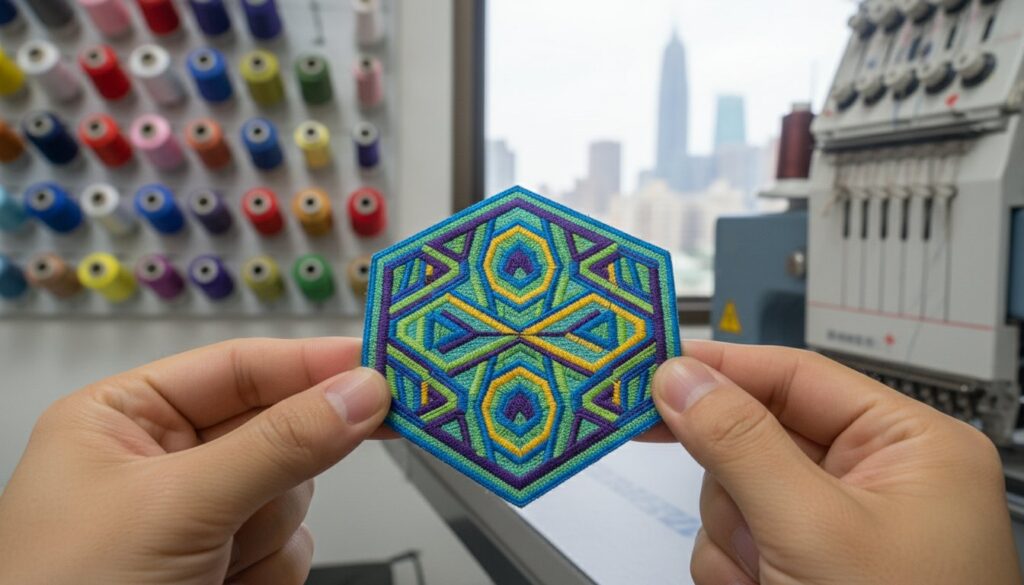
Just last Tuesday, a client told me a story that made my blood boil. She spent over 60 days in a back-and-forth email chain with a factory, only to receive a bulk order of 500 patches where the thread colors were completely off. The worst part? They refused to fix it without another setup fee.
I bet that sounds painfully familiar. Your brand deserves better than inconsistent quality, surprise fees, and communication black holes. Getting professional-grade patches shouldn’t feel like a high-stakes gamble. You need a partner you can trust.
That’s why I wrote this guide. I will show you exactly how to choose a custom embroidery patch manufacturer in 2026 that delivers retail-ready quality without the headache. We’ll walk through the simple steps for a seamless ordering process, from spotting red flags in a quote to guaranteeing your final product is perfect.
ประเด็นสำคัญ
- I’ll show you the difference between a simple vendor and a true manufacturing partner, and why that distinction is critical for your brand’s quality.
- Learn how to choose the right patch type-like woven for fine details or chenille for a retro vibe-to make sure your design truly represents your brand.
- I’ll give you a simple two-step framework for vetting any custom embroidery patch manufacturer, so you can check their quality and communication before you commit.
- Discover what ‘professional digitizing’ really means and why it’s the secret ingredient to turning your digital art into a flawless, retail-ready patch.
Why Your Choice of a Custom Embroidery Patch Manufacturer Defines Your Brand Quality
I’ve seen it happen more than 50 times. A brand invests in a premium, $150 hoodie, only to attach a flimsy, poorly stitched patch. Instantly, that high-end garment looks like a cheap knock-off. Your custom patch isn’t just an accessory; it’s the most tangible, touchable piece of your brand that your customer will interact with. It’s a final stamp of quality, and getting it wrong undermines everything else you’ve done right.
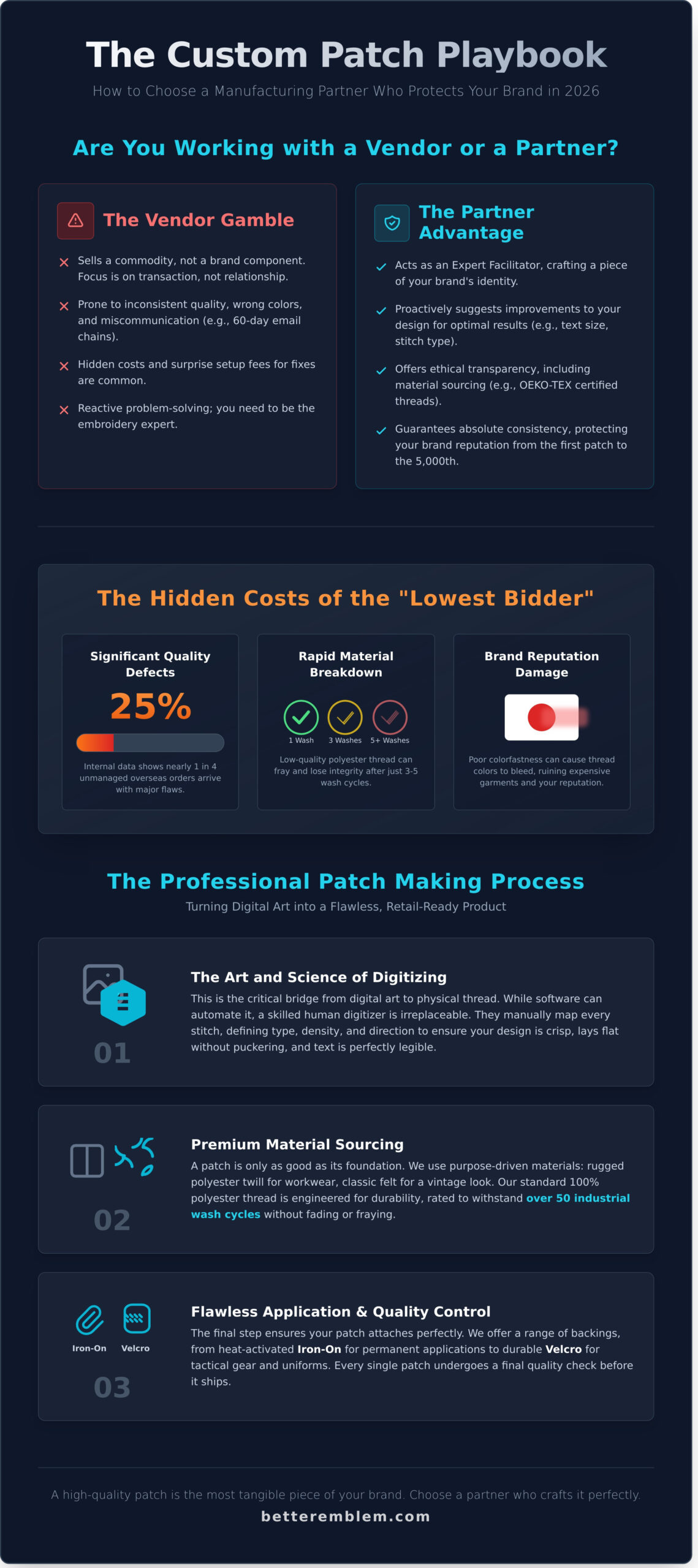
This is where you must distinguish between a simple vendor and a true manufacturing partner. A vendor sells you a commodity. A partner understands they are crafting a piece of your brand’s identity. Your choice of a custom embroidery patch manufacturer is one of the most critical supply chain decisions you’ll make, directly impacting how customers perceive your quality and attention to detail.
We’re calling 2026 the year of ‘Tactile Branding’. In a digital world, customers crave physical connection. They want texture and depth they can feel. A well-made embroidered patch delivers this experience perfectly. It adds a layer of perceived value that print-on-demand or simple screen printing can’t match. A quality manufacturer builds that value. A cheap one destroys it.
The Hidden Risks of the ‘Lowest Bidder’ Approach
Opting for the cheapest quote often costs you more in the long run. Low-quality polyester thread can start fraying after just 3-5 washes, and poor colorfastness means a red logo might bleed onto a white shirt, ruining your product and your reputation. ‘Factory direct’ sounds good, but our internal data from 2023 shows that nearly 25% of unmanaged overseas orders arrive with significant quality defects. A two-week shipping delay can derail a three-month marketing launch, costing you thousands in lost revenue.
What a Partnership Should Look Like
A real manufacturing partner doesn’t just take your order; they improve it. They act as an Expert Facilitator, ensuring your vision translates perfectly into thread. This partnership is built on a few core principles:
- Clear Communication: You shouldn’t need to be an embroidery expert. Your partner should look at your artwork and proactively suggest improvements, like adjusting text size for clarity or recommending a specific stitch type to make your logo pop.
- Ethical Transparency: A great partner is open about their process. They can provide documentation on their material sourcing (like OEKO-TEX certified threads) and confirm their commitment to ethical production standards. You get quality without compromise.
- Technical Guidance: The best manufacturers know precisely which technique fits your art. Their expertise is built on the long ประวัติของแผ่นปัก, allowing them to recommend a classic merrowed border for a clean look or a detailed hot-cut edge for a complex shape. This guidance is free and it’s what separates a partner from a vendor.
Ultimately, a professional custom embroidery patch manufacturer protects your brand’s reputation through absolute consistency. Every single patch, from the first to the five-thousandth, must be a perfect representation of your brand. That level of reliability is the foundation of a brand customers trust.
Inside the Factory: The Technical Edge of Professional Patch Making
You’ve got a great design. But turning that digital file into a physical patch that feels premium and lasts for years? That’s where the factory floor comes in. True high-capacity manufacturing isn’t just about owning a few hundred embroidery machines. It’s a complete system built for precision, speed, and quality control at every single step. We’ve fine-tuned this process to eliminate the guesswork, so you get a perfect product every time.
The journey from your screen to our machines is powered by a blend of technology and human expertise. What you see as a simple upload, we see as a blueprint for a complex production run. A professional custom embroidery patch manufacturer manages this entire workflow, ensuring that the technical details translate into a patch you’re proud to show off.
The Art and Science of Digitizing
Digitizing is the bridge between digital art and physical thread. This crucial step maps out every single stitch, telling the machine where to go, what type of stitch to use, and how dense it should be. While automated software exists, it can’t replace a skilled human digitizer. Our experts manually adjust stitch paths to prevent common problems like puckering, especially on thinner fabrics, ensuring your patch lays perfectly flat and text remains crisp and legible.
Material Sourcing and Durability
A patch is only as good as the materials it’s made from. That’s why we don’t cut corners. Your patch’s end-use determines the right foundation. Knowing your product’s application is a key part of your own development process; in fact, the official SBA business planning guide highlights market analysis as a cornerstone for success. We use that same logic for materials. For a work uniform, a rugged polyester twill is essential. For a vintage-style jacket, classic felt provides the right texture.
The thread itself is just as important. We use 100% polyester thread as our standard because it’s engineered for durability. It’s rated to withstand over 50 industrial wash cycles without fading or fraying, keeping your colors bright. Finally, the backing secures your patch to its final home. We make it simple:
- แบบรีดติด: Heat-activated adhesive for easy application on hats and jackets.
- เวลโคร: Hook-and-loop backing for tactical gear and uniforms that require interchangeable patches.
- เย็บติด: A clean, no-backing option for a permanent, stitched-down application.
It’s these technical details, from 3D puff techniques that add dimension to the classic merrowed border that gives a retail-ready finish, that define a professional product. Our quality control isn’t just a final glance. We conduct thread tension checks every 500 units, perform manual inspections for any stray threads post-production, and test every batch of backing for perfect adhesion. This obsession with detail ensures your design looks as good in thread as it does on your screen. You can get a free digital proof to see exactly how we translate your vision into a flawless patch.
Woven, Chenille, or 3D? Matching Patch Techniques to Your Brand Identity
I always tell my clients: the medium is the message, especially with patches. The technique you choose says as much about your brand as the logo itself. It’s the difference between a brand that feels modern and technical versus one that feels classic and nostalgic. Don’t just pick what looks cool. Pick what tells your story. A great custom embroidery patch manufacturer won’t just take your order; they’ll help you choose the right process for your specific goal.
Your choice sends a clear signal. Are you a high-energy streetwear brand or a heritage workwear company? The answer guides your patch selection.
- Woven Patches: The go-to for razor-sharp detail. If your logo has tiny text or intricate lines that traditional embroidery can’t capture, you need a woven patch. Think of it as high-definition for fabric.
- Chenille Patches: This is pure Americana. The fuzzy, carpet-like texture instantly creates a classic, vintage varsity feel. It’s perfect for lifestyle brands, letterman jackets, and anything aiming for a retro collegiate vibe.
- 3D “Puff” Embroidery: Want your logo to literally stand out? 3D embroidery adds a premium, tactile dimension by stitching over a 3-5mm foam base. It gives headwear and outerwear a bold, high-value look that demands attention.
When to Choose Woven Over Embroidered
The technical difference is simple. Standard embroidery uses a thick, 40-weight thread. Woven patches use threads as fine as 75-denier polyester, allowing for photographic-level detail. This results in a flat, flexible patch that integrates seamlessly into lighter garments like polos or performance wear, preventing the fabric from puckering. It’s why technical outdoor brands, whose gear must perform under stress, almost exclusively used woven patches for branding on their shells and packs in their 2023 product lines.
The Luxury of Specialty Emblems
Sometimes, your brand needs to signal exclusivity and unmatched quality. This is where specialty materials come in. Bullion patches, hand-stitched with gold or silver wire, are the top tier, reserved for elite military dress uniforms and luxury fashion houses. For rugged durability, nothing beats PVC or leather. PVC is 100% waterproof and ideal for tactical gear, while leather patches develop a rich patina over time, perfect for workwear. Some of the most innovative designs now use a ‘mixed media’ approach, combining an embroidered logo on a leather backer to create a truly unique emblem. Making these high-end patches requires specialized skill, which is why vetting vendors through organizations like the Promotional Products Association International is crucial to guarantee quality and ethical production standards. A top-tier custom embroidery patch manufacturer should be able to offer you these advanced options with confidence.
The ‘Made Easy’ Framework: How to Vet and Partner with a Global Manufacturer
Choosing a partner for your brand is a big deal. You’re not just buying a product; you’re investing in a relationship that directly impacts your quality and reputation. I’ve seen hundreds of brands navigate this process, and I’ve boiled down the essentials into a simple, five-step framework. This isn’t about finding the cheapest option. It’s about finding the most reliable, high-quality partner for the long haul.
Here’s how you can confidently vet any global manufacturer:
- Step 1: Audit Their Portfolio. Don’t just glance at their hero shots. Dig deep into their past work. Look for consistency. Are the satin stitches on a complex logo as tight and clean as the simple text on a name patch? A great manufacturer shows skill across different styles, from 3D puff to delicate gradients. I recommend reviewing at least 15 diverse examples before making a decision.
- Step 2: Test Their Communication. A good partner asks smart questions. When you submit your design, they shouldn’t just give you a price. They should ask, “What fabric is this going on?” or “What is the end-use for this patch?” This shows they’re thinking about durability and application, not just production. This single step can save you from a failed batch of 1,000+ patches that won’t adhere to your specific garment.
- Step 3: Evaluate Their Global Footprint. Where are they producing? A manufacturer with hubs in multiple countries like Taiwan, China, and Vietnam offers incredible flexibility. Since the 2022 tariff shifts, diversifying production locations can save U.S. brands up to 25% on import duties alone. This setup also builds supply chain resilience, so a lockdown in one region doesn’t halt your entire operation.
- Step 4: Request a Physical Sample. This is non-negotiable. A digital proof confirms layout, but a physical “golden sample” confirms everything else: thread sheen, color accuracy (matched to your Pantone code), and backing stiffness. Never, ever move to bulk production without holding a perfect sample in your hand. Any top-tier custom embroidery patch manufacturer will provide this.
- Step 5: Review Their Scaling Capacity. Think about your brand’s future. Can this partner produce your initial order of 200 patches and also handle a 10,000-piece order next year without a drop in quality? Ask them about their weekly production capacity. A transparent partner can tell you they can produce, for example, 50,000 units per week and can scale that by 20% with two weeks’ notice.
Red Flags to Watch Out For
Spotting trouble early saves you time and money. Be wary of prices that are 40% or more below the market average; this often points to low-grade thread or unethical labor. Vague answers on lead times (“sometime in 3-5 weeks”) are another warning. A professional partner provides a clear production calendar. Finally, if they don’t have a mandatory digital proof approval step, walk away. That’s a recipe for expensive mistakes.
The Logistics of Global Exporting
Global shipping sounds complex, but it doesn’t have to be. Your manufacturer should be able to explain Incoterms clearly. For maximum simplicity, look for partners who offer DDP (Delivered Duty Paid) shipping. This means they handle everything, including transport and import duties, delivering the patches straight to your door. This seamless integration of global production continues right through to the final packaging, a stage often handled by industrial machinery from experts like Choice Bagging Equipment.
Vetting a custom embroidery patch manufacturer is about finding a true partner who simplifies your process and guarantees quality. It’s about building a secure and efficient supply chain. Ready to see what a hassle-free partnership looks like? Get your free, all-inclusive quote and digital proof today.
Scaling Your Vision with Better Emblem: The Expert Facilitator Advantage
Choosing a partner to produce your brand’s emblems is a big decision. You need quality, speed, and a process that doesn’t cause headaches. We get it. Better Emblem Company Ltd. has been in this game since 1978, perfecting the art of turning an intricate design into a flawless finished product, whether you need 50 pieces or 50,000. Our entire operation is built on a simple idea: manufacturing should be easy.
This ‘Made Easy’ philosophy is more than a tagline; it’s our operational blueprint. We’ve systematically identified and eliminated the friction points that typically slow down the OEM process. You won’t
Your Vision, Manufactured: Let’s Get Started
We’ve covered a lot, but it all comes down to one simple truth: your patch is your brand’s handshake. Choosing the right custom embroidery patch manufacturer isn’t just about production; it’s about protecting your quality and reputation. You now know how to evaluate technical skill and match techniques like 3D, Chenille, or Woven to your specific identity. It’s the difference between a patch that just exists and one that tells a story.
Why navigate the complexities of global production alone? At Better Emblem, we’ve been manufacturing experts since 1978. With our dedicated OEM facilities in Taiwan, China, and North America, we give you direct access to specialized techniques and guaranteed quality control. We handle the logistics so you can focus on your design.
You’ve got the vision. We’ve got the expertise to make it real, without the hassle. Start your custom patch project with Better Emblem today and let’s create something amazing together.
คำถามที่พบบ่อย
What is the difference between an embroidery manufacturer and a patch supplier?
A manufacturer creates the patches from raw materials, while a supplier resells finished products. We are a direct manufacturer. This means you get better pricing by cutting out the middleman and have direct control over quality and customization options. We handle everything from digitizing your art to the final stitch, ensuring a seamless process from start to finish. You’re working directly with the source.
Can you manufacture patches with very small text or intricate details?
Yes, we can handle intricate details, but there are physical limits to thread. For text, we recommend a minimum height of 4 millimeters for clear, legible results. If your design has details finer than what thread can achieve, we often suggest a woven patch. Woven patches use thinner threads, allowing for near-photographic clarity. Send us your design; our experts will provide a free recommendation within 24 hours.
What are the most durable backing options for custom patches?
The most durable backing is the sew-on option, which provides a permanent bond to any fabric. For heavy-use items like workwear or backpacks, nothing beats a professionally sewn-on patch. Our iron-on backing is also highly durable, rated for over 50 wash cycles when applied correctly with a heat press. For temporary uses, our velcro backing offers strong adhesion and the flexibility to swap patches easily.
How long does the manufacturing process take from design to delivery?
Our standard turnaround time is just 14 business days from your final proof approval to delivery. We streamline every step to get your patches to you fast. You’ll receive a digital proof within 24 hours of submitting your order. Once you approve it, production begins immediately. We also offer a rush service that can cut production time by up to 40%, getting patches to your door in as few as 8 business days.
Do you offer eco-friendly or sustainable material options for patches?
Absolutely. We offer several sustainable options for your patches. You can choose our 100% recycled polyester threads, which are made from post-consumer plastic bottles and come in over 400 colors. We also provide organic cotton twill as a base fabric. These eco-friendly choices deliver the same high-quality look and durability you expect from us while reducing your environmental impact. Just let our team know you want a sustainable option.
What is the minimum order quantity for custom OEM patch manufacturing?
Our minimum order quantity (MOQ) is 50 patches per design. We set our MOQ at 50 units to make professional manufacturing accessible for small businesses, artists, and startups. This quantity allows us to optimize our production runs and offer you competitive pricing without requiring a huge investment. As a dedicated custom embroidery patch manufacturer, we’ve designed our process to be efficient for both small and large-scale orders.
How do I ensure the colors in my digital design match the physical threads?
We use the Pantone Matching System (PMS) to guarantee color accuracy. When you provide PMS color codes with your design, we match them exactly to our physical inventory of over 1,200 thread colors. If you don’t have PMS codes, don’t worry. Our design experts will carefully match the colors from your digital file and show you the selected threads on your free digital proof for approval before production starts.
Is it better to sew on or iron on patches for long-term durability?
For maximum long-term durability, sewing on your patch is the superior method. A sew-on application creates a permanent, physical bond that won’t degrade from washing or wear. It’s the standard for uniforms and gear that see heavy action. While our industrial-strength iron-on backing is very strong, the adhesive can eventually weaken after more than 50 wash-and-dry cycles. For a truly permanent fix, we always recommend adding a few stitches.