
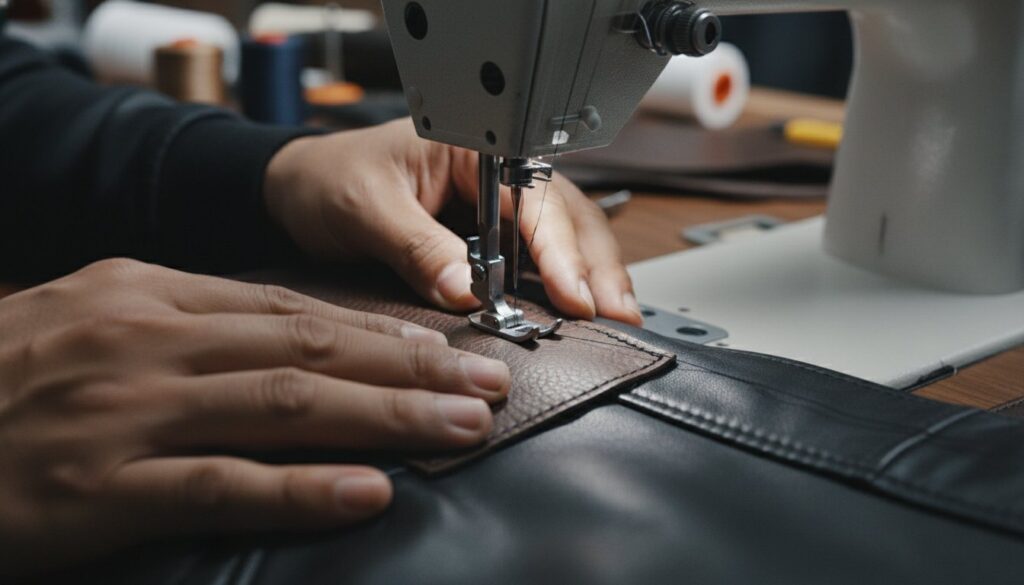
Chỉ một mũi khâu sai vị trí trên da top-grain không chỉ là một sai lầm; đó là một vết sẹo vĩnh viễn trên chiếc áo khoác $150. Tôi đã chứng kiến rất nhiều dự án tự làm bị đình trệ chỉ vì kim may thông thường không thể xử lý được độ dày của da, để lại những lỗ thủng lởm chởm và chỉ bị đứt. Bạn muốn có một đường may gọn gàng, chuyên nghiệp, nhưng da không cho bạn cơ hội thứ hai như vải denim hay vải bạt. Thật bực bội khi phải làm việc với những chất liệu cao cấp trong khi máy may của bạn cứ liên tục gây khó khăn cho bạn.
Tôi sẽ làm cho quy trình này trở nên đơn giản. Tôi sẽ hướng dẫn bạn cách tốt nhất để may miếng da bằng những dụng cụ và kỹ thuật cụ thể mà tôi đã sử dụng để gắn hơn 5.000 huy hiệu kể từ năm 2014. Bạn sẽ học cách chọn chỉ nylon dán phù hợp và tại sao kim da 110/18 lại là công cụ quan trọng nhất của bạn. Đây là phương pháp gắn mác chuyên nghiệp nhưng rất dễ thực hiện, đảm bảo miếng da của bạn sẽ bám chắc mãi mãi với đường may thẳng tắp hoàn hảo. Chúng ta sẽ bắt đầu với những dụng cụ cần thiết để tránh những sai lầm thường gặp và hoàn thành công việc ngay từ lần đầu tiên.
Những điểm chính
- Tôi sẽ giải thích tại sao khi làm việc với da lại cần có tư duy “làm một lần là xong” và cách tránh những vết kim vĩnh viễn có thể làm hỏng tác phẩm của bạn.
- Hãy tìm hiểu lý do tại sao việc sử dụng keo dán chuyên dụng thay vì ghim lại là cách tốt nhất để may miếng da, giúp tạo ra bề mặt hoàn thiện gọn gàng và không có lỗ.
- Tôi sẽ hướng dẫn bạn cách khâu gáy chuyên nghiệp và một kỹ thuật khóa chỉ đơn giản để đảm bảo chỉ của bạn không bao giờ bị tuột hay bung ra.
- Tìm hiểu những nâng cấp phần cứng cần thiết để máy may của bạn có thể xử lý da dày một cách trơn tru, không bị gián đoạn.
- Tôi sẽ chia sẻ bí quyết của nhà sản xuất về cách lựa chọn kiểu viền phù hợp có thể giúp bạn tiết kiệm hàng giờ lao động trong quá trình thi công.
Tại sao việc may miếng da lại đòi hỏi phải có tư duy “một lần là xong”
Tôi luôn nói với khách hàng của mình một điều trước khi họ cầm kim lên: da không giống như vải denim. Da không thể “lành lại”. Khi bạn khâu qua một loại vải dệt như cotton hay vải bạt, kim sẽ đẩy các sợi vải sang một bên. Nếu bạn mắc lỗi, bạn chỉ cần rút chỉ ra, ủi hơi nước lên vải là lỗ thủng sẽ biến mất. Da lại là một “câu chuyện” hoàn toàn khác. Đó là da động vật đã qua xử lý, có cấu trúc tế bào dày đặc và không dệt. Mỗi lần kim đâm xuyên qua bề mặt, bạn đã tạo ra một vết sẹo vĩnh viễn rộng 1mm. Ở đây không có nút “undo” nào cả.
Tìm kiếm Cách tốt nhất để may miếng da lên quần áo Mọi chuyện bắt đầu từ việc chấp nhận tư duy “làm một lần là xong” này. Nếu bạn căn chỉnh miếng vá lệch đi dù chỉ hai milimét, những lỗ ban đầu đó sẽ mãi mãi lộ ra, như đang nhìn chằm chằm vào bạn như một chuỗi những sai lầm nhỏ bé nhưng đắt giá. Tôi đã thấy nhiều người đam mê làm hỏng những chiếc áo khoác da $300 vì họ coi dự án này như một công việc thủ công thông thường. Tính toàn vẹn cấu trúc của da đang bị đe dọa. Quá nhiều lỗ được đặt quá gần nhau sẽ tạo ra một “đường đục lỗ”, khiến da dễ bị rách ngay cả khi chịu lực căng nhẹ nhất.
Bộ dụng cụ may gia đình thông thường sẽ khiến bạn thất vọng ngay từ mũi kim đầu tiên. Hầu hết các loại kim gia dụng đều có đầu nhọn tròn và thuôn nhọn, được thiết kế để lách qua các sợi chỉ. Khi may trên da, những chiếc kim này rất khó xuyên qua, thường bị uốn cong hoặc gãy dưới áp lực. Ngay cả khi bạn cố gắng ép kim xuyên qua, bạn cũng sẽ tạo ra một lỗ xước xát, lồi lõm thay vì một điểm vào gọn gàng. Điều này không chỉ liên quan đến thẩm mỹ; mà còn liên quan đến những rủi ro về tài chính và cảm xúc khi làm việc với các vật liệu cao cấp. Bạn thường phải làm việc với những biểu tượng thương hiệu tùy chỉnh mà phải mất hàng tuần để sản xuất. Bạn chắc chắn không muốn lãng phí khoản đầu tư đó chỉ vì một lần gắn biểu tượng không thành công.
Bộ dụng cụ may da thiết yếu
Bạn cần có dụng cụ phù hợp để tạo ra sản phẩm trông thật chuyên nghiệp. Tôi luôn khuyên dùng kim Glovers thay vì các loại kim sắc nhọn thông thường. Những chiếc kim này có đầu kim hình tam giác độc đáo, giúp cắt xuyên qua da ngay khi đâm vào, tạo ra một đường đi chính xác cho sợi chỉ. Để có kết quả bền bỉ nhất, tôi luôn khuyên bạn nên sử dụng một Kỹ thuật khâu gáy. Phương pháp này sử dụng hai cây kim và một sợi chỉ để tạo ra một mũi khâu khóa, giúp mũi khâu không bị bung ra ngay cả khi một vòng khâu bị đứt.
- Chỉ polyester tẩm sáp: Đây là tiêu chuẩn ngành không phải là không có lý do. Lớp phủ sáp giúp sợi chỉ lướt nhẹ qua da và tạo ra độ “bám” giúp duy trì độ căng đều đặn.
- Đầu ngón tay và kìm: Bàn tay của bạn sẽ cảm ơn tôi. Một chiếc mũi kim bằng kim loại sẽ bảo vệ ngón tay dùng để đẩy kim, trong khi một chiếc kìm mũi nhọn nhỏ sẽ giúp bạn kéo kim xuyên qua lớp da dày 5oz hoặc 6oz.
- Dụng cụ tạo rãnh khâu: Công cụ này tạo ra một rãnh nhỏ để ren nằm vừa khít vào đó, giúp bảo vệ ren khỏi bị mài mòn bề mặt.
Chọn độ dày chỉ phù hợp
Đừng dùng loại chỉ mỏng đa năng đó. Nếu chỉ quá mỏng, nó sẽ hoạt động như một sợi dây kim loại xuyên qua phô mai, và cuối cùng sẽ cắt đứt các sợi da khi trang phục chuyển động. Tôi khuyên bạn nên sử dụng chỉ nylon hoặc polyester liên kết có cỡ 69 (Tex 70) trở lên. Các sợi tổng hợp này vượt trội hơn so với bông tự nhiên vì chúng không bị mục nát khi tiếp xúc với mồ hôi hoặc độ ẩm ở mức 80%.
Việc phối màu cũng là một nghệ thuật. Nếu bạn đang làm việc với da “pull-up”, màu da sẽ nhạt đi khi được kéo căng hoặc gấp lại. Tôi thường chọn chỉ có màu phù hợp với tông màu đậm nhất của miếng vá để đảm bảo đường may trông có chủ đích và sang trọng. Khi bạn chú trọng đến những chi tiết kỹ thuật này, bạn sẽ nhận ra rằng Cách tốt nhất để may miếng da lên quần áo đơn giản là cách chuẩn bị kỹ lưỡng nhất. Nó biến một nhiệm vụ gây căng thẳng thành một quy trình chuyên nghiệp và có thể lặp lại.
Chuẩn bị: Bí quyết để có một kết quả hoàn thiện chuyên nghiệp
Tôi đã thấy quá nhiều người làm hỏng một chiếc áo khoác cao cấp hay một chiếc túi đặt may riêng chỉ vì vội vàng dùng kim khâu ngay. Điều Cách tốt nhất để may miếng da lên quần áo Quá trình này bắt đầu từ rất lâu trước khi bạn thực hiện mũi khâu đầu tiên. Giai đoạn chuẩn bị chính là lúc quyết định 90% chất lượng của tác phẩm. Nếu bạn vội vàng trong giai đoạn này, miếng vá sẽ bị lệch, khoảng cách giữa các mũi khâu sẽ trông thiếu chuyên nghiệp, hoặc tệ hơn nữa, bạn sẽ để lại những vết sẹo vĩnh viễn trên da mà không thể khắc phục được.
Đầu tiên, hãy vứt những chiếc kim ghim may vào thùng rác. Da không giống như vải denim; nó không thể “tự lành”. Mỗi lỗ bạn chọc vào đều trở thành một vết hằn vĩnh viễn trên trang phục. Thay vào đó, tôi sử dụng băng dính hai mặt dành cho da hoặc bôi một lớp mỏng keo cao su. Cách này giúp miếng vá được cố định chắc chắn mà không làm hỏng bề mặt da. Sau khi đã định vị miếng vá, hãy dùng dụng cụ chia vạch hình cánh để đánh dấu một đường hướng dẫn mờ cách mép vải chính xác 1/8 inch. Nếu không có dụng cụ chia vạch, một chiếc nĩa nhà bếp thông thường lại hoạt động hiệu quả bất ngờ để tạo ra các vết lõm cách đều nhau cho các mũi khâu. Đường hướng dẫn này đảm bảo rằng Các kiểu khâu da phổ biến trông gọn gàng và chuyên nghiệp, thay vì xộc xệch và làm vội vàng.
Cách đục lỗ trước mà không làm hỏng vân gỗ
Da quá dày nên kim thông thường khó có thể đâm xuyên dễ dàng. Bạn phải đục lỗ trước bằng dao đục chỉ hoặc dùi kim cương. Tôi luôn khuyên bạn nên dùng búa cao su 16 ounce thay vì búa kim loại. Búa kim loại rung quá mạnh và về lâu dài có thể làm mòn đầu những chiếc dao đục chỉ đắt tiền của bạn. Tôi sử dụng kỹ thuật “chạm nhẹ”, trong đó trước tiên tôi ấn dao đục vào da vừa đủ sâu để thấy vết hằn. Điều này giúp tôi kiểm tra khoảng cách xung quanh các góc. Nếu các lỗ không thẳng hàng hoàn hảo khi hoàn thành, tôi có thể điều chỉnh khoảng cách một chút trước khi đục lỗ chính thức. Khi đường đi đã rõ ràng, tôi đập lưỡi đục xuyên qua cả miếng vá và vật liệu nền để tạo sự khớp hoàn hảo.
Bảo mật bản vá cho Zero Shift
Phương pháp “khâu tạm” truyền thống bằng chỉ là một sai lầm khi làm việc với da vì nó tạo ra những lỗ không cần thiết. Để ngăn miếng vá bị “trượt” trong khi bạn làm việc, hãy sử dụng kẹp giấy. Tôi luôn đặt những mảnh da nhỏ giữa kẹp và sản phẩm để làm lớp đệm. Điều này giúp ngăn các răng kim loại để lại vết lõm vĩnh viễn trên vật liệu của bạn. Khi bôi keo tạm thời, hãy tập trung vào phần giữa miếng vá. Nếu keo dính vào đường may, kim của bạn sẽ bị dính keo sau mỗi vài giây. Điều này có thể làm tăng thời gian may lên hơn 40% và dẫn đến chỉ may bị rối và sờn. Nếu bạn muốn tránh những rắc rối khi tự làm, bạn luôn có thể đặt hàng Miếng dán da tùy chỉnh được cung cấp sẵn sàng để sử dụng trong các ứng dụng chuyên nghiệp.
Hướng dẫn từng bước: Cách tốt nhất để may da bằng tay
May tay là lựa chọn tối ưu để có được một sản phẩm hoàn thiện cao cấp. Tôi nhận thấy rằng cách tốt nhất để may miếng da là cần một chút kiên nhẫn và áp dụng một số kỹ thuật thủ công cụ thể. Mặc dù máy may rất nhanh, nhưng may tay mang lại cho bạn mức độ kiểm soát và độ bền mà sản xuất hàng loạt đơn giản là không thể sao chép được. Điều này đảm bảo miếng da của bạn sẽ không bị bong tróc, ngay cả trên những món đồ chịu lực cao như áo khoác xe máy hay túi đựng dụng cụ.
Tôi luôn bắt đầu bằng cách “khóa” sợi chỉ vào kim. Đây là một mẹo đơn giản giúp ngăn kim tuột ra giữa chừng khi khâu. Tôi luồn chỉ qua lỗ kim, sau đó dùng đầu kim chọc vào chính sợi chỉ đó khoảng một inch về phía dưới. Khi kéo đầu chỉ dài ra, sợi chỉ sẽ tự cố định vào lỗ kim. Đây là một bước nhỏ giúp toàn bộ quá trình trở nên dễ dàng và thuận tiện.
Độ căng đều đặn chính là bí quyết tạo nên vẻ ngoài cao cấp và độc đáo. Nếu kéo quá mạnh, da sẽ bị nhăn. Nếu kéo quá lỏng, miếng da sẽ bị hở. Tôi luôn cố gắng kéo một cách chắc chắn và nhịp nhàng sau mỗi mũi khâu. Điều này giúp sợi chỉ ăn sâu vào da, bảo vệ da khỏi sự mài mòn bề mặt và hao mòn theo thời gian.
Nắm vững kỹ thuật khâu gáy
Kỹ thuật khâu yên ngựa được coi là tiêu chuẩn vàng trong ngành là có lý do của nó. Kỹ thuật này cực kỳ bền bỉ. Bạn sử dụng hai cây kim ở hai đầu đối diện của một sợi chỉ dài đã được tẩm sáp. Bằng cách luồn cả hai cây kim qua cùng một lỗ từ hai phía đối diện, bạn tạo ra một đường khâu hình số 8. Nếu một sợi chỉ bị đứt, sợi còn lại vẫn nguyên vẹn để giữ miếng vá ở vị trí. Đây là phương pháp an toàn 100% mà máy móc không thể bắt chước được. Để mặt sau trông gọn gàng, tôi luôn đảm bảo các kim chéo nhau theo cùng một thứ tự cho mỗi lỗ. Điều này tạo ra một đường thẳng hoàn hảo ở mặt trong của quần áo.
Hoàn thiện và khâu ngược
Tôi không bao giờ dùng nút thắt truyền thống ở đầu sợi dây da. Các nút thắt thường cồng kềnh và cuối cùng sẽ bị tuột qua các lỗ. Thay vào đó, tôi áp dụng phương pháp khâu ngược ba mũi. Khi đến cuối miếng da, tôi chỉ cần khâu ngược lại qua ba lỗ cuối cùng vừa khâu xong. Điều này tạo ra một khóa ma sát vĩnh viễn. Đối với các loại chỉ tổng hợp như sợi polyester tẩm sáp 0,8 mm, tôi cắt phần đuôi chỉ còn khoảng 2 mm. Sau đó, tôi dùng bật lửa để nung chảy cẩn thận phần đầu chỉ. Tôi dùng ngón tay ấn phần nhựa đã mềm vào da để tạo ra một “mối hàn” nhỏ. Đây là một cách hoàn thiện gọn gàng, không nhìn thấy và sẽ không bao giờ bị bung ra.
Có thể dùng máy may để may miếng vá da không?
Tôi thường xuyên được hỏi câu này. Câu trả lời ngắn gọn là có, bạn có thể sử dụng máy. Tuy nhiên, hệ thống máy tính gia đình thông thường của bạn có thể gặp khó khăn nếu bạn không chuẩn bị đúng cách. Cái Cách tốt nhất để may miếng da lên quần áo Khi may bằng máy, bạn cần sử dụng chân máy đi bộ. Phụ kiện này là không thể thiếu. Nếu thiếu nó, các răng dẫn vải phía dưới sẽ kéo vải di chuyển trong khi chân ép phía trên lại bám chặt vào da. Điều này dẫn đến việc dẫn vải không đều và các mũi khâu lộn xộn, bị nhăn nhúm, làm hỏng tác phẩm của bạn.
Tôi cũng khuyên bạn nên điều chỉnh ngay độ dài mũi khâu. Trong may vá thông thường, người ta thường dùng mũi khâu ngắn, nhưng da thì khác. Nếu các mũi khâu quá sát nhau, về cơ bản bạn đang tạo ra một đường đục lỗ. Chỉ cần giật mạnh một cái, miếng vá sẽ bị xé ra như một tờ giấy vở. Hãy giữ độ dài mũi khâu trong khoảng từ 3,5 mm đến 4,0 mm để đảm bảo độ chắc chắn và chuyên nghiệp. Đối với các góc khó khâu hoặc các điểm nối dày nơi nhiều đường may giao nhau, tôi sử dụng phương pháp quay tay. Tôi tắt động cơ và quay bánh xe bằng tay. Điều này giúp tôi kiểm soát hoàn toàn và ngăn kim bị gãy khi khâu trên đường may dày.
Cài đặt máy cho da
Thành công bắt đầu từ chiếc kim của bạn. Tôi luôn chọn kim khâu da cỡ 100/16 hoặc 110/18. Những chiếc kim này có đầu hình tam giác, được thiết kế để cắt xuyên qua da thay vì đâm xuyên như kim khâu vải. Độ căng chỉ là thách thức tiếp theo của bạn. Tôi thường tăng nhẹ độ căng phía trên để đảm bảo nút thắt nằm bên trong da thay vì nằm trên bề mặt. Đừng đạp chân ga quá mạnh. Việc may quá nhanh sẽ tạo ra nhiệt ma sát, có thể làm chảy chỉ tổng hợp hoặc làm hỏng bề mặt da. Chậm mà chắc luôn là chìa khóa thành công.
Khi nào nên tránh sử dụng máy
Đôi khi, máy may không phải là công cụ phù hợp cho công việc đó. Tôi luôn đánh giá tổng độ dày của vật liệu trước khi bắt đầu. Nếu bạn đang cố may xuyên qua bốn lớp vải denim dày và một miếng da dày, hầu hết các động cơ máy may gia dụng sẽ không chịu nổi. Nếu bạn ngửi thấy mùi kim loại hoặc mùi “nóng” phát ra từ máy, hãy dừng lại ngay lập tức trước khi động cơ bị cháy.
Trong những trường hợp này, tôi chuyển sang may tay. Cách này tốn nhiều thời gian hơn, nhưng lại mang đến một nét mộc mạc, thủ công cho Những miếng dán tùy chỉnh chuyên dụng điều mà máy móc không thể nào bắt chước được. Khâu tay cho phép bạn sử dụng các sợi chỉ tẩm sáp dày hơn, vốn quá dày để dùng cho cuộn chỉ tiêu chuẩn, từ đó giúp tăng độ bền đường may lên 25% cho những trang phục phải chịu ma sát cao như áo khoác xe máy hay áo khoác lao động.
Bí quyết của nhà sản xuất: Cách đặt hàng để dễ dàng sử dụng
Tôi đã từng chứng kiến nhiều thương hiệu lãng phí hơn 40 giờ lao động thủ công chỉ cho một đợt sản xuất duy nhất vì họ không lên kế hoạch cho quy trình may trong giai đoạn thiết kế. Tôi sẽ giúp bạn tiết kiệm thời gian đó bằng cách đề xuất sử dụng viền may Merrow thay vì để mép vải thô. Các Cách tốt nhất để may miếng da lên quần áo là chọn viền may kiểu Merrow, tạo ra một mép dày và bảo vệ, đóng vai trò như một đường dẫn tự nhiên cho kim của bạn. Nếu bạn thích kiểu viền phẳng, tôi khuyên bạn nên thêm các rãnh khâu đã được đục lỗ sẵn. Đây là mẹo hay nhất dành cho việc khâu tay. Những lỗ nhỏ xíu được cắt bằng laser này giúp bạn không phải vật lộn với da; các mũi khâu của bạn sẽ luôn đều đặn và trông chuyên nghiệp mỗi lần thực hiện.
Mở rộng quy mô thương hiệu có nghĩa là biết khi nào nên ngừng tự mình làm mọi việc. Nếu bạn đang chuyển từ một lô hàng nhỏ gồm 20 sản phẩm sang đơn hàng 500 sản phẩm, thì đã đến lúc chuyển sang sử dụng dịch vụ OEM chuyên nghiệp. Sự chuyển đổi này đảm bảo chất lượng sản phẩm luôn ổn định trên từng sản phẩm may mặc mà không làm đội ngũ nội bộ của bạn kiệt sức.
Lựa chọn lớp lót phù hợp
Tôi thường thấy nhiều người cố gắng sử dụng lớp lót dán nhiệt cho da thật, nhưng đó thường là một sai lầm dẫn đến việc hàng hóa bị hỏng. Da thật phản ứng không tốt với nhiệt độ 300 độ cần thiết để làm chảy keo; da có thể co lại, bị cong vênh hoặc mất đi các chất dầu tự nhiên. Các Cách tốt nhất để may miếng da lên quần áo Để miếng vá có thể bền bỉ suốt đời, bạn nên chỉ chọn các loại miếng vá may trực tiếp. Nếu bạn đang may lên vải denim dày 14oz hoặc áo khoác công sở dày, tôi khuyên bạn nên dùng một lớp lót mỏng bằng nỉ hoặc vải. Lớp lót này giúp cố định miếng vá và khiến kim may thông thường dễ dàng xuyên qua vải hơn mà không bị nhảy mũi hay gãy kim.
Đặt hàng số lượng lớn với Better Emblem
Khi bạn đặt hàng huy hiệu tùy chỉnh, bạn nên cân nhắc xem đặc tính của chất liệu có phù hợp với ứng dụng của bạn hay không. Da thật là tiêu chuẩn vàng về sự sang trọng và độ bền vượt trội. Da nhân tạo mang lại vẻ ngoài đồng nhất hơn, rất phù hợp với các thương hiệu thời trang đường phố hiện đại. Da lộn là lựa chọn tuyệt vời nếu bạn muốn một bề mặt mềm mại hơn, có kết cấu nổi bật và phản chiếu ánh sáng theo cách độc đáo. Mục tiêu của tôi là giúp toàn bộ quy trình sản xuất trở nên “Dễ dàng” hơn cho bạn. Tôi loại bỏ những thuật ngữ kỹ thuật phức tạp và tập trung vào việc mang đến cho bạn một sản phẩm chất lượng cao, sẵn sàng để sử dụng ngay lập tức. Chúng tôi chú trọng vào tính đáng tin cậy và minh bạch để thương hiệu của bạn có thể phát triển mà không gặp phải những rắc rối thường gặp trong quá trình sản xuất.
Hãy làm chủ chiến lược xây dựng thương hiệu của bạn ngay hôm nay
Tôi đã dành hàng thập kỷ để quan sát các nhà sáng tạo biến những món đồ may mặc cơ bản thành những sản phẩm cao cấp. Da là một chất liệu đặc biệt vì nó hoàn toàn không cho phép sai sót; một khi đã đâm thủng bề mặt, sẽ không thể quay lại được. Đó là lý do tại sao tôi luôn nhấn mạnh tinh thần “chỉ có một cơ hội” và sự chuẩn bị tỉ mỉ. Dù bạn sử dụng máy chuyên dụng hay khâu tay để có sự kiểm soát tối đa, thì Cách tốt nhất để may miếng da lên quần áo đòi hỏi sự kiên nhẫn và những công cụ phù hợp. Chúng tôi là những chuyên gia trong lĩnh vực sản xuất từ năm 1978, và chúng tôi đã chứng kiến cách một biểu tượng được đặt đúng chỗ có thể nâng tầm bản sắc của cả một thương hiệu.
Với tư cách là nhà cung cấp OEM toàn cầu cho các thương hiệu hàng đầu, chúng tôi đã tối ưu hóa quy trình sản xuất để giúp quý khách hàng tiết kiệm thời gian và công sức. Bạn không cần phải là chuyên gia sản xuất để đạt được kết quả chuyên nghiệp. Chúng tôi cung cấp mức giá trọn gói, không có phí ẩn, đảm bảo quá trình từ thiết kế đến sản phẩm hoàn thiện hoàn toàn minh bạch. Mục tiêu của chúng tôi là loại bỏ những rào cản để bạn có thể tập trung vào tầm nhìn sáng tạo của mình. Tôi rất háo hức được chứng kiến những gì bạn sẽ tạo ra tiếp theo với những miếng vá phù hợp trong tay.
Bạn đã có đủ kiến thức để thành công, vậy hãy mạnh dạn thể hiện bản thân với sự tự tin.
Câu hỏi thường gặp
May miếng da bằng tay hay bằng máy thì tốt hơn?
Tôi khuyên bạn nên may tay đối với các sản phẩm đơn lẻ, nhưng máy may sẽ phù hợp hơn cho các dự án sản xuất số lượng lớn. Khoảng 90% các xưởng may chuyên nghiệp sử dụng máy may công nghiệp có chân di chuyển như Juki LU-1508 để tăng tốc độ. Nếu bạn chỉ có một chiếc áo khoác, cách tốt nhất để may miếng da là dùng mũi khâu yên ngựa bằng tay. Cách này giúp bạn kiểm soát hoàn toàn và ngăn máy may để lại vết răng cưa trên da.
Loại kim nào là phù hợp nhất để may qua da dày?
Bạn cần một cây kim chuyên dụng để may da có đầu kim hình tam giác. Những cây kim này thực chất sẽ tạo ra một vết rạch nhỏ trên chất liệu thay vì chỉ đơn thuần xuyên qua nó. Đối với da bò dày 2mm, tôi luôn sử dụng kim cỡ 110/18 để tránh làm động cơ bị quá tải. Hình dạng đặc biệt này giúp da không bị rách khi chịu lực căng và khiến toàn bộ quá trình trở nên dễ dàng và trơn tru.
Tôi có thể ủi miếng vá da lên thay vì may nó không?
Bạn tuyệt đối không nên ủi miếng da vì nhiệt độ cao sẽ làm hỏng da vĩnh viễn. Hầu hết các loại bàn ủi gia dụng đều đạt nhiệt độ 400 độ Fahrenheit ở chế độ ủi vải cotton, cao hơn 100 độ so với ngưỡng mà da bắt đầu co lại hoặc bị cháy xém. May là phương pháp duy nhất đáng tin cậy để đảm bảo hình in của bạn vẫn nguyên vẹn trong nhiều năm. Đây là một bước đơn giản giúp bảo vệ khoản đầu tư của bạn khỏi hư hỏng do nhiệt.
Làm thế nào để miếng da không bị xê dịch trong khi may?
Tôi dùng một dải băng dính hai mặt rộng 1/4 inch để giữ miếng vá luôn thẳng hàng hoàn hảo. Đừng bao giờ dùng ghim vì chúng sẽ để lại những lỗ vĩnh viễn trên da mà bạn không thể sửa chữa sau này. Phương pháp dùng băng dính này là bí quyết của các chuyên gia, giúp việc may miếng vá lên da trở nên nhanh chóng và chính xác nhất. Nó giữ miếng vá chắc chắn trong khi bạn tập trung vào việc tạo ra những mũi khâu thẳng và gọn gàng.
Loại chỉ nào đủ chắc để may miếng da lên áo khoác xe máy?
Bạn cần loại chỉ nylon hoặc polyester liên kết có kích cỡ T70 dành cho các thiết bị nặng. Loại chỉ này là tiêu chuẩn trong ngành vì nó có thể chịu được lực căng lên đến 11 pounds trước khi đứt. Chỉ bông sẽ bị mục nát khi tiếp xúc với mưa và nắng, nhưng chỉ nylon liên kết vẫn giữ được độ bền trong suốt một thập kỷ. Đây là lựa chọn đáng tin cậy nhất dành cho những người đi xe máy cần trang bị của mình phải bền bỉ khi di chuyển ở tốc độ cao trên đường cao tốc.
Tôi có cần khoan lỗ trước trên miếng da của mình không?
Tôi khuyên bạn nên đục lỗ trước nếu da của bạn dày hơn 3mm. Bạn có thể dùng dao đục chỉ 1mm hoặc mũi khoan kim cương để tạo lối đi rõ ràng cho kim. Bước này giúp giảm 50% mức độ mỏi tay và đảm bảo các mũi khâu cách nhau chính xác 4mm. Đây là một chi tiết chuyên nghiệp giúp dự án DIY của bạn trông như được thực hiện tại một xưởng may đo cao cấp.
Làm thế nào để che đi các nút chỉ khi may trên da?
Tôi giấu các nút thắt bằng cách bắt đầu mũi khâu đầu tiên từ mặt sau và luồn đầu chỉ qua giữa các lớp vải. Khi hoàn thành, tôi thực hiện 3 mũi khâu ngược để cố định sợi chỉ mà không cần đến một nút thắt cồng kềnh. Nếu bạn dùng chỉ tổng hợp, bạn có thể hơ đầu chỉ bằng bật lửa để tạo mối hàn vĩnh viễn. Điều này tạo ra vẻ ngoài liền mạch, vừa gọn gàng vừa cực kỳ bền bỉ.
Nếu tôi làm sai và phải tháo các mũi khâu ra thì sẽ thế nào?
Việc tháo chỉ khâu sẽ để lại những lỗ hổng vĩnh viễn có thể nhìn thấy được, bởi vì da không “tự lành” như vải denim. Vì da là một loại da, nên mỗi vết kim đâm vào đều là một vết tích vĩnh viễn. Nếu bạn mắc lỗi, lựa chọn duy nhất của bạn là phải sử dụng lại chính xác những lỗ đó khi khâu lại miếng vá. Đây là lý do tại sao tôi luôn đánh dấu các đường khâu trước để tránh hoàn toàn những sai lầm gây bực bội này.