
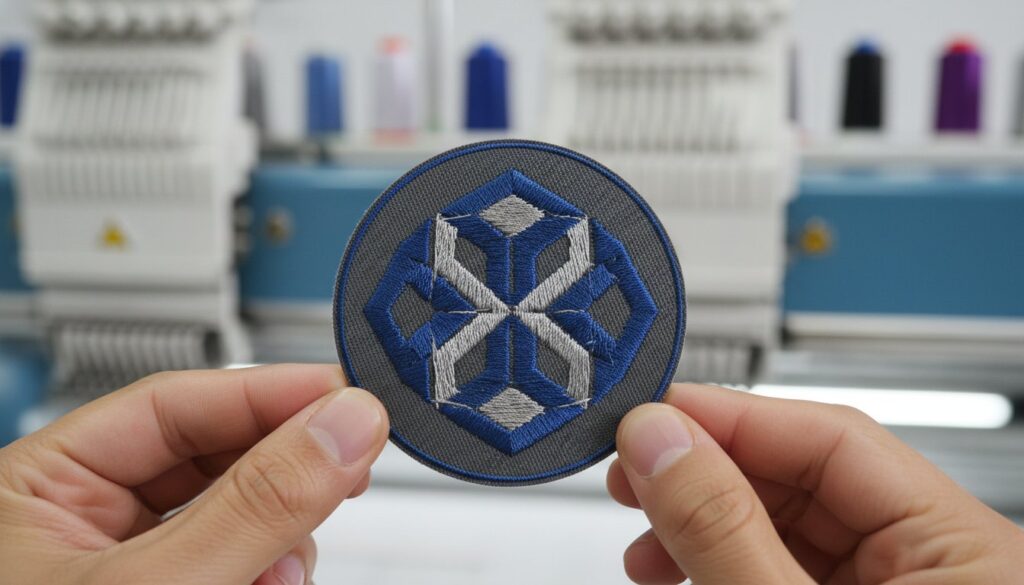
Hầu hết các nhà thiết kế đều cho rằng số sợi chỉ càng cao thì miếng thêu càng đẹp, nhưng trong lĩnh vực sản xuất chuyên nghiệp, con số đó thực ra có thể đang làm hỏng những chi tiết tinh xảo của bạn. Tôi đã dành nhiều năm giúp các thương hiệu nhận ra rằng việc hiểu về mật độ sợi trong thêu không phải là việc đếm từng sợi riêng lẻ như khi bạn mua ga trải giường. Thực chất, đó là sự cân bằng kỹ thuật giữa trọng lượng sợi và mật độ mũi thêu.
Tôi biết bạn sẽ cảm thấy thất vọng khi một logo sắc nét bỗng trở thành một mớ hình ảnh mờ nhòe, hay sản phẩm hoàn thiện lại cứng đơ như một tấm vải polyester “chống đạn”. Bạn mong muốn những đường nét sắc sảo và cảm giác chất lượng cao, đặc biệt khi thị trường thêu toàn cầu được dự báo sẽ tăng trưởng lên $8,0 tỷ vào năm 2034. Tôi sẽ giải thích rõ các thuật ngữ kỹ thuật này để bạn có thể tự tin thiết kế những miếng vá tùy chỉnh đạt tiêu chuẩn chuyên nghiệp. Chúng ta sẽ cùng tìm hiểu cách chọn phong cách phù hợp, từ thêu 3D đến miếng vá dệt, và tôi sẽ cung cấp cho bạn những thuật ngữ chính xác cần thiết để luôn nhận được kết quả hoàn hảo từ nhà sản xuất.
Những điểm chính
- Hãy tìm hiểu lý do tại sao thuật ngữ “số sợi vải” lại là một cách gọi không hoàn toàn chính xác trong ngành sản xuất; thay vào đó, việc tập trung vào trọng lượng và mật độ sẽ giúp tạo ra những logo sắc nét hơn nhiều.
- Tôi sẽ chỉ cho bạn cách chọn độ dày chỉ phù hợp để bạn có thể thể hiện được những chi tiết nhỏ nhất mà không làm mất đi nét thiết kế vì những sợi chỉ quá dày.
- Hãy khám phá cách tôi cân bằng mật độ mũi khâu với lớp lót vải để các miếng vá của bạn vẫn mềm dẻo, thay vì cứng đơ như một tấm ván.
- Việc nắm vững khái niệm về mật độ sợi trong thêu sẽ giúp bạn lựa chọn được loại miếng thêu phù hợp nhất, dù bạn cần thêu 3D hay những chi tiết tinh xảo của miếng thêu dệt.
- Hãy xem cách dịch vụ đánh giá số hóa chuyên nghiệp của tôi giúp đơn giản hóa quy trình này, đảm bảo tác phẩm nghệ thuật của bạn luôn được chuyển thể hoàn hảo thành sản phẩm thực tế.
“Số sợi” trong thêu thực sự có ý nghĩa gì?
Tôi thường có khách hàng hỏi tôi về chỉ số sợi, và tôi thường phải giải thích rõ rằng chúng ta không đang nói đến những bộ ga giường bằng vải bông Ai Cập có chỉ số sợi 800. Trong lĩnh vực sản xuất, Hiểu về chỉ số sợi trong thêu thực ra liên quan đến mối quan hệ kỹ thuật giữa độ dày sợi chỉ và độ phủ của mũi khâu. Nếu bạn hình dung nó giống như việc vẽ tranh, thì độ dày sợi chỉ tương đương với kích thước của chiếc cọ, trong khi độ dày đặc lại tương đương với số lớp sơn bạn phủ lên khung vải. Hiểu rõ sự khác biệt này chính là bước đầu tiên để tạo ra một thiết kế miếng vá sắc nét và chuyên nghiệp.
Nói một chút về khía cạnh kỹ thuật, chúng tôi sử dụng các đơn vị đo lường trong ngành dệt may như Denier hay Tex để phân loại độ dày của sợi chỉ. Điều này giúp tôi đảm bảo rằng sợi chỉ đủ chắc chắn để chịu được máy may tốc độ cao nhưng cũng đủ mảnh để thể hiện được những chi tiết đặc trưng của thương hiệu bạn. Nếu bạn sử dụng sợi chỉ quá dày cho một logo nhỏ, các chi tiết sẽ biến mất trong một mảng màu mờ nhạt. Ngược lại, nếu mật độ sợi quá thưa, bạn sẽ thấy lớp vải nền lộ ra, khiến sản phẩm trông rẻ tiền và chưa hoàn thiện.
Sự khác biệt giữa thêu tay và thêu máy
Tôi thấy có nhiều nhầm lẫn ở đây do sự phổ biến của việc thêu tay như một sở thích. Trong thêu tay, người ta thường làm việc với các “sợi” được tách thủ công từ một đoạn chỉ bông lớn hơn. Quy trình của tôi thì hoàn toàn khác. Tôi sử dụng các cuộn chỉ một sợi được thiết kế để chịu lực căng ở tốc độ cao và có độ bền cực cao. Những sợi chỉ này thường được làm từ polyester hoặc rayon, được lựa chọn vì độ bền màu và độ bền cao. Tôi tập trung vào các tiêu chuẩn máy móc này vì chúng cho phép tôi duy trì chất lượng OEM nhất quán trên hàng nghìn sản phẩm. Bạn sẽ nhận được một miếng vá trông giống hệt miếng đầu tiên ra khỏi dây chuyền, mỗi lần như vậy. Đó là về tốc độ và độ chính xác mà thêu tay đơn giản không thể sánh kịp.
Tại sao “số sợi vải” lại thường là một thuật ngữ bị hiểu nhầm
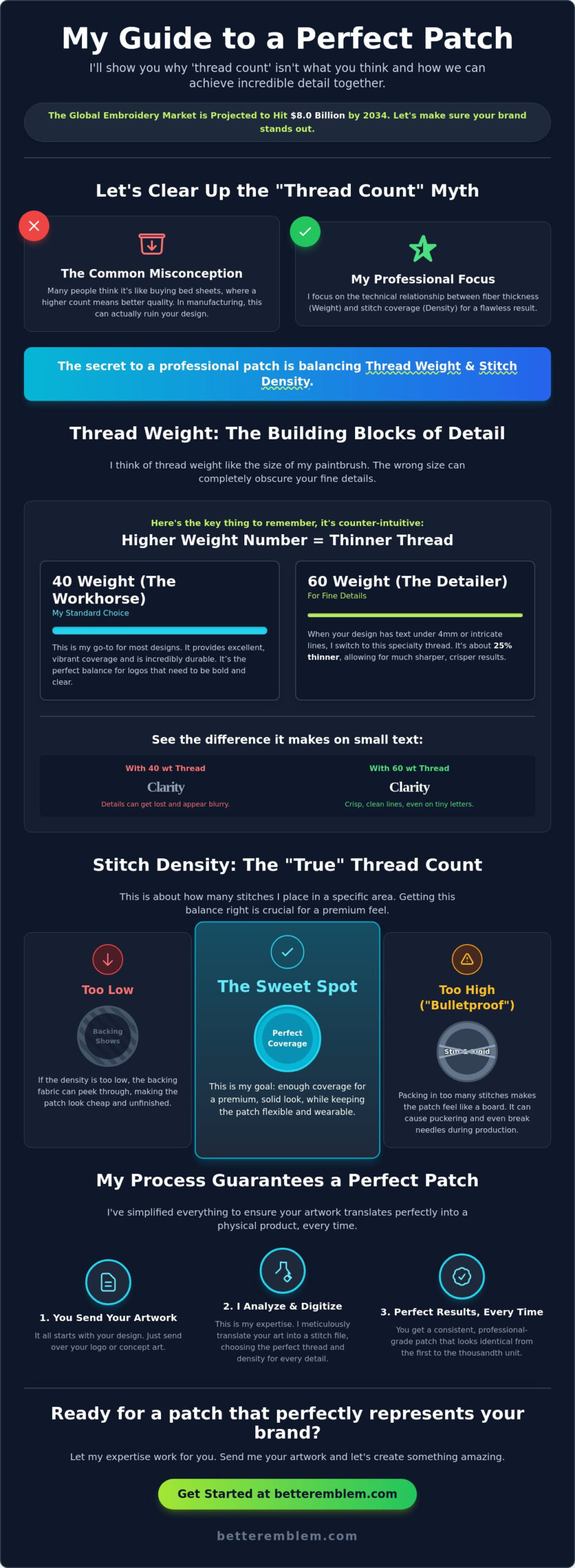
Trong ngành dệt may, “số sợi” (thread count) đề cập đến số lượng sợi trên mỗi inch vuông của chính tấm vải. Trong lĩnh vực vá váy, tôi xem xét có bao nhiêu mũi khâu chiếm một diện tích cụ thể trong thiết kế của bạn. Tôi thường nói với khách hàng rằng “nhiều hơn” không phải lúc nào cũng có nghĩa là “tốt hơn” trong sản xuất. Nếu tôi nhồi nhét quá nhiều mũi khâu vào một không gian nhỏ, miếng vá sẽ trở thành thứ mà tôi gọi là “chống đạn”. Nó sẽ cứng đến mức thậm chí không thể uốn cong quanh ống tay áo hay mũ. Mật độ cao như vậy cũng có thể khiến vải bị nhăn hoặc thậm chí làm gãy kim trong quá trình sản xuất. Bí quyết thực sự nằm ở việc tìm ra điểm cân bằng giữa độ che phủ vừa đủ để trông cao cấp và độ linh hoạt vừa đủ để có thể mặc được. Tôi muốn thiết kế của bạn nổi bật, nhưng tôi cũng muốn nó phải thực sự hữu ích cho khách hàng của bạn.
Độ dày sợi và denier: Những yếu tố cơ bản tạo nên chi tiết
Tôi sử dụng độ dày sợi chỉ làm tiêu chí chính để xác định chính xác mức độ chi tiết tinh xảo mà tôi có thể thể hiện trong thiết kế của bạn. Đây chính là nền tảng vật lý của miếng thêu. Nếu tôi cố gắng sử dụng sợi chỉ quá dày cho một logo phức tạp, máy thêu sẽ thực sự bị “đứt chỉ” hoặc tạo ra một mớ hỗn độn. Điều quan trọng nhất cần nhớ là hệ thống phân loại độ dày chỉ số này đi ngược lại trực giác. Chỉ số độ dày càng cao, sợi chỉ thực tế lại càng mảnh.
Thật sự Hiểu về chỉ số sợi trong thêu có nghĩa là không chỉ nhìn vào tổng số mũi khâu mà còn tập trung vào độ dày của từng sợi riêng lẻ. Tôi chủ yếu sử dụng chỉ polyester vì hiện nay loại chỉ này chiếm 46,7% thị phần trên thị trường toàn cầu, và điều đó hoàn toàn có lý do: nó cực kỳ bền và giữ màu tốt ngay cả khi tiếp xúc với thuốc tẩy và tia UV. Khi bạn thiết kế miếng vá tùy chỉnh, việc biết nên chọn mức trọng lượng nào sẽ quyết định sự khác biệt giữa một sản phẩm hoàn thiện chuyên nghiệp và một logo mờ nhòe.
Hiểu về hệ thống phân loại trọng lượng (40 wt so với 60 wt)
Chỉ tiêu chuẩn cỡ 40 là “công cụ đắc lực” hàng ngày của tôi. Loại chỉ này mang lại sự cân bằng tối ưu giữa độ bền, màu sắc rực rỡ và độ che phủ. Tuy nhiên, khi tác phẩm của bạn có chữ nhỏ hoặc các đường nét phức tạp, tôi sẽ chuyển sang dùng chỉ cỡ 60. Loại chỉ chuyên dụng này mỏng hơn chỉ tiêu chuẩn khoảng 25%, giúp tạo ra các điểm nhọn sắc nét hơn và chữ viết rõ ràng hơn. Theo nguyên tắc chung, tôi luôn khuyên dùng chỉ cỡ 60 cho bất kỳ văn bản nào có chiều cao dưới 4mm. Mặc dù cần nhiều mũi khâu hơn để lấp đầy cùng một khoảng trống, nhưng độ rõ nét đạt được hoàn toàn xứng đáng với công sức bỏ ra. Bởi Hiểu về chỉ số sợi trong thêu Nếu xét dưới góc độ trọng lượng sợi, bạn có thể thiết kế với độ chính xác cao hơn nhiều.
Vai trò của sợi Denier trong lĩnh vực sợi chuyên dụng
Mặc dù “trọng lượng” là thuật ngữ phổ biến, nhưng khi lựa chọn các loại sợi chuyên dụng như sợi rayon hay sợi kim loại, tôi cũng chú ý đến chỉ số Denier. Denier là đơn vị đo mật độ khối lượng tuyến tính của chính sợi đó. Tại cửa hàng của tôi, chỉ số Denier càng thấp thì sợi càng mảnh. Tôi thường sử dụng những loại sợi có độ chi tiết cao này nhất khi tạo ra miếng vá dệt. Vì các miếng dán dệt sử dụng sợi mảnh hơn so với thêu truyền thống, chúng có thể tái hiện các hiệu ứng chuyển màu và những chi tiết cực nhỏ mà trước đây không thể sản xuất được. Nếu bạn chưa chắc chắn loại sợi nào phù hợp với dự án của mình, chỉ cần Hãy gửi bản thiết kế của bạn cho chúng tôi và tôi sẽ giúp bạn chọn những viên gạch phù hợp để tạo nên một bề mặt hoàn thiện hoàn hảo.
Mật độ mũi khâu: Số sợi “thực sự” của một miếng vá đặt làm riêng
Tôi thường thấy mọi người trên các diễn đàn trực tuyến gợi ý rằng bạn nên “cứ tiếp tục may” cho đến khi phủ kín toàn bộ vải. Đó là công thức dẫn đến thảm họa khi sử dụng máy may công nghiệp. Tại xưởng của tôi, mật độ mũi may mới chính là yếu tố then chốt để Hiểu về chỉ số sợi trong thêu. Trong khi độ dày sợi chỉ quyết định độ dày của đường may, thì mật độ là thước đo khoảng cách thực tế giữa các hàng mũi khâu. Nếu các hàng này cách nhau quá xa, miếng vá của bạn sẽ trông mỏng và thiết kế có cảm giác chưa hoàn thiện. Nhưng nếu chúng quá gần nhau, bạn sẽ gặp phải hiện tượng biến dạng “kéo và đẩy”. Đây là trường hợp lực căng của máy thực sự làm biến dạng vải, làm hỏng sự thẳng hàng của các mũi khâu.
Tôi luôn hướng đến một “điểm lý tưởng” cụ thể. Đây là điểm mà lớp vải nền được che khuất hoàn toàn, nhưng miếng thêu vẫn giữ được độ mềm dẻo. Để đạt được điều này, cần phải có sự hiểu biết sâu sắc về cách các chất liệu khác nhau phản ứng với kim thêu. Với dự báo thị trường thêu toàn cầu sẽ tăng trưởng lên $8,0 tỷ vào năm 2034, nhu cầu về các sản phẩm thêu mật độ cao, chất lượng cao cấp sẽ ngày càng gia tăng. Tôi đảm bảo thương hiệu của bạn luôn đi trước xu hướng này bằng cách cân bằng giữa mật độ mũi thêu và độ chính xác kỹ thuật.
Mối quan hệ giữa độ dày và chất liệu vải
Các loại nền khác nhau đòi hỏi các thiết lập mật độ hoàn toàn khác nhau. Nền vải chéo (twill) là tiêu chuẩn ngành của tôi vì chúng cực kỳ ổn định. Tuy nhiên, nếu tôi làm việc với các chất liệu mềm hơn như nỉ hoặc nhung, tôi phải cẩn thận hơn rất nhiều. Tôi sử dụng các mũi khâu lót để giải quyết vấn đề này. Hãy hình dung lớp lót như khung xương của một ngôi nhà. Nó tạo nên nền móng kết cấu để lớp vải trên cùng có bề mặt phẳng để nằm lên. Điều này đặc biệt quan trọng đối với Thêu 3D. Nếu thiếu nền tảng đó và độ đặc lý tưởng, lớp bọt sẽ không giữ được trạng thái nén, và thiết kế của bạn sẽ trông cẩu thả và không đều.
Tránh bản vá “Bulletproof”
Không ai muốn một miếng vá có cảm giác như một mảnh nhựa cả. Nếu tôi dồn quá nhiều mũi khâu vào một khu vực nhỏ, kết quả sẽ là thứ mà tôi gọi là miếng vá “chống đạn”. Nó sẽ trở thành một tấm cứng, nặng và giòn, gây khó chịu khi đeo trên áo sơ mi hay áo khoác mỏng. Tôi cân bằng số lượng mũi khâu để đảm bảo miếng vá vẫn đủ mềm dẻo khi may lên quần áo mà vẫn trông sang trọng và đắt tiền. Việc số hóa đúng cách là cách tôi đạt được mật độ cao mà không gây ra độ dày không cần thiết. Điều này không phải là sử dụng càng nhiều chỉ càng tốt, mà là sử dụng lượng chỉ phù hợp ở những vị trí thích hợp. Sự chú trọng vào hiệu quả này đảm bảo các miếng vá của bạn trông tuyệt vời và bền bỉ trong nhiều năm mà không bị nứt hay bong tróc.
Cân bằng giữa chi tiết và độ bền trong thiết kế của bạn
Tôi luôn bắt đầu bằng việc hỏi miếng vá của bạn sẽ được gắn ở đâu. Một miếng vá trên túi chiến thuật cần phải chịu được sự mài mòn mạnh, trong khi miếng vá trên mũ chỉ cần trông thật bắt mắt. Chỉ mảnh tuy đẹp, nhưng không phải lúc nào cũng là lựa chọn tốt nhất cho những vị trí dễ bị mài mòn. Tôi nhận thấy rằng Hiểu về chỉ số sợi trong thêu giúp tôi tạo ra một thiết kế có thể tồn tại trong điều kiện thực tế mà không làm mất đi vẻ đẹp thẩm mỹ. Điều quan trọng là phải điều chỉnh các tính chất vật lý của sợi chỉ sao cho phù hợp với môi trường mà miếng vá sẽ được sử dụng.
Kết hợp các loại chỉ có độ dày khác nhau chính là cách tôi giải quyết bài toán cân bằng giữa chi tiết và độ bền. Tôi sẽ sử dụng chỉ tiêu chuẩn cỡ 40 cho các vùng tô màu rộng để đảm bảo miếng vá chắc chắn và bền bỉ. Sau đó, tôi sẽ chuyển sang dùng chỉ mỏng hơn cỡ 60 cho những phần chi tiết phức tạp của logo của bạn. Phương pháp kết hợp này mang lại cho bạn cả hai lợi ích tối ưu. Bạn sẽ có được độ bền vững của một miếng vá chịu lực cao cùng với độ chính xác như phẫu thuật trong các chi tiết thêu bằng chỉ mảnh, đảm bảo thương hiệu của bạn vẫn trông chuyên nghiệp ngay cả sau nhiều tháng sử dụng.
Khi nào nên áp dụng mật độ cao
Tôi khuyên dùng mật độ cao cho các logo doanh nghiệp cần có bề mặt hoàn thiện cao cấp và bóng bẩy. Phương pháp này mang lại hiệu quả đặc biệt tốt cho Những miếng dán tùy chỉnh chuyên dụng chẳng hạn như các họa tiết dạng thỏi vàng hoặc các thiết kế có sử dụng sợi kim loại. Độ dày cao giúp phản chiếu nhiều ánh sáng hơn, mang lại vẻ ngoài sáng bóng hơn. Điều này tạo ra hiệu ứng phản chiếu cao cấp, giúp thương hiệu của bạn nổi bật trên nền vải mờ.
Sự khác biệt giữa miếng dán dệt và miếng dán thêu
Có một sự khác biệt cơ bản về cấu trúc giữa kiểu thêu và kiểu dệt. Mẫu thêu được đặt trên một lớp vải nền; còn miếng vá dệt chính là bản thân tấm vải đó. Nếu thiết kế của bạn đòi hỏi những chi tiết có số sợi “vô hạn” như tôi thường gọi, tôi thường sẽ đề xuất sử dụng miếng vá dệt. Sợi dệt mỏng hơn đáng kể so với cả những sợi thêu mịn nhất của tôi. Điều này giúp tôi đạt được độ rõ nét như ảnh chụp và thể hiện được những sắc thái chuyển màu cực nhỏ mà kim và chỉ đơn thuần không thể tái tạo được qua kỹ thuật thêu truyền thống. Đây là cách hiệu quả nhất để giữ nguyên chi tiết mà không làm tăng độ dày.
Việc lựa chọn giữa các phương án kỹ thuật này không nhất thiết phải là một vấn đề đau đầu. Tôi ở đây để giúp bạn tìm ra lựa chọn phù hợp nhất, giúp thương hiệu của bạn tỏa sáng nhất có thể. Nếu bạn đã sẵn sàng khám phá cách những chi tiết chuyên biệt này có thể nâng tầm thương hiệu của bạn, Bắt đầu dự án thiết kế huy hiệu theo yêu cầu của bạn và hãy cùng nhau tạo nên điều tuyệt vời nhé.
Cách tôi giúp bạn đạt được sự cân bằng hoàn hảo cho sợi chỉ tại Better Emblem
Tôi không mong bạn phải là một kỹ sư dệt may. Đó là công việc của tôi. Dù trong bài viết này tôi đã giải thích về khía cạnh kỹ thuật, mục tiêu của tôi là giúp bạn loại bỏ sự phức tạp đó. Kể từ năm 1978, tôi đã hỗ trợ các tổ chức toàn cầu tìm ra sự cân bằng phù hợp giữa thiết kế và độ bền. Tôi trực tiếp giám sát việc lựa chọn độ dày sợi và cài đặt mật độ để đảm bảo các mục tiêu thương hiệu của bạn được đáp ứng mà bạn không cần phải lo lắng về các phép tính phức tạp.
Quy trình OEM của chúng tôi được thiết kế để diễn ra suôn sẻ nhất có thể. Quy trình này bắt đầu bằng việc rà soát chuyên nghiệp để số hóa từng tác phẩm nghệ thuật được gửi đến công ty chúng tôi. Điều này đảm bảo rằng Hiểu về chỉ số sợi trong thêu không phải là trở ngại đối với bạn, mà là công cụ tôi sử dụng để đảm bảo thành công cho bạn. Tôi xem xét logo của bạn và quyết định xem chúng ta cần độ bền tiêu chuẩn của sợi polyester 40-weight hay độ chính xác như phẫu thuật của sợi 60-weight cho những chi tiết cực nhỏ đó.
Từ bản vẽ nghệ thuật đến tệp dữ liệu đường may được tối ưu hóa
Tôi lấy tệp vector của bạn và chuyển đổi nó thành bản đồ gồm hàng nghìn mũi khâu. Đây không chỉ là một quá trình chuyển đổi đơn thuần; mà là một quá trình chuyển đổi kỹ thuật. Tôi điều chỉnh “số sợi chỉ” kỹ thuật số để phù hợp với các đặc tính vật lý của loại chỉ cụ thể mà chúng ta đã chọn. Đây chính là lúc kinh nghiệm hàng thập kỷ của chúng tôi thực sự phát huy tác dụng. Tôi biến một bản vẽ phẳng thành một huy hiệu bền bỉ, có kết cấu, giữ nguyên hình dáng và màu sắc trong nhiều năm. Chúng tôi tính đến các yếu tố như sự co giãn của vải để miếng vá hoàn thiện của bạn trông chính xác như ý tưởng ban đầu của bạn.
Tại sao chất lượng nguyên liệu lại quan trọng đối với các thương hiệu toàn cầu
Tôi chỉ sử dụng các loại chỉ rayon và polyester cao cấp, không phai màu hay lem màu. Chất lượng là yếu tố quan trọng, đặc biệt khi các miếng dán của bạn phải tiếp xúc với thời tiết khắc nghiệt hoặc giặt giũ thường xuyên. Chúng tôi tuân thủ các tiêu chuẩn ngành về độ bền màu và khả năng chống clo để đảm bảo màu sắc thương hiệu của bạn luôn rực rỡ. Các cơ sở sản xuất quy mô lớn của tôi được thiết kế để duy trì độ dày đồng đều trên 10.000 sản phẩm một cách dễ dàng, giống như khi sản xuất một lô nhỏ. Bạn sẽ nhận được cùng một mức độ chi tiết sản xuất cao cấp trên từng sản phẩm, bất kể quy mô đơn hàng là bao nhiêu.
Sẵn sàng bắt đầu chưa? Hãy yêu cầu báo giá số lượng lớn cho dự án tùy chỉnh của bạn ngay hôm nay và hãy để tôi lo liệu các chi tiết kỹ thuật giúp bạn.
Bạn đã sẵn sàng nâng tầm bản sắc thương hiệu của mình chưa?
Việc thiết kế một miếng vá hoàn hảo không nên giống như một trò chơi đoán mò. Giờ đây, khi bạn đã thành thạo Hiểu về chỉ số sợi trong thêu, bạn có thể bắt tay vào dự án tiếp theo với sự rõ ràng tuyệt đối. Hãy nhớ rằng bí quyết nằm ở việc cân bằng giữa độ dày sợi chỉ để tạo chi tiết sắc nét và mật độ mũi khâu để đảm bảo độ bền lâu dài. Dù bạn cần hiệu ứng nổi bật, có kết cấu của thêu 3D hay độ chính xác tuyệt đối của các miếng dán dệt chi tiết cao, những lựa chọn kỹ thuật phù hợp sẽ tạo nên sự khác biệt. Tôi đã dành hàng thập kỷ để hoàn thiện quy trình này, giúp bạn không còn phải lo lắng về những thách thức trong quá trình sản xuất.
Kể từ năm 1978, tôi đã hoạt động với tư cách là nhà cung cấp OEM toàn cầu cho các thương hiệu lớn, chuyên về mọi lĩnh vực từ các thiết kế 3D nổi phức tạp đến các miếng dán dệt có độ chi tiết cao. Tôi ở đây để đảm bảo tầm nhìn của quý vị được hiện thực hóa một cách hoàn hảo từ tệp tin kỹ thuật số thành một sản phẩm vật lý cao cấp. Hãy cùng loại bỏ những áp lực trong chu trình sản xuất của quý khách và tạo ra một sản phẩm thực sự thể hiện đúng bản sắc thương hiệu của quý khách. Để bắt đầu dự án tiếp theo của quý khách, Nhận báo giá chuyên nghiệp cho các miếng vá tùy chỉnh của bạn Hôm nay. Mình rất háo hức muốn xem các bạn đã thiết kế những gì.
Câu hỏi thường gặp
Số sợi tiêu chuẩn cho một miếng vá thêu là bao nhiêu?
Tôi không sử dụng một con số tiêu chuẩn cụ thể nào vì “số sợi” không phải là thuật ngữ kỹ thuật được dùng trong lĩnh vực thêu máy. Thay vào đó, tôi tập trung sử dụng chỉ polyester cỡ 40 làm tiêu chuẩn ngành cho hầu hết các mẫu thiết kế. Độ dày này mang lại độ che phủ và độ bền tuyệt vời cho phần lớn các logo. Sau đó, tôi điều chỉnh mật độ mũi thêu để đảm bảo vải nền được che phủ hoàn toàn mà không làm miếng thêu trở nên cồng kềnh một cách không cần thiết.
Tôi có thể sử dụng mật độ sợi cao hơn cho phần chữ rất nhỏ trong logo của mình không?
Tôi khuyên bạn nên chuyển sang dùng chỉ mảnh hơn, loại 60-weight, cho bất kỳ dòng chữ nào có chiều cao nhỏ hơn 4mm. Mặc dù mọi người thường gọi đây là “tăng mật độ chỉ”, nhưng thực chất đây là việc sử dụng sợi mảnh hơn để tạo ra những vòng chỉ chặt chẽ hơn và các đầu mũi kim sắc nét hơn. Điều này giúp tôi thể hiện được nhiều chi tiết hơn trong một không gian rất nhỏ mà không làm cho các mũi khâu chồng chéo lên nhau và tạo thành một đốm mờ nhòe, khó đọc.
Có sự khác biệt nào giữa độ dày sợi vải và số sợi trên inch không?
Đúng vậy, có một sự khác biệt lớn. “Độ dày sợi” (thread weight) đề cập đến độ dày thực tế của từng sợi riêng lẻ, trong khi “số sợi” (thread count) là thuật ngữ thường được dùng để chỉ mật độ dệt của vải nền. Để hiểu rõ hơn Hiểu về chỉ số sợi trong thêu giúp bạn nhận ra rằng thực ra chúng ta đang nói đến mật độ mũi khâu. Tôi điều chỉnh số lượng mũi khâu được dệt vào mỗi inch vuông để mang lại vẻ hoàn thiện cho thiết kế của bạn.
Mật độ mũi khâu ảnh hưởng như thế nào đến giá của những miếng vá đặt làm riêng của tôi?
Mật độ mũi thêu ảnh hưởng trực tiếp đến thời gian sản xuất trên các máy thêu của tôi. Một thiết kế có mật độ cao đòi hỏi nhiều lần kim đâm vào vải hơn và cần nhiều chỉ hơn để hoàn thành. Mặc dù tôi không tính phí theo từng mũi thêu, nhưng một thiết kế có mật độ rất cao hoặc phức tạp sẽ mất nhiều thời gian sản xuất hơn so với một thiết kế đơn giản. Tôi luôn tìm kiếm mật độ hiệu quả nhất mà vẫn đảm bảo mang lại kết quả hoàn thiện cao cấp, chất lượng cao cho thương hiệu của quý khách.
Một miếng vá có mật độ cao liệu có quá cứng đối với áo thun không?
Một miếng dán có mật độ cao có thể tạo cảm giác cứng như một tấm ván nếu không được thiết kế kỹ thuật số dựa trên kiểu dáng của sản phẩm may mặc hoàn thiện. Nếu bạn đang gắn miếng dán lên các loại vải mỏng như áo thun, tôi thường sẽ giảm mật độ xuống một chút và sử dụng chất liệu lót mềm hơn. Điều này giúp miếng dán giữ được độ mềm dẻo và tránh làm kéo căng vải áo. Tôi sẽ giúp bạn tìm ra sự cân bằng hoàn hảo để trang phục của bạn vẫn thoải mái và dễ mặc.
Nếu mật độ thêu quá thấp thì sẽ ra sao?
Mật độ thêu thấp khiến lớp vải lót lộ ra qua các mũi thêu, đây là dấu hiệu phổ biến của một miếng vá chất lượng kém. Tôi gọi hiện tượng này là “lộ vải lót”, và nó khiến màu sắc trông nhợt nhạt còn họa tiết thì có vẻ chưa hoàn thiện. Nếu mật độ thêu quá thấp, các mũi thêu cũng dễ bị xơ hoặc bong ra theo thời gian. Tôi đảm bảo mật độ thêu đủ cao để tạo ra bề mặt chắc chắn, rực rỡ và bền bỉ.
Các miếng vá dệt có mật độ sợi cao hơn so với các miếng vá thêu không?
Về mặt kỹ thuật, các miếng dán dệt có “độ phân giải” cao hơn nhiều vì sợi dệt chỉ dày bằng khoảng một nửa so với sợi thêu tiêu chuẩn. Do các sợi được dệt lại với nhau để tạo thành chính tấm vải, tôi có thể thể hiện nhiều chi tiết hơn đáng kể trên cùng một diện tích. Điều này khiến các miếng dán dệt trở thành lựa chọn tốt hơn cho Hiểu về chỉ số sợi trong thêu khi thiết kế của bạn có các yếu tố ảnh hoặc các đường nét rất mảnh.
Tôi có thể chọn các loại sợi có độ dày cụ thể cho các phần khác nhau trong thiết kế của mình không?
Tôi thường áp dụng phương pháp kết hợp, trong đó tôi sử dụng các loại chỉ có độ dày khác nhau trong cùng một mảnh vá. Tôi sẽ dùng chỉ tiêu chuẩn cỡ 40 cho các vùng nền rộng để đảm bảo miếng vá chắc chắn và tiết kiệm chi phí. Sau đó, tôi sẽ chuyển sang dùng chỉ chuyên dụng cỡ 60 cho các chi tiết nhỏ như nét mặt hoặc chữ viết mảnh. Cách này giúp bạn có được độ rõ nét tối ưu chính xác ở những nơi cần thiết nhất, đồng thời vẫn duy trì được độ bền cấu trúc của miếng vá.