
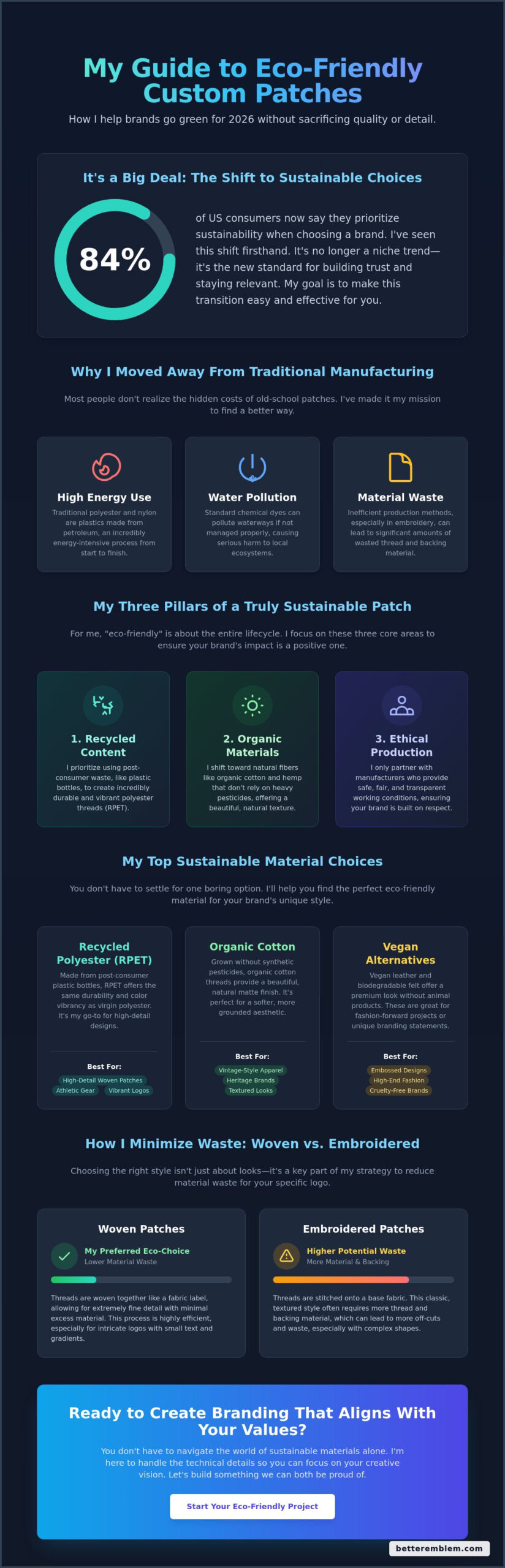
Did you know that 84% of US consumers now prioritize sustainability when they choose which brands to support? It’s a huge shift, and I understand if you feel a bit overwhelmed by the pressure to go green. You might worry that switching to eco-friendly custom patch options means sacrificing the sharp detail of your logo or the longevity of the finished product. It’s frustrating to face greenwashing or fear that recycled materials just won’t hold up in the real world.
I agree that your brand’s quality shouldn’t suffer just because you’re making an ethical choice. I’m here to show you exactly how to choose sustainable materials and ethical manufacturing processes without sacrificing any detail. I’ll walk you through the best material choices for 2026, explain how to meet new OEKO-TEX standards, and help you find a reliable partner for your bulk production needs. You can create high-quality branding that aligns with your values without the stress of hidden hurdles.
Key Takeaways
- I’ll explain why eco-friendly branding has shifted from a niche trend to a necessary corporate standard for 2026.
- I’ll help you explore the most reliable eco-friendly custom patch options that deliver high-end detail without the environmental footprint.
- You’ll learn how I compare woven and embroidered styles to help you minimize material waste for your specific logo.
- I’ll show you why prioritizing durability and longevity is actually your most effective tool for reducing textile waste.
- I’ll share what I look for in an ethical OEM partner to ensure your entire supply chain stays transparent and responsible.
Exploring the Shift to Eco-Friendly Custom Patch Options
I’ve noticed a massive shift in how brands approach their identity through textiles over the last few years. In the past, seeking out eco-friendly custom patch options felt like a niche hobby, but in 2026, it’s the gold standard. I see companies from tech startups to local breweries moving away from standard plastics. They aren’t just looking for a cool logo; they’re looking for a statement about their values. It’s an exciting time to be in manufacturing because the technology has finally caught up with our environmental goals.
Eco-friendly patches are no longer a niche product found only on high-end hiking gear. They’ve become a central part of corporate responsibility. When I talk to my clients, they’re choosing these options because they want their brand alignment to match consumer demand. People care where their products come from. If your brand uses sustainable materials, you build trust immediately. I define sustainable patches as those using recycled fibers, organic materials, and ethical production methods. It’s a holistic approach that ensures your branding doesn’t leave a negative legacy.
The Problem with Traditional Patch Manufacturing
Most people don’t realize that traditional polyester and nylon production are incredibly energy-intensive processes. These materials are essentially plastic derived from petroleum. Beyond the energy use, the chemical dyes used in standard manufacturing can lead to significant water pollution if they aren’t managed with extreme care. I’ve made it my mission to help brands avoid these pitfalls. I focus on reducing the carbon footprint of every emblem I produce by rethinking the raw materials we use from the start. We can’t keep doing things the old way if we want to stay relevant.
Defining Sustainability in the Patch Industry
When I talk about eco-friendly custom patch options, I’m looking at more than just the thread. It’s about the whole lifecycle of the product. This movement is part of a much larger shift toward sustainable fashion that prioritizes the environment and workers’ rights. True sustainability includes everything from the backing material to the adhesive used for heat-press applications. I look for specific certifications like the Global Recycled Standard (GRS) in my supply chain. This ensures that when I say a material is recycled, it actually is. We look at three main pillars:
- Recycled Content: Using post-consumer waste like plastic bottles to create high-quality polyester threads.
- Organic Materials: Shifting toward natural fibers like hemp or organic cotton that don’t rely on heavy pesticides.
- Ethical Production: Ensuring the people making your patches work in safe, fair, and transparent conditions.
I believe that transparency is the only way to build a reliable brand. My goal is to make these choices feel simple and effective for you. You don’t have to be a textile expert to make a better choice for the planet. I handle the technical hurdles so you can focus on your creative journey.
Sustainable Materials: What Are Your Real Options?
When you look at eco-friendly custom patch options, you shouldn’t feel like you’re stuck with one boring choice. I offer several material paths depending on your brand’s specific aesthetic goals. Whether you want a high-tech athletic look or a vintage heritage vibe, there’s a sustainable material that fits perfectly. It isn’t just about finding something “green”; it’s about finding the right texture and performance for your specific gear. While many providers only talk about recycled plastic, I look at the whole patch. That includes the thread, the base fabric, and even the backing.
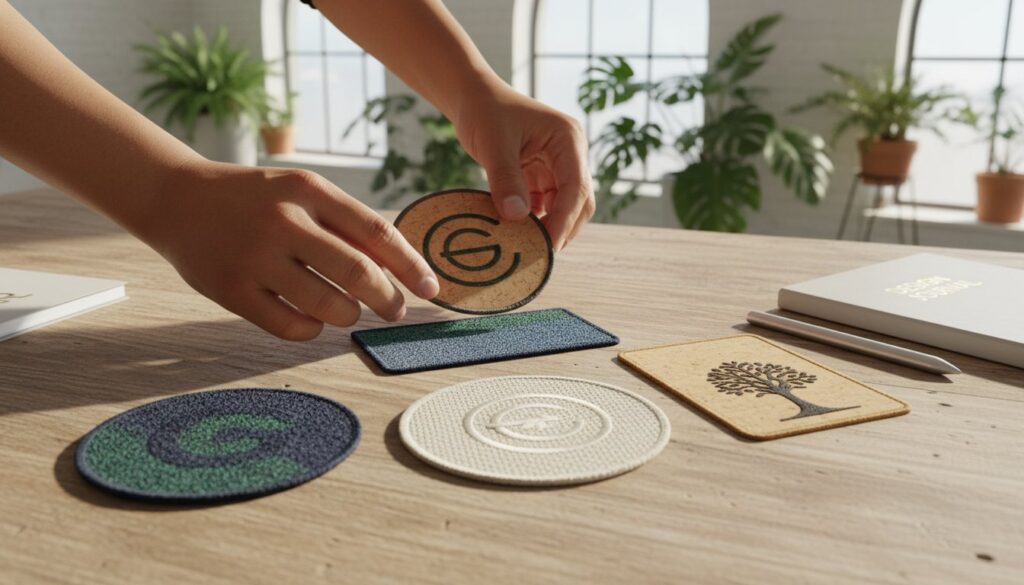
Recycled Polyester (RPET) is the workhorse of the eco-friendly patch world. It’s incredibly durable and vibrant. For heritage brands, I suggest organic cotton or hemp. These materials provide a natural, textured feel that looks great on heavy canvas or denim. If you’re working on a fashion-forward project or a temporary event, biodegradable felt backings are a perfect choice. I even utilize FSC-certified paper for backer cards to ensure your total package sustainability is covered. Every component matters when you’re building a responsible brand.
Recycled Thread (RPET) and Its Benefits
This thread is made from post-consumer plastic bottles diverted from landfills. I find that RPET holds color and detail just as well as virgin polyester, so you don’t lose that “pop” in your design. It’s the best choice for high-detail woven patches. Since the threads are so thin and strong, we can achieve complex gradients and small text that other materials might struggle with. It’s a clean, efficient way to repurpose waste into a high-value branding tool that lasts for years.
Natural Fibers and Vegan Alternatives
Organic cotton threads offer a beautiful matte finish that looks incredible on vintage-style apparel. Unlike standard cotton, these fibers are grown without synthetic pesticides. I also see a huge demand for vegan leather patches. These provide a premium, embossed look without using any animal products. Organizations like Cascale (formerly the Sustainable Apparel Coalition) help set the standards for these types of value chain improvements. This ensures that our material choices actually make a measurable difference in the industry. I recommend these natural options for brands focusing on a “back to nature” aesthetic. If you’re ready to start your project, you can view our material options to find the right fit for your logo.
Comparing Eco-Friendly Patch Styles: Woven vs. Embroidered
I often get asked which style is “greener,” and honestly, the answer usually depends on your specific design. When you explore different eco-friendly custom patch options, you’ll find that both woven and embroidered styles have unique environmental benefits. It isn’t just about the thread type; it’s about how much material we actually use to bring your vision to life. My goal is to help you pick the style that matches your brand’s look while keeping waste to an absolute minimum. It’s a practical way to balance aesthetics with responsibility.
Woven patches are typically the low-waste choice because they use thinner threads and create a flatter profile. This leads to less material volume overall. On the other hand, embroidered patches offer that classic, heavy texture that many heritage brands love. We can make these sustainable too by using 100% recycled backings and non-toxic adhesives. Research from the Centre for Sustainable Fashion highlights how reducing raw material weight is a key step in lowering a product’s total impact. This is why I look at the density of every design before we start production to see where we can save material.
Woven Patches: The Low-Waste Choice
I suggest woven techniques for brands that need a flatter surface and high detail density. Since woven patches are made by interlacing threads together rather than stitching them onto a base fabric, they use significantly less thread than traditional embroidery. This makes them a fantastic option for wholesale woven patches where you need perfect consistency across a large order. You get sharp lines and readable text without the bulk. It’s a clean, efficient process that minimizes thread overlap and excess waste.
Embroidered Patches: Recycled Texture
Traditional embroidery doesn’t have to be wasteful. I make it sustainable by switching to RPET threads and using recycled twill as the base fabric. If you want a premium, high-impact look, we can even do 3D embroidery using recycled foam inserts. This gives you that bold, raised effect without relying on virgin plastics. It’s all about adapting standard custom patches to meet modern eco-needs without losing the quality you expect. You don’t have to choose between a “green” patch and a “cool” patch.
Regardless of the style you choose, I ensure the “hidden” parts of the patch are responsible too. We use recycled polyester backings and adhesives that are free from harmful chemicals. This holistic approach to eco-friendly custom patch options means your branding is clean from the front to the back. It’s a simple way to upgrade your brand’s sustainability without changing your entire design language. You get a high-quality investment that matches your values and your style perfectly.
Designing for Longevity: The Ultimate Sustainability Hack
I believe that a patch that never needs replacing is the most sustainable option you can choose. While we often talk about materials, we shouldn’t overlook durability. A patch that lasts for a decade on a jacket is far better for the environment than a biodegradable one that falls apart in six months. When you invest in high-quality eco-friendly custom patch options, you are actively fighting the “fast fashion” cycle. My focus is on creating products that stand the test of time, ensuring your brand remains visible without contributing to the landfill.
Durability starts with the small details. I use high-quality dyes that won’t fade under the sun or after dozens of washes. If a patch looks old and tired, the garment it’s attached to often gets thrown away too. By ensuring the colors stay vibrant and the edges stay crisp, I help extend the life of the entire piece of apparel. It’s a simple logic: better quality leads to longer use, which leads to less waste. This is the most effective way to make your branding truly responsible.
Attachment Methods and Their Environmental Impact
The way you attach your patch affects how long the garment stays in circulation. Sew-on patches are the gold standard for durability. They allow for easy removal and reuse if the original garment wears out. Iron-on adhesives have come a long way too. I use eco-certified heat-seal films that provide a permanent bond without harsh chemicals. For tactical gear, I offer Velcro backings made from recycled nylon. These maintain full functionality while utilizing diverted waste. Choosing the right method ensures your patch stays exactly where it belongs for years.
Color and Detail: Minimizing Production Waste
I always help my clients simplify their color palettes to reduce the number of thread changes during manufacturing. Every time a machine stops to change a thread, it uses energy. Clean, bold designs often require less energy to produce at scale and result in fewer production errors. By using digital proofing, I eliminate the need for physical sample shipping, which drastically cuts down on carbon emissions and material waste during the design phase. If you want to see how your design looks with these sustainable tweaks, you can start your custom quote today and we’ll refine the details together.
Partnering with an Ethical OEM Manufacturer
I pride myself on total transparency in my Asian and North American facilities. Choosing the right eco-friendly custom patch options isn’t just about picking the right thread or backing. It’s about the people who operate the machines and the conditions they work in. Ethical manufacturing is just as important as the materials themselves. I ensure fair wages and safe conditions across my entire supply chain. This is the human side of sustainability that often gets ignored in favor of trendy buzzwords. When you work with me, you know that your branding is built on a foundation of respect for the workforce.
I’ve seen this industry evolve significantly since 1978. Back then, sustainability wasn’t even a conversation. Today, it’s a core requirement for any serious brand. I make the transition to eco-friendly branding effortless because I handle the heavy lifting for you. You don’t need to be an expert in textile regulations or global supply chain logistics. I act as your partner to ensure your vision is realized responsibly and efficiently. Reliability is the key to a stress-free manufacturing experience.
Why OEM Expertise Matters
I handle the technical side of material sourcing so you don’t have to worry about the fine details. My decades of experience allow me to spot “greenwashing” instantly. Some suppliers claim to be green but use sub-suppliers that don’t meet verified ethical standards. I verify every step of the process to maintain my commitment to quality. I also offer tiered volume pricing to make sustainable choices affordable for brands of any size. High-quality, responsible manufacturing should be accessible, not a luxury reserved for the biggest players.
Your Next Steps to Sustainable Branding
Ready to make the switch? I recommend starting with a material sample kit. It’s the best way to feel the quality of recycled polyester or organic cotton for yourself. You’ll see that these eco-friendly custom patch options don’t sacrifice any detail or durability. My team is here to help you digitize your artwork specifically for recycled threads. We adjust stitch density and color mapping to ensure your logo looks perfect on sustainable substrates. It’s a precise process that guarantees a professional result every time.
Let’s build something that looks great and does good for the planet. Whether you need woven patches or 3D embroidery, I have the tools and the expertise to make it happen. You get the reliability of a professional partner and the peace of mind that comes with ethical production. Your brand’s journey toward a better future starts with a single, high-quality choice. I’m here to ensure that choice is the right one for your business, your customers, and the environment.
Build a Future-Ready Brand Today
I’ve shown you that choosing responsible materials doesn’t mean you have to settle for less. We’ve explored how recycled polyester and organic fibers maintain the high-end detail your brand deserves. Remember that true sustainability is a combination of the right materials, durable design, and an ethical manufacturing partner. By focusing on longevity and transparent sourcing, you’re making a high-quality investment that benefits both your brand and the environment.
Finding the right eco-friendly custom patch options should be a seamless part of your creative journey. Since 1978, I’ve helped brands navigate the complexities of manufacturing with ease and reliability. My team provides expert design assistance and uses Global Recycled Standard (GRS) compliant sourcing to ensure every patch meets the highest ethical benchmarks. I’m here to strip away the stress of production so you can focus on your professional growth.
Ready to take the next step in your sustainable journey? Get a quote for your eco-friendly custom patches today! I look forward to partnering with you to create something that looks incredible and stands for something better.
Frequently Asked Questions
Are eco-friendly patches as durable as regular ones?
Yes, they are designed to match or exceed standard durability. Recycled polyester threads are chemically identical to virgin polyester, so they won’t fray or break easily. I focus on high-quality construction to ensure your branding stays intact through heavy wear and repeated washing. A long-lasting patch is a core part of sustainable design because it reduces the need for replacements over time.
Can I get high-detail designs with recycled thread?
You can achieve incredible detail with recycled threads, especially when using woven techniques. I find that recycled polyester threads are just as fine as traditional ones, allowing for sharp edges and readable text. Whether you need a complex logo or fine gradients, these eco-friendly custom patch options deliver a professional finish without compromising your brand’s unique aesthetic goals.
Is there a minimum order quantity (MOQ) for sustainable patches?
I generally maintain standard MOQs for sustainable options to keep the production process efficient and affordable. While specific numbers vary depending on the style you choose, bulk ordering is often the best way to reduce the environmental impact per unit. I’ll work with you to find a volume that fits your brand’s needs while maximizing the sustainability of the manufacturing run.
How much more do eco-friendly custom patch options cost?
You might see a slight increase in upfront costs due to the specialty sourcing of recycled materials and ethical labor practices. However, many of my clients find the long-term brand value far outweighs the initial investment. I provide transparent pricing models that help you balance your budget with your environmental goals without any hidden hurdles or stress during the ordering process.
What certifications should I look for in a sustainable patch manufacturer?
Look for Global Recycled Standard (GRS) and OEKO-TEX Standard 100 certifications. These ensure that the materials are truly recycled and that no harmful chemicals remain in the finished product. I prioritize these standards in my own supply chain to give you confidence that your branding meets the latest 2026 global requirements for safety and environmental responsibility.
Can I use recycled materials for 3D or chenille patches?
Yes, we can adapt specialized styles like 3D embroidery or chenille patches using sustainable inputs. I use recycled foam for 3D effects and recycled polyester yarn for the fuzzy texture of chenille. This allows you to maintain a premium, tactile look while sticking to your commitment to using more responsible materials throughout your entire product line.
Are the dyes used in eco-friendly patches non-toxic?
I use dyes that meet strict environmental standards to prevent water pollution and ensure user safety. This is especially important as new regulations in 2026 restrict specific chemicals like Bisphenols and certain PFAS. My goal is to provide a clean product that is safe for both the people making it and the customers wearing it on their favorite gear.
How do I apply an eco-friendly iron-on patch?
You apply them just like standard iron-on patches using a heat press or a home iron. I use eco-certified heat-seal films that bond permanently to most fabrics without releasing harmful fumes. Simply follow the temperature and pressure guidelines I provide with your order to ensure a secure, long-lasting attachment that won’t peel or fray over years of use.