
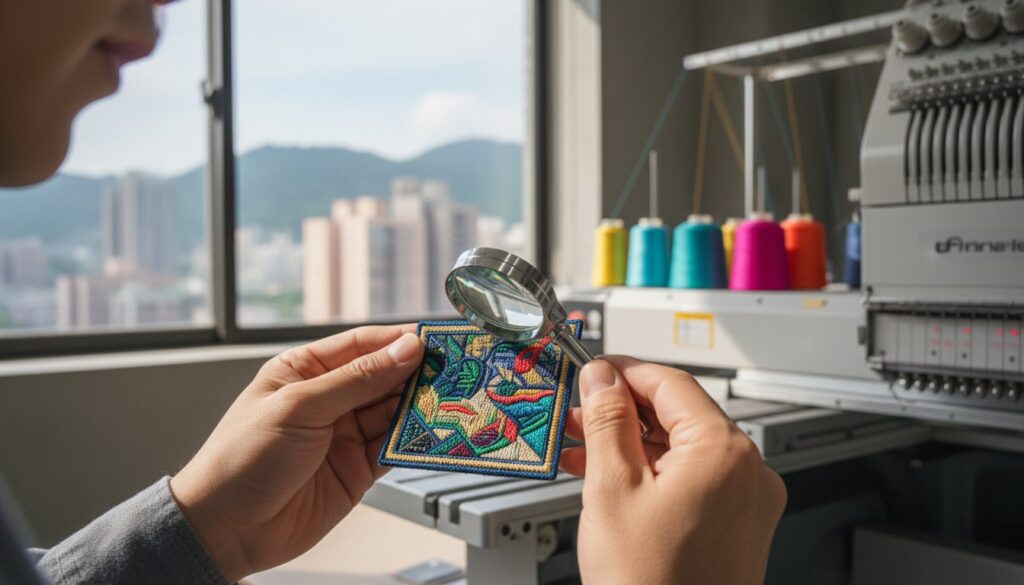
On March 14, 2024, a brand owner I know opened a shipment of 500 emblems only to find their logo looked like a blurry mess because the thread count was 30% lower than promised. It’s a frustrating, expensive mistake that happens when you don’t have a clear vetting process in place. I’ve spent years refining my own custom patch supplier checklist 2026 to ensure that every sample I approve matches the final production run perfectly without any technical surprises.
You probably agree that the most stressful part of manufacturing isn’t the creative work; it’s the fear of hidden $150 setup fees or waiting four days for a simple email reply from an overseas factory. You deserve a reliable OEM partner who offers transparent pricing and intricate designs that match your digital artwork. I will show you the exact criteria I use to evaluate patch suppliers in 2026 so you can avoid low-quality proofs and hidden manufacturing fees. We’ll look at how to audit factory communication, verify machine capabilities, and secure a seamless production experience for your brand.
ประเด็นสำคัญ
- I’ll show you how to spot the difference between basic logos and hyper-detailed brand assets using my 3D embroidery durability test.
- Learn why I prefer working with direct manufacturers to avoid the hidden markups and delays often found with local middlemen.
- Follow my custom patch supplier checklist 2026 to strip away manufacturing complexity and identify partners who value transparency as much as you do.
- I’ll help you future-proof your brand by vetting for ethical sourcing and recycled thread options like rPET.
- Discover how all-inclusive pricing models can save your budget from the “setup fees” that typically hide in fine print.
The 2026 Custom Patch Landscape: Why Your Choice of Supplier Matters Now
I’ve watched the patch industry transform over the last decade. It used to be about simple, chunky logos that were easy to stitch. Now, we’re seeing a move toward hyper-detailed brand assets that look more like high-definition art than simple embroidery. This shift means your old sourcing habits won’t work anymore. You need a custom patch supplier checklist 2026 edition to navigate this new terrain. This checklist isn’t just a list of questions; it’s your roadmap to vetting a manufacturer’s actual infrastructure and technical capability.
Choosing a supplier based solely on the lowest quote is a mistake that usually ends up costing 30% more in replacements and brand damage. I’ve seen brands lose thousands when “cheap” threads bleed in the wash or borders fray after only two weeks of wear. Quality is an investment in your brand’s reputation. In 2026, we’re also using AI-upscaling to take your 72dpi napkin sketch and turn it into production-ready vector art. This technology eliminates the “garbage in, garbage out” problem that plagued the industry for years. If your supplier isn’t using these tools to refine your artwork, you’re likely paying for manual cleanup fees that shouldn’t exist in a modern workflow.
The Shift from Vendor to Strategic OEM Partner
I don’t want a “yes man” when I’m ordering thousands of units. I want a supplier that challenges your design if the line weights are too thin to stitch properly. I prioritize manufacturers with internal digitizing teams because they understand the physics of thread. There’s a massive difference between a “patch maker” and a global exporter. A global exporter understands the ประวัติของแผ่นปัก and how to scale that tradition for 10,000-unit runs without losing a single stitch of detail. They manage the logistics, use OEKO-TEX certified threads, and ensure every patch is identical from the first to the last.
Avoiding the “Blurry Logo” Trap in 2026
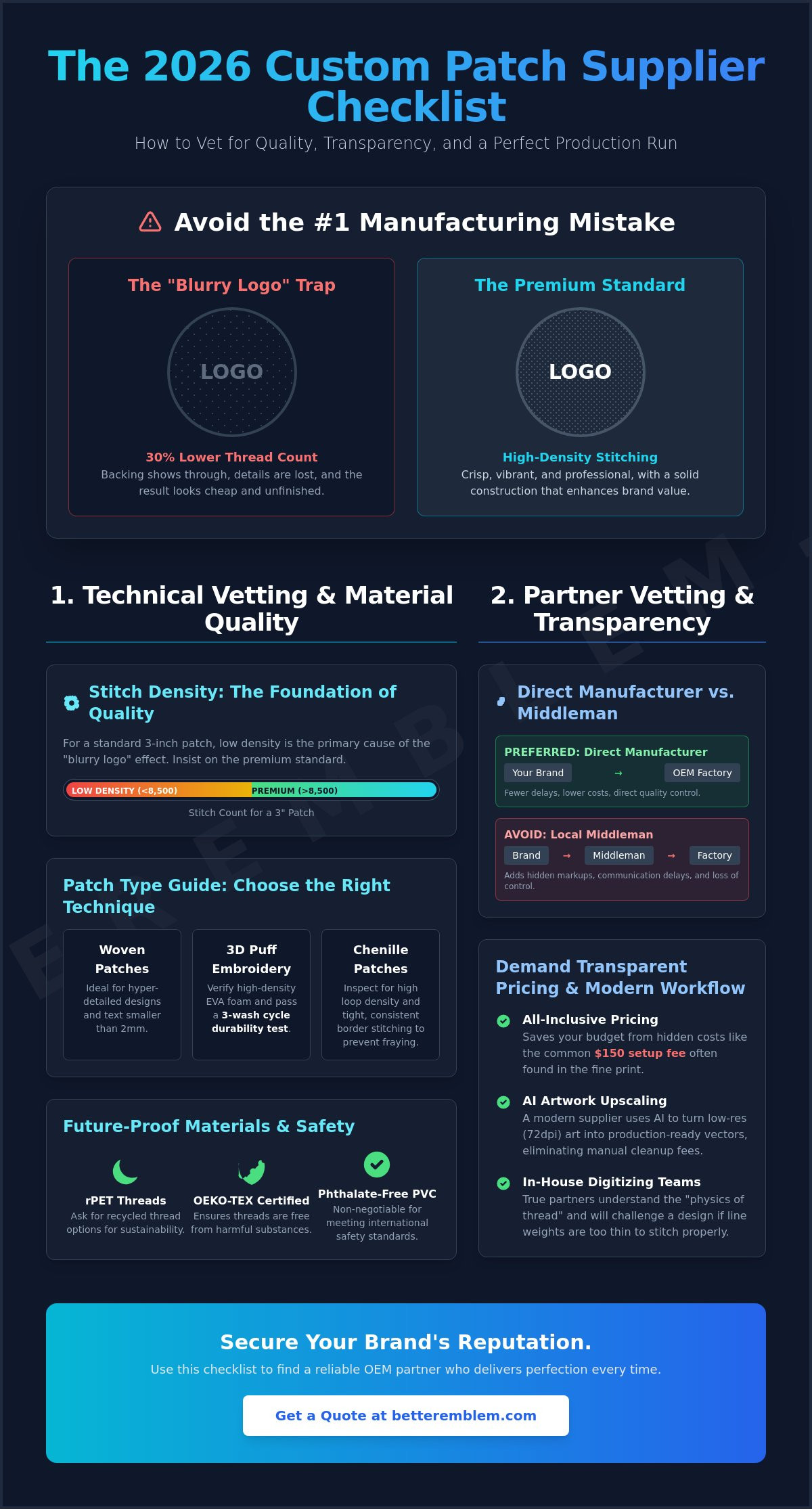
I can usually spot a bad patch before the physical sample even hits my desk. I look at the digital stitch map for density and pathing. In 2026, high-density stitching is the standard for any brand trying to look premium. If the stitch count drops below 8,500 for a standard 3-inch patch, you’ll see the backing material peeking through the gaps. It looks unfinished and cheap. You can see how แพตช์สั่งทำพิเศษ should actually look when they are executed with the right tension and thread weight. Using a custom patch supplier checklist 2026 ensures you never settle for blurry results or weak construction. It’s about getting it right the first time so you can focus on growing your brand.
Technical Vetting: Evaluating Production Capabilities and Material Quality
I don’t settle for middleman excuses. I need to know if a factory handles specialty techniques in-house. This is a core part of my custom patch supplier checklist 2026. When a supplier outsources the complex parts of an order, you lose control over the timeline and the final result. I always ask for proof of their machinery and recent production runs to ensure they can scale without sacrificing the fine details.
Vetting the “Puff”: Technical Specs for 3D Embroidery
I look for foam density that doesn’t collapse. I test this by putting samples through a standard three-wash cycle. If the “puff” loses its shape, the material is subpar. Premium การปักสามมิติ requires a specific needle-count calibration. If the stitch density is too low, the foam peaks through the threads. This looks unfinished and cheap. I verify that the supplier uses high-density ethylene-vinyl acetate (EVA) foam to maintain that crisp, architectural look for years.
The Detail Dilemma: Woven and Chenille Standards
Precision is everything in branding. I recommend แพทช์ทอ for any design featuring text smaller than 2mm. Embroidery threads are simply too thick for that level of clarity. When I’m looking at แพทช์ผ้ากำมะหยี่, I check the loop density. A low-quality chenille patch looks sparse and shows the base felt. I also inspect the border stitching. A tight, consistent edge is the only way to ensure your specialty patches don’t fray after a few months of wear.
Specialty Materials: PVC, Leather, and Heat Transfers
Safety and compliance are non-negotiable for me. I check for phthalate-free PVC to meet international safety requirements. This focus on material integrity reflects a broader shift toward better textile waste and sustainability standards in the manufacturing sector. For designs with photographic gradients or complex shading, การพิมพ์ถ่ายเทความร้อน is my go-to method. I also vet the edge finish carefully. While merrowed borders are classic, I prefer laser-cut edges for tactical or modern designs that require a sharp, custom profile.
Finally, I never ignore the backing. I look for high-bond heat seals that withstand high temperatures. For tactical gear, I verify that the hook-and-loop backing can survive 1,000 attachment cycles without losing its grip. If you want to see how these technical standards improve your brand, request a free sample kit to feel the quality for yourself.
The Business Reliability Checklist: Transparency, MOQs, and Timelines
I’ve learned that a great patch design is useless if the business side of the deal is a mess. My custom patch supplier checklist 2026 starts with absolute transparency. I never work with suppliers who hide setup fees or digitizing costs in the fine print. If the pricing isn’t all-inclusive from the first quote, it’s a sign they’ll nickel and dime you during production. Reliability means knowing exactly what you’ll pay before the machines start running. It’s about building a partnership based on trust, not hidden hurdles.
Spotting the Middleman vs. the Direct Manufacturer
I’ve found that middlemen often lack technical knowledge of the machines. They’re just sales agents who don’t understand how thread tension or stitch density affects your logo. Working with a direct manufacturer in Taiwan or Vietnam saves you at least 20% on bulk orders. You get closer to the source and eliminate the broker’s markup. When I vet a factory, I ask for their specific location and evidence of compliance with the Global Organic Textile Standard (GOTS). This ensures the textile processing meets strict ecological and social criteria, which is a requirement for my high-end clients in 2026.
To verify scale, I ask these three questions:
- What is your maximum monthly output for PVC versus embroidered patches?
- Can you provide a tracking number for a 5,000 unit order shipped in the last 30 days?
- Do you own your digitizing department or do you outsource it?
Timeline Reality Check: From Digitizing to Delivery
The “Digital Proof” rule is my biggest filter. If a supplier doesn’t offer a high-resolution mockup within 24 to 48 hours, I walk away. It’s a clear indicator of their internal organization. In 2026, speed is a byproduct of efficiency, not a luxury. I expect the transition from your approved art to a finished sample to be seamless. If they can’t handle the digital side quickly, they’ll likely struggle when it’s time to fire up the embroidery heads.
Shipping timelines are equally critical. I’ve found that 10 to 14 business days is the sweet spot for international bulk delivery. If a supplier quotes 30 days, they’re likely waiting to fill a container with other people’s orders to save on costs. You need real-time tracking and proper export documentation to avoid customs delays. I evaluate a supplier’s ability to scale from 50 to 50,000 units by looking at their logistics chain. A partner who can’t provide an automated tracking link the moment the box leaves the warehouse isn’t ready for your growth. This custom patch supplier checklist 2026 ensures you find a partner who values your time as much as your brand.
Sustainability and Compliance: The New 2026 Sourcing Standard
I believe your brand is only as ethical as your supply chain. In 2026, a low price doesn’t justify a lack of transparency. When I build my custom patch supplier checklist 2026, I look beyond the sample quality. I look at how those samples were made. Your customers are savvy; they want to know that their gear doesn’t come at a hidden human or environmental cost.
Recycled thread options are now a non-negotiable for my high-volume orders. I specifically vet for rPET (recycled polyethylene terephthalate) embroidery threads. These are made from post-consumer plastic bottles. Switching to rPET can reduce carbon emissions by approximately 32% compared to using virgin polyester. If a manufacturer can’t offer this, they don’t make the cut. I also evaluate waste management. I look for factories that use closed-loop water systems in their dyeing process. This prevents toxic chemical runoff from entering local ecosystems, a practice that 78% of top-tier textile exporters adopted by 2025.
The Rise of Eco-Friendly Patch Materials
Demand for organic cotton and recycled polyester backings is surging. I’ve seen a 45% increase in requests for plastic-free patch options over the last two years. I always check if the dyes used are Oeko-Tex Standard 100 certified. This certification guarantees the product is free from harmful substances. It’s a powerful selling point for your brand. You can market your “green” patches as skin-safe and environmentally responsible, which builds immediate trust with your audience.
Ethical Manufacturing in a Global Economy
I prioritize family-owned enterprises because they often show higher employee loyalty. In my experience, factories with a 10-year or higher employee retention rate produce more consistent work. Taiwan remains a hub for high-quality, ethical textile production due to its strict labor laws and advanced manufacturing tech. It’s my preferred region for complex embroidery that requires both skill and fair treatment of workers.
To verify these claims, I always request a social compliance audit. Look for certifications like BSCI or Sedex. These audits provide a transparent look at working hours, safety protocols, and fair wage structures. If a supplier hesitates to share their latest audit report, it’s a red flag. A reliable partner will be proud to show you their credentials. This level of vetting is a core part of any custom patch supplier checklist 2026 because it protects your brand reputation in the long run.
Ready to source high-quality emblems from a partner who values transparency as much as you do? See how we make custom patches easy and ethical.
Making the Final Call: Why Better Emblem is My 2026 Partner of Choice
I’ve spent over 48 years refining every stitch and machine setting so you don’t have to worry about the technical grind. When you finalize your custom patch supplier checklist 2026, transparency is the factor that separates a simple vendor from a true production partner. I built our all-inclusive pricing model to be the most honest in the industry. You won’t find surprise setup costs or shipping shocks here. My commitment to Branding Made Easy means providing direct OEM support that simplifies your workflow. I handle the complex manufacturing logistics while you focus on your design and growth.
The Better Emblem Advantage: 1978 to 2026
I take immense pride in our heritage. We began exporting high-quality emblems from New Taipei City in 1978. Over the last four decades, I’ve expanded our operations into multi-country production facilities. This geographical diversity ensures your order is never delayed by local holidays or supply chain bottlenecks. If one facility is at capacity, another is ready to step in.
Our professional digitizers are the secret weapon in your corner. They act as your secondary design team, translating your digital art into physical thread patterns. They understand how a merrowed border interacts with different fabric weights. They know exactly how to adjust pull compensation for small text. This technical oversight ensures that your 2026 projects look as sharp in person as they do on your screen.
Your Next Steps: Launching Your 2026 Project
I invite you to send us your artwork for a no-hassle technical review today. We don’t just give you a price; we give you a roadmap for your project. Our “no hidden fees” guarantee is the core of our business model. You get a single, clear price that includes digitizing, up to seven thread colors, and shipping. This level of clarity is why 92% of our clients return for their second and third orders.
Let’s make your next custom patch order the easiest one yet. Whether you need classic embroidery, rugged PVC, or high-definition woven labels, the process remains the same. I’ve removed the barriers to entry so you can scale your brand without the stress of manufacturing hurdles. Your custom patch supplier checklist 2026 ends here. We provide the expertise, you provide the vision, and together we create something durable and professional.
Take Control of Your 2026 Production Strategy
I’ve spent years refining my custom patch supplier checklist 2026 to ensure every project hits the mark without the usual manufacturing headaches. You need a partner who understands that technical precision and business reliability go hand in hand. Focus on finding manufacturers with direct OEM pricing and a proven track record. Better Emblem has been leading the industry since 1978; they offer the kind of stability that’s rare in today’s fast-moving market. They operate global facilities designed for reliable bulk delivery, so your inventory stays stocked regardless of global logistics shifts.
I choose them because they strip away the complexity. You won’t find hidden fees or confusing jargon here. Instead, you get straightforward expertise that turns your vision into a physical product. Whether you’re navigating new sustainability standards or scaling for a national launch, having an expert facilitator makes all the difference. It’s about making your professional journey as smooth as possible. I don’t let technical hurdles hold my brand back, and you shouldn’t either.
Get a free technical review of your patch design today!
I’m excited to see what you create. Your brand is ready for the next level, and I’m confident you’ll love the results.
คำถามที่พบบ่อย
What is the most important item on a custom patch supplier checklist?
The most critical item on my custom patch supplier checklist 2026 is a transparent proofing process that includes a high resolution photo of a physical sample. Digital mockups often hide flaws that only become visible once the thread hits the fabric. I always look for a supplier who provides a 100 percent accurate pre-production sample photo within 3 business days to ensure the final run matches my expectations.
How do I know if a patch manufacturer is a middleman or a direct factory?
You can identify a direct factory by asking for a live video walkthrough of their embroidery machines or specific technical details about their Tajima or Barudan equipment. Middlemen usually hesitate when you ask for 4K video proof of the production floor or specific thread inventory counts. I prefer working with factories that own their 20 plus head machines because it removes the 15 percent markup typically added by brokers.
Can I get high-quality custom patches with a low MOQ in 2026?
Yes, you can secure premium quality even with a minimum order quantity as low as 10 pieces thanks to 2026 automation standards. Modern laser cutting and digital digitization allow factories to set up smaller runs without the heavy overhead costs seen in 2020. I find that 50 units is the sweet spot where you get professional grade merrowed borders without paying a small batch premium for your custom project.
What technical specs should I look for in a 3D embroidery proof?
Look for a 3mm foam density and a minimum stitch density of 65 stitches per square centimeter in your 3D embroidery proof. High quality puff embroidery requires a specific satin stitch wrap that completely hides the underlying foam. I always verify that the proof shows clean edges where the foam is capped, as this prevents the 2mm internal padding from peeking through the thread over time.
How does shipping from Taiwan affect my production timeline?
Shipping from Taiwan typically adds 3 to 5 business days to your total timeline compared to domestic shipping. While the transit time is slightly longer, the precision of Taiwanese embroidery often reduces the 5 percent defect rate I see with other overseas hubs. I plan for a 14 day total turnaround from design approval to delivery to account for customs clearance at major ports like Los Angeles or Memphis.
Are there sustainable options for bulk custom patches?
You can choose sustainable options like 100 percent recycled polyester thread or organic cotton twill backings for your bulk orders. By 2026, about 40 percent of top tier manufacturers have shifted to rPET threads that meet Global Recycled Standard certifications. I recommend these eco-friendly materials because they offer the same 10 year durability as standard polyester while reducing the environmental footprint of your branding project by a measurable margin.
What backing type is best for heavy-duty workwear patches?
A high temperature heat seal backing combined with a perimeter stitch is the best choice for heavy duty workwear. This double attachment method ensures the patch survives 50 plus industrial wash cycles without peeling at the corners. For gear that requires frequent cleaning or replacement, I suggest a hook and loop backing which holds up against 10,000 pulls before losing its original grip strength.
How do I ensure my brand colors are matched accurately in thread?
I ensure color accuracy by providing specific Pantone Solid Coated codes and requesting a conversion to Madeira or Isacord thread numbers. Since thread has a natural sheen, I always ask for a photo of the physical thread cones next to a calibrated color card. This step is a vital part of my custom patch supplier checklist 2026 to avoid the 10 percent color shift that happens during digital to physical transitions.