
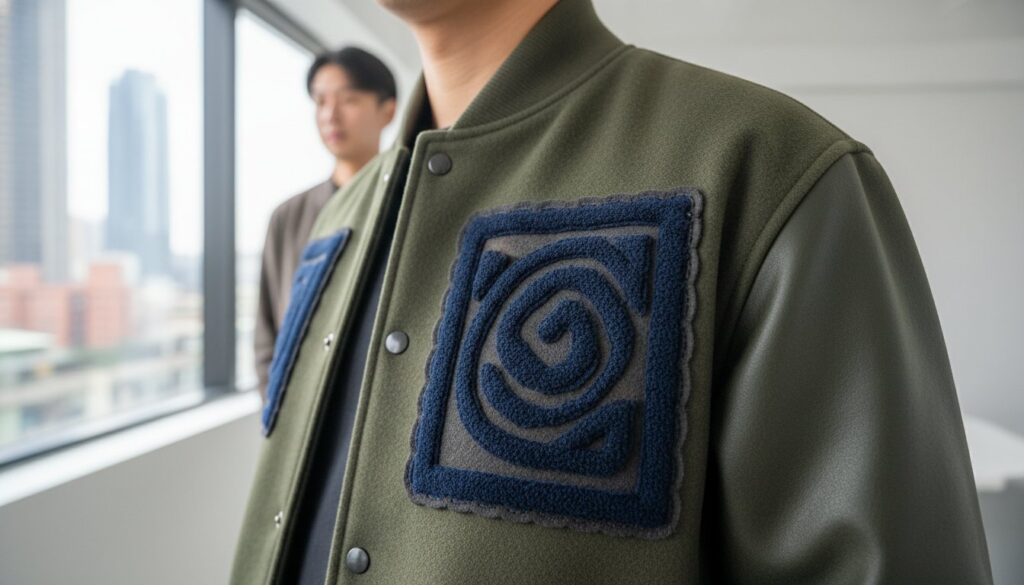
Your favorite vintage varsity jacket doesn’t look iconic just because of the fuzzy thread. It looks premium because of the structural frame hidden underneath. In a global custom-made clothes market valued at $70.78 billion in 2026, standing out requires more than just a flat design. I’ve found that chenille patches with felt backing are the absolute secret to achieving that deep, 3D texture that keeps its shape for years. You likely worry about yarn unraveling or your branding losing its detail, especially with the July 1, 2026, deadline for textile producers to register under California’s SB 707.
I’m here to make this process simple and hassle-free. I’ll show you why felt backing is the essential foundation for a durable, high-impact patch and how you can design them to fit the 2026 retro revival trend. We’ll explore color-blocking techniques, discuss how to avoid common design pitfalls, and help you find a reliable manufacturing partner for your bulk orders. By the end of this guide, you’ll have a clear roadmap to creating premium emblems that feel as good as they look. Let’s get your brand the quality it deserves without the usual manufacturing headaches.
Những điểm chính
- Understand how felt density and edge finishing provide the structural stability needed for complex, scalloped designs.
- Learn to apply the “less is more” design rule so your chenille patches with felt backing stay sharp and professional.
- Compare heat-seal and sew-on methods to determine which application provides the best longevity for your specific garment type.
- Find out how to use contrasting felt colors to make your 3D textures pop against modern, earthy streetwear palettes.
- Explore how a reliable OEM partner handles the technical heavy lifting to make your bulk ordering process seamless and fast.
What Exactly Are Chenille Patches with Felt Backing?
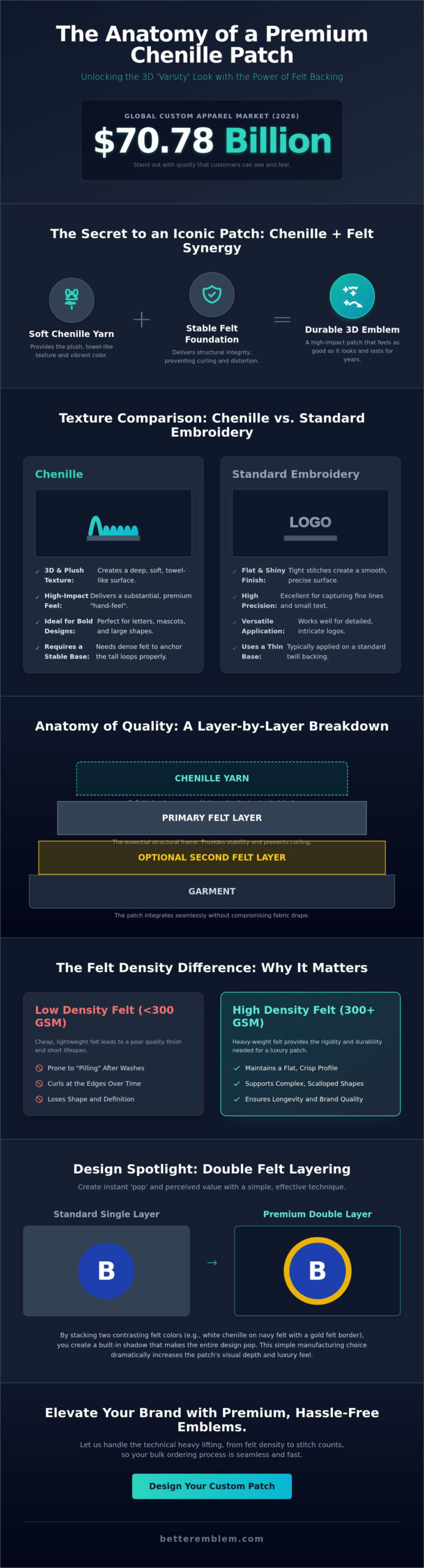
I’ve spent years helping brands find their identity through texture, and I’ve learned that the “varsity” look is all about structural integrity. When we create chenille patches with felt backing, we’re blending soft, fluffy yarn with a stable foundation. This combination is what gives the patch its iconic 3D profile. The felt base serves as a crucial buffer. It stops the patch from feeling like a stiff piece of cardboard, which often happens when you use too much plastic-based backing. Instead, the felt allows the patch to move with the fabric of your hoodie or jacket. It’s a small detail that makes your brand feel much more professional and thoughtful. This synergy ensures that the high-volume moss stitch remains plush without compromising the garment’s drape.
The History of the Varsity Look
Xe Lịch sử của áo khoác Letterman shows us that this style has survived since 1865 for a reason. It originated at Harvard University and quickly became a global symbol of achievement. I’ve noticed that in 2026, this look isn’t just for athletes anymore. Varsity-inspired startups and luxury houses are obsessed with this texture because it triggers a psychological sense of “premium” quality. It’s nostalgic yet modern. When you touch a plush, well-made patch, you immediately associate it with heritage and investment. It’s an easy way to elevate a simple sweatshirt into a high-end piece of apparel.
Chenille vs. Standard Embroidery: A Texture Comparison
Standard embroidery usually relies on tight, flat stitches that create a shiny finish. It’s perfect for small text, but it doesn’t have the “soul” of a textured patch. Chenille is a loop-stitch technique that creates a soft, towel-like surface. Because these loops are so tall, they need a thick, porous base like felt to anchor them properly. If you tried to put this much yarn on a thin twill backing, the patch would curl up at the edges. I recommend chenille patches with felt backing because they offer a tactile “hand-feel” that flat thread can’t replicate.
I always tell my clients that if they want their brand to feel established, they should choose the 3D depth of chenille. While standard thread is great for precision, chenille provides the volume. The felt backing acts as the skeleton for this “carpet” texture, ensuring the design doesn’t sag or lose its shape after a few washes. It’s a simple manufacturing choice that makes a massive difference in how your customers perceive your brand’s value. We handle the technical specs of these layers so your design process stays fast and seamless.
The Anatomy of Quality: Why the Felt Base Matters
I often see brands focus entirely on the fluffiness of the yarn while ignoring the material that actually holds the patch together. In my experience, the felt base is the unsung hero of a high-end emblem. When you order chenille patches with felt backing, you aren’t just buying a decoration; you’re buying a structural frame. This base prevents the heavy chenille yarn from pulling through the garment fabric over time. Without a dense felt layer, the constant friction of wear and washing would cause the stitches to loosen. I prioritize high-quality felt because it provides a clean, stable surface for the moss stitch to anchor into. This ensures your logo stays crisp and legible for the life of the jacket.
Felt Density and Patch Stability
The “hand-feel” of your patch depends heavily on felt density, which we measure in grams. I typically recommend a density of at least 300 grams per square meter (GSM) to prevent the patch from curling at the edges. Cheap, lightweight felt is prone to “pilling,” where tiny balls of fiber form on the surface after a few washes. This makes a brand look dated and worn out. By using a heavier weight, we ensure the patch remains flat and rigid enough to handle the high stitch count required for 3D textures. This stability is especially vital for complex or “scalloped” shapes where a standard twill backing would fray or lose its definition. We monitor the latest data from the Producer Price Index for Nonwoven Fabrics and Felts as of March 2026 to ensure we’re sourcing materials that meet these rigorous durability standards.
Double Felt Layering for Maximum Pop
If you want to achieve the true luxury varsity standard, I suggest looking into double felt layering. This technique involves stacking two different colors of felt to create a built-in shadow or border effect. It’s a brilliant way to add visual depth without the extra cost of additional embroidery layers. For example, placing white chenille on a base of navy felt with a secondary gold felt border creates an immediate “pop” that looks incredibly expensive. This method highlights the 3D nature of the yarn and gives the patch a substantial, heavy-duty feel. It’s a simple design trick that transforms a basic patch into a premium branding tool. If you’re unsure which colors will work best for your logo, you can explore our design gallery to see how these layers interact in real-world samples. This approach makes the manufacturing process seamless while ensuring your final product stands out in a crowded market.
Designing Your Masterpiece: Colors, Borders, and Borders
I love a bold design, but with chenille, the “less is more” rule is your best friend. Because the yarn is so thick, trying to cram too much detail into a small space usually results in a messy blob. I recommend focusing on large, iconic shapes for the chenille portion of your artwork. When you create chenille patches with felt backing, the felt isn’t just a foundation; it’s a vital design element. A standard felt border should be about 3mm wide to frame the plush yarn properly. If you go too thin, the yarn might overlap the edge. If you go too thick, it looks unbalanced. I’ve found that a 3mm border provides that classic varsity silhouette that customers expect.
I want to highlight a technique most competitors ignore: the double felt contrast. By using two layers of felt, you create a “step” effect that adds incredible depth. It’s like adding a matte to a framed picture. This technique is perfect for high-end streetwear brands that want a more sophisticated look than a standard school patch. It allows you to introduce a secondary brand color without adding the weight of extra embroidery. I’ve seen this work beautifully for brands looking to bridge the gap between retro aesthetics and modern luxury.
Choosing Your Yarn and Felt Palette
Trends for 2026 are shifting toward earthy and natural tones like olive green and rust orange, though I still see plenty of brands using soft pastels like lavender and blush pink. My team uses a precise color-matching process to ensure your brand’s PMS colors look perfect in thread. Translating a digital color to a textile can be tricky. I always suggest choosing a felt color that provides high contrast. For instance, a sand beige yarn on a forest green felt base creates a sophisticated look that feels right for the current market. We also offer neon and metallic accents if you want to add a futuristic touch to your varsity designs.
Mixed Media: The Best of Both Worlds
Small text is the biggest enemy of chenille yarn. If your logo has fine lines or tagline text under 0.5 inches, the loops will simply swallow the detail. This is where mixed media comes in. I often combine plush chenille for the main mascot or initial with fine-detail embroidery for the smaller elements. This gives you the best of both worlds: the 3D impact of chenille and the surgical precision of thread. See how this compares to our 3D embroidery for a different kind of depth. This approach ensures your branding remains legible while still feeling incredibly premium. We handle these technical transitions in-house, making the manufacturing process simple and fast for you.
Application Methods: Should You Sew or Iron Your Patches?
You’ve spent time perfecting your design, so the last thing you want is for it to peel off after the first wash. When you’re working with chenille patches with felt backing, the application method you choose is just as important as the stitch density. I usually see two main paths: the traditional sew-on method or the modern heat-seal backing. While iron-on is faster for high-volume promotional runs, it isn’t always the right choice for the heavy, textured garments that typically pair with chenille. You need to consider how the garment will be used before you commit to a backing type.
Felt is a natural insulator, which means it doesn’t transfer heat as quickly as thin twill. This creates a technical challenge during the iron-on process. To get the adhesive to melt properly, you have to apply heat for a longer period. However, if you aren’t careful, that same heat can scorch or flatten the delicate chenille loops on the front. It’s a delicate balance that requires professional equipment. If you’re building a premium brand that prioritizes longevity, you need to understand these trade-offs before you start your bulk production.
The Case for Sew-On Durability
I almost always recommend the sew-on method for premium hoodies, varsity jackets, and heavy outerwear. This “stitch-down” approach provides an authentic vintage look that screams quality. It also ensures the patch can withstand the rigors of heavy industrial washing without the edges curling or the bond failing. Sewing is the only way to guarantee a permanent hold on fabrics with high pile or texture. You can read our guide to custom patches to see how different backings perform across various garment types. This method is the gold standard for any brand looking to establish a legacy of quality.
Iron-On Convenience for Modern Apparel
There are times when iron-on backing makes perfect sense. If you’re creating patches for lightweight t-shirts or promotional items that won’t see daily wear, the convenience is hard to beat. To get a strong bond, I suggest pressing from the back of the garment whenever possible to protect the plush yarn. Felt requires a slightly longer ‘press time’ than standard twill due to its thickness. This extra time ensures the heat fully penetrates the felt layer to reach the glue. If you’re looking for the most reliable way to secure your branding, request a custom quote today and we’ll help you choose the perfect backing for your specific project. We offer both permanent adhesives and temporary positioning options to make your assembly process fast and seamless.
Scaling Your Brand with Better Emblem: The OEM Advantage
I believe your manufacturer should be your biggest ally. When you’re ready to scale your brand, you need a partner that can handle the technical heavy lifting without slowing you down. My team at our Taiwan-based HQ, along with our global facilities, focuses on removing every possible barrier to your success. Producing high-volume orders of chenille patches with felt backing requires a well-oiled machine. We’ve refined our “Made Easy” philosophy to ensure that technical specs, like yarn density and backing stability, are handled by us so you can focus on your creative vision. We don’t just ship products; we provide a seamless solution to your branding problems.
Sustainability is a core pillar of our 2026 operations. With the July 1, 2026, deadline for the California Responsible Textile Recovery Act (SB 707) approaching, we’ve already aligned our manufacturing to meet these rigorous standards. I’m committed to using sustainable materials, including recycled polyesters and organic fabrics, to help your brand stay compliant and eco-conscious. This proactive approach ensures your supply chain is future-proofed against changing global regulations. We treat your brand’s reputation with the same respect we give our own manufacturing legacy.
Quality Control from 1978 to 2026
Our secret to producing world-class emblems lies in nearly 50 years of experience. Since 1978, we’ve perfected a proprietary “no unraveling” yarn technology that keeps your designs looking fresh through years of wear. In our labs, we put every batch through grueling tests for felt durability and colorfastness. We ensure the felt base doesn’t pill and the yarn doesn’t bleed, even when exposed to harsh conditions. This level of scrutiny is why professional buyers trust us for their most important projects. You get the benefit of decades of expertise packed into every single patch we deliver.
Seamless Bulk Ordering and Logistics
I know that shipping and logistics can feel like a headache, especially when dealing with overseas facilities. We’ve simplified the entire process to make it as fast and transparent as possible. From the moment your order leaves our Asian facilities, we track it straight to your door with zero hidden fees. We offer tiered pricing structures specifically designed for wholesalers and large-scale distributors, ensuring you get the best value as your volume increases. My goal is to make the transition from a digital design to a physical product feel effortless. Ready to start? Get your custom chenille quote here! We’ll handle the specs, the shipping, and the quality checks so you can stay focused on growing your business.
Elevate Your Brand Identity for 2026
You now understand why the structural integrity of your emblem depends on the foundation. Choosing chenille patches with felt backing ensures your brand captures that plush, high-impact varsity aesthetic without the risk of pilling or losing its shape. We’ve discussed how the right felt density and mixed-media design can transform a standard logo into a premium piece of apparel. Whether you’re aiming for a retro 80s look or a modern luxury feel, the technical choices you make today will define your brand’s durability for years to come.
I’ve been helping brands navigate these manufacturing hurdles since 1978. Our global OEM production facilities specialize in high-volume, high-detail textile emblems; we ensure every piece meets our rigorous standards. We handle the complexity of textile regulations and technical specs so you don’t have to. It’s time to stop worrying about peeling edges and start focusing on your creative vision. Design your custom chenille patches with our experts today and let’s build something that lasts. I’m excited to help you take your professional branding journey to the next level.
Câu hỏi thường gặp
Can I get chenille patches with felt backing in custom shapes?
Yes, you can absolutely get your chenille patches with felt backing in almost any custom shape you can imagine. Unlike standard twill which can fray, felt is a nonwoven material that holds its edge perfectly when laser-cut into complex or scalloped designs. This makes it the ideal choice for unique brand mascots or intricate varsity letters that need to stand out. We handle the technical cutting process to ensure your edges are clean and professional every time.
How do I wash a garment that has a felt-backed chenille patch?
I always recommend turning your garment inside out and using a cold water cycle to protect the plush yarn. While our felt is tested for colorfastness, high heat in a dryer can eventually flatten the 3D loops of the chenille. For the best results and to ensure the patch remains vibrant, air drying is the gold standard. This simple care routine keeps your premium branding looking like new for years of regular wear after production.
What is the minimum order quantity (MOQ) for custom chenille patches?
Most leading manufacturers in 2026 offer low minimum order requirements to help startups and smaller brands get off the ground. While we specialize in bulk OEM production for wholesalers, we’ve streamlined our setup process to make smaller runs more accessible than in previous years. This flexibility allows you to test new designs or color palettes without committing to thousands of units upfront. It’s all part of our commitment to making the custom emblem market accessible for every professional buyer.
Can I combine chenille with other patch types like woven or PVC?
You can definitely combine chenille with other materials like fine-detail embroidery or woven elements to achieve a mixed-media look. While we don’t offer direct garment embroidery, we can easily integrate different patch textures into a single design. For example, using a woven section for small tagline text and chenille for the main logo body creates a sophisticated, high-contrast finish. This approach is a major trend for 2026 brands looking for hyper-personalization and unique tactile experiences.
Will the felt backing make the patch too stiff for a t-shirt?
A standard chenille patch might feel a bit too heavy or stiff for a lightweight t-shirt. Because of the density required for the moss stitch and the thickness of the felt foundation, these patches are much better suited for hoodies, denim, or varsity jackets. If you’re dead set on a t-shirt application, I suggest keeping the design small or choosing a lighter weight felt. This prevents the garment from sagging or pulling under the weight of the patch.
How long does the manufacturing and shipping process take in 2026?
The typical turnaround time for custom chenille patches in 2026 is between 10 to 15 business days for production. Shipping from our global facilities to your door usually adds a few extra days depending on your specific location and logistics preferences. We’ve optimized our supply chain to ensure this process remains fast and seamless. You’ll receive tracking information as soon as your order leaves our facility so you can plan your product launches with total confidence.
Is double-layered felt more expensive than single-layered?
Double-layered felt does carry a slightly higher price point because it requires extra material and a more precise assembly process. However, the visual “pop” and added depth it provides often outweigh the small increase in cost for premium brands. It’s a high-impact design choice that makes your 3D textures stand out much more than a single layer. We provide transparent pricing upfront so you can decide which option fits your budget and brand goals without any hidden fees.
What file format do I need for my chenille patch design?
I need your design in a high-resolution vector format like AI, PDF, or EPS to ensure the highest quality production. Vector files allow us to scale your artwork perfectly without losing any detail or clarity. If you only have a raster image like a PNG or JPEG, our design team provides free professional artwork assistance to help convert your file. This ensures your final chenille patches with felt backing look exactly like the vision you have in your head.