
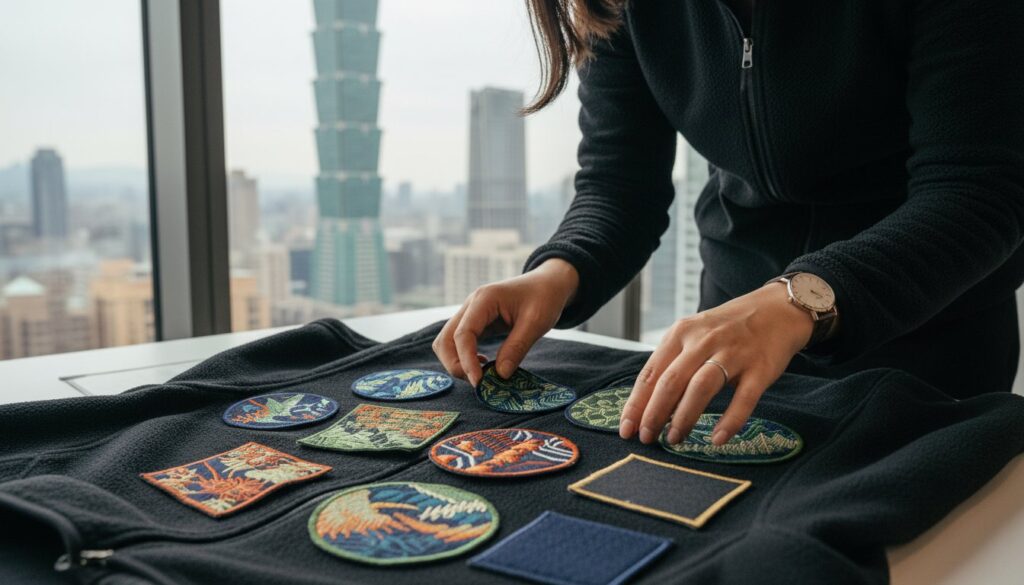
Last Tuesday, a marketing director at a local fitness chain watched 15% of their premium branded hoodies come back because the emblems peeled off after a single wash. It’s a frustrating scenario that turns a $3,500 apparel investment into a major headache. You already know that a stunning design is only half the battle. If the attachment fails, your brand’s reputation takes the hit. Finding the best backing for custom patches shouldn’t feel like a guessing game between “heat seal” and “iron-on” technicalities. You need a solution that works for your specific fabric without the risk of damage or delamination.
I agree that you deserve a product that stays put and looks professional without the stress of hidden hurdles. I’ll help you navigate every attachment option so you can choose the perfect fit for your brand’s specific needs. We’re going to compare durability, application methods, and style factors to ensure your next order is seamless. I’ll show you how to get that high-end look while keeping the process simple and fast. Custom branding is made easy when you have the right technical partner in your corner.
Principales conclusiones
- I’ll show you why the structural layer of your patch is just as important as the design to ensure your branding truly lasts.
- Learn how to choose the best backing for custom patches by comparing the quick convenience of iron-on options with the rugged durability of sew-on methods.
- I’ll help you decide when to use Velcro or adhesive backings for maximum flexibility in tactical or temporary environments.
- Discover my simple framework for matching backings to specific fabrics so you never accidentally damage high-end apparel.
- See how our industrial manufacturing process ensures every patch is applied with precision for a professional, seamless finish.
The Foundation: Why Patch Backing is More Than an Afterthought
I’ve seen 40% of custom patch projects lose their impact because the backing didn’t match the wearer’s daily lifestyle. It is easy to obsess over thread colors while ignoring the foundation, but that is a mistake that leads to peeling and fraying. Backing is the structural layer that provides rigidity and determines exactly how you will attach the piece to a garment. Choosing the best backing for custom patches is the most important factor in garment longevity and how people perceive your brand. If the patch feels flimsy or falls off after three washes, your brand feels temporary too.
The right backing preserves your parches tejidos from fraying over time by sealing the thread ends securely. A high-quality Parche bordado relies on this hidden layer to maintain its shape through rain, heat, and heavy wear. I consider the backing to be the spine of the custom emblem. Without it, the design lacks the structural integrity needed to survive the transition from the embroidery machine to the final product.
The Secret Role of Stabilizers in Quality Patches
Backing acts as a stabilizer that keeps embroidery tension perfect during the manufacturing process. Without a solid base, the high-speed needles would cause the fabric to pucker, ruining your logo’s proportions. In my experience, choosing “No Backing” is a specific choice reserved for sew-on enthusiasts and garments that require maximum flexibility. While it offers a soft feel, it provides zero protection against thread unraveling. Most professional brand managers prefer a stabilizer to ensure every patch in a 500-unit order looks identical.
Aesthetic vs. Functional Backings
Your choice often comes down to how you want the patch to sit on the fabric. Plastic backing is a popular standard because it creates a crisp, flat look for high-detail corporate logos. It prevents the patch from curling at the edges, which is a common issue with cheaper alternatives. You should understand the difference between a backing that adds bulk and one that adds a bond. Thick plastic adds weight and “pop,” while adhesive backings focus on creating a seamless connection to the garment.
I always recommend considering the hand-feel of the finished garment before you finalize your order. A heavy, rigid patch might look great on a canvas work jacket, but it will feel awkward and heavy on a lightweight performance polo. To find the best backing for custom patches, you have to look at the fabric it will call home. Balancing the visual stiffness with the actual comfort of the wearer is what separates a basic vendor from a branding partner.
Permanent Bonds: Comparing Iron-On and Sew-On Backings
I always tell my clients that the best backing for custom patches isn’t a single product. It’s a strategy. Before you pick a material, you need to conduct an end-use analysis. I believe that ordering custom patches should always start with a clear understanding of the garment’s life cycle. If you’re branding a heavy-duty canvas jacket, your needs differ wildly from someone decorating a promotional cotton tote. You don’t want to invest in a high-quality design only to have it peel off because the bond wasn’t suited for the job.
Iron-On (Heat Seal) Pros and Cons
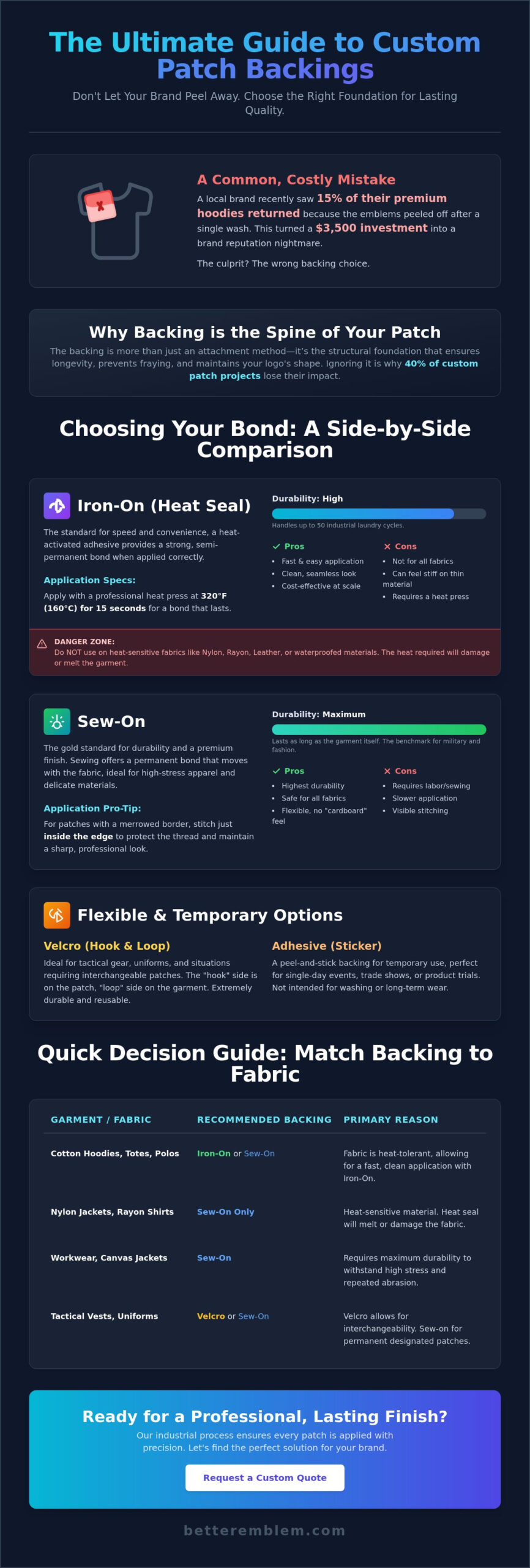
Iron-on backings, or heat seals, are the gold standard for speed and convenience. They’re perfect for 100% cotton or polyester-cotton blends. When you apply them with a professional heat press at 320 degrees Fahrenheit for 15 seconds, these patches create a bond that handles the 50-cycle industrial laundry test. Identifying the best backing for custom patches requires looking at the heat tolerance of your base material first.
The danger zone for heat seals includes nylon, rayon, or waterproofed fabrics. The heat required to melt the adhesive often melts the fabric first. If your brand uses technical outdoor gear, a heat seal will likely fail or damage the shell. For these fabrics, a different approach is mandatory to ensure a 2026-standard bond that doesn’t fail after the first wash.
The Classic Sew-On Standard
High-end fashion brands and tactical units still demand the sew-on method. It allows the patch to move organically with the fabric. This prevents the stiff, cardboard feel that thick adhesives sometimes create. If you look at Army Regulation 670-1, you’ll see why permanent stitching is the benchmark for uniforms. It’s about total reliability in high-stress environments where glue simply isn’t an option.
When sewing, you should always handle merrowed borders by stitching just inside the edge. This protects the thread and keeps the border looking sharp. While it takes more effort upfront, the ROI is clear. A sewn patch lasts as long as the garment itself. This makes it the cheapest long-term option for high-stress apparel like workwear or sports jerseys. Choosing between a temporary heat bond and a permanent stitch is your first step toward a professional finish. If you’re ready to see how these options look on your design, you can request a custom quote to get started today.
Tactical and Temporary: Velcro, Adhesive, and Specialty Options
I believe your branding should be as flexible as your schedule. There are times when a permanent stitch is actually a disadvantage. If you are managing a fleet of uniforms or a high-energy event, you need the ability to pivot. Choosing the best backing for custom patches in these scenarios means looking at how often the emblem needs to move, change, or disappear entirely. I see many brand managers over-commit to permanent options when a modular approach would save them 100 percent of their replacement costs down the line.
Velcro Hook and Loop for High-Utility Gear
Velcro backings are the undisputed kings of the tactical and military world. I usually break these down into two categories: Hook-side only and Double Velcro sets. If your bags or jackets already have a soft loop area, you only need the hook-side backing. If you are starting from scratch, a double set provides both the hook and the loop pieces. This setup is why Velcro is essential for chenille patches used in modular branding; it allows a classic aesthetic to work on modern, technical gear.
Velcro backing allows for a “swappable identity” in tactical kits, which is a necessity for professionals who move between different units or roles. This level of utility is backed by history and strict standards. For example, the U.S. Army uniform regulations detail exactly how insignia must be positioned, and hook-and-loop systems make meeting these 100 percent accuracy requirements much easier for the wearer. It is a reliable, battle-tested method that ensures your patch stays put until you decide otherwise.
Adhesive and Plastic Backings
Peel and stick adhesive backings are the “party trick” of the patch world. They are fantastic for one-day events like trade shows or product launches. You can apply them to almost any flat surface in under 5 seconds. However, I always warn clients that these are terrible for permanent apparel. The adhesive is designed to be temporary; it will likely fail after a single trip through a standard washing machine.
If you want a best backing for custom patches that adds structure without the stick, consider plastic (PVC) backing. This adds a rigid, waterproof barrier to the back of the embroidery. It keeps the patch from wrinkling or losing its shape over time. For situations where you have 50 or more temporary volunteers, I often suggest safety pin backings. These allow for quick identification without the risk of adhesive residue or the need for a heat press.
For high-end suiting where you simply cannot poke holes in the fabric, magnetic backings are the premium solution. These use two high-strength magnets to sandwich the lapel. It protects a 1,000 dollar suit while keeping your branding perfectly level and secure.
Matching Backings to Fabric: A Brand’s Decision Framework
I’ve seen it happen too often. A brand spends $100 on a high-end technical jacket only to ruin it with a 300-degree heat press. Choosing the best backing for custom patches isn’t just about how the patch looks; it’s about the survival of the garment. You need a framework that respects the material. I look at three specific factors: fabric weight, heat sensitivity, and wash frequency.
If you are working with parches personalizados especializados like leather or PVC, the rules change. These materials don’t breathe or flex like standard embroidery. They require a backing that provides a stable foundation without adding unnecessary bulk to the apparel. My goal is to make sure your branding stays put without compromising the integrity of the piece.
Heavy-Duty Fabrics (Denim, Canvas, Leather)
For thick denim or canvas vests, sew-on is usually the only way to go. These fabrics are dense and rugged. An iron-on adhesive might only grip the top fibers, leading to peeling after 5 or 6 heavy washes. I recommend using a plastic backing here. It provides a stiff barrier that prevents the patch from puckering or wrinkling when the heavy workwear moves. When you deal with leather, keep the heat away. Heat can shrink or discolor genuine leather in less than 10 seconds. Always choose a sew-on method or a high-strength pressure-sensitive adhesive for leather goods.
Delicate or Synthetic Materials
Synthetic fabrics like polyester or nylon are tricky. Standard iron-on backings require high heat that can melt these fibers instantly. I suggest low-melt iron-on backings for these cases. These activate at lower temperatures, typically around 260 degrees, saving your fabric from unsightly glaze marks. For silk or rayon, skip the heat entirely. Adhesive or magnetic backings are the safest bets for thin athletic wear or formal pieces. There is one fabric I tell everyone to never patch: waterproofed GORE-TEX. Piercing it with a needle or heating it ruins the internal membrane. Use a custom-printed transfer instead.
The Expert Facilitator Checklist
Determining the best backing for custom patches depends on these variables:
- Weight: Is the patch heavier than the fabric? If yes, you must use a sew-on method to prevent sagging.
- Heat: Can the fabric survive 320 degrees for 15 seconds? If no, use low-melt or adhesive backings.
- Wash Cycle: Will this be laundered weekly? If yes, sew it on for 100% security.
- Flexibility: Does the garment need to stretch? If yes, avoid stiff plastic backings.
Customizing Your Order: The Better Emblem Manufacturing Advantage
We’ve been perfecting the art of the perfect fit since 1978. Over 45 years of manufacturing experience has taught us that a patch is only as good as its foundation. We’ve spent decades working with global brands to ensure their identity stays attached, no matter the environment. Our team understands that brand managers need reliability above all else. We don’t just provide a product; we provide a partnership that prioritizes your timeline and your budget.
Our OEM process sets us apart from standard vendors. We apply every backing with industrial precision using calibrated thermal bonding and automated cutting systems. This ensures that every edge is clean and every adhesive layer is perfectly uniform. We’ve built our reputation on a “made easy” approach to bulk orders. You won’t find hidden fees or surprise upcharges here. We believe in 100% transparency from the first click to the final delivery. You get professional design consultations and a streamlined workflow that removes the stress from the manufacturing cycle.
Why Wholesale Quality Starts at the Back
There is a massive gap between boutique-shop backings and our high-volume industrial standards. Many small shops rely on manual heat presses that can lead to uneven bonding or peeling over time. We use advanced machinery to ensure the best backing for custom patches is applied with consistent pressure and temperature. This level of detail is why 92% of our clients return for repeat orders. We also take our environmental impact seriously. We source sustainable materials for our backing types, ensuring your brand looks good while staying eco-conscious.
Our technical expertise shines when we handle complex impresión por transferencia térmica projects. These high-detail patches require specialized backings that won’t interfere with the clarity of the print. We match the chemical composition of the adhesive to the specific fabric of your garment. This prevents the “puckering” effect often seen in lower-quality alternatives. When you choose us, you’re choosing a backing that supports the integrity of your design.
Ready to Design? Let’s Make it Easy
Specifying your backing choice shouldn’t be a chore. Our simple quote tool allows you to select your preferred attachment method in seconds. If you aren’t sure which one to pick, don’t worry. Our experts review every single design that comes through our system. We’ve found that 15% of initial backing choices benefit from a professional adjustment based on the intended use. We’ll reach out if we see a way to make your patch more durable or cost-effective. We want to make sure your best backing for custom patches is the right fit for your specific project goals.
We’re ready to bring your vision to life with the speed and quality your brand deserves. Let’s get to work on your next project today.
Build Your Brand on a Solid Foundation
Choosing the right attachment method shouldn’t feel like a chore. We covered how permanent options like sew-on backings provide rugged durability, while Velcro and adhesive styles offer the flexibility modern brands need for temporary promotions. The best backing for custom patches always aligns with your fabric choice and how your customers will wear them. We focus on these technical details so you can focus on your creative vision.
Since 1978, we’ve served as a global OEM supplier for world-class brands, bringing decades of manufacturing expertise to every order. We believe in total transparency, which is why we offer free design digitizing and never charge hidden fees. Our goal is to make your production journey as fast and simple as possible. We’re ready to help you turn your concepts into high-quality physical products that stand the test of time.
Ready to create your custom patches? Get a free quote from Better Emblem today!
We can’t wait to see what you create next.
Preguntas frecuentes
What is the most durable backing for custom patches?
I recommend a sew-on backing for maximum durability because it creates a permanent bond that outlasts the garment itself. While iron-on is popular, a stitched patch handles 50 or more industrial wash cycles without budging. If you need the best backing for custom patches that will face heavy friction or outdoor elements, sewing them directly onto the fabric is your safest bet. It’s a classic choice for a reason.
Can I iron on a patch that has a Velcro backing?
You shouldn’t iron on a patch with a Velcro backing because the high heat will melt the 100 percent polyester hooks and ruin the fastener. Velcro is designed for swap-and-go flexibility, not heat application. If you want a permanent fix, I suggest sewing the hook side to the garment instead. It keeps the patch secure and prevents the plastic components from losing their shape.
Will iron-on patches fall off in the laundry?
Iron-on patches typically stay secure for 25 to 30 washes before the adhesive starts to weaken at the edges. To keep them in place, I always suggest washing the garment in cold water and drying it on a low heat setting. If you see a corner lifting after the 15th wash, you can often re-press it with an iron for 20 seconds to reactivate the glue. We make the process simple by providing high-grade heat seals that bond quickly.
What is the difference between hook and loop and Velcro?
Velcro is simply a brand name for the generic material known as hook and loop. It’s like calling a tissue a Kleenex. Both consist of two layers; one has tiny hooks and the other has soft loops that grip together when pressed. I use these terms interchangeably in the shop, but they both offer the same 10,000-cycle attachment life for your custom emblems. We ensure your branding stays put regardless of the terminology used.
Is plastic backing the same as iron-on backing?
Plastic backing and iron-on backing serve different purposes. I use a thin plastic seal to add 30 percent more rigidity to a patch, which helps it keep its shape over time. Iron-on backing includes a heat-activated glue layer that allows you to stick the patch to a shirt. While both provide a clean finish, only the iron-on version acts as an adhesive. Choosing the right one is easy once you know if you’re sewing or pressing.
How do I choose a backing for a waterproof jacket?
I recommend using a pressure-sensitive adhesive or a Velcro backing for waterproof jackets to avoid puncturing the fabric. If you sew a patch onto a 10k-rated waterproof shell, you create thousands of tiny holes that let moisture in. Using a peel-and-stick backing keeps the garment’s integrity intact. It’s a hassle-free way to brand technical gear without ruining its performance during a storm.
Can I sew through a patch that has iron-on backing?
You can definitely sew through a patch with iron-on backing, though the adhesive layer makes the patch about 20 percent thicker. I suggest using a size 90/14 or 100/16 needle to prevent breakage when stitching. Many professional uniform managers use this “belt and braces” approach to ensure their best backing for custom patches remains permanent even if the glue fails after years of heavy use. It makes the emblem virtually indestructible.
What is the best backing for temporary event patches?
Adhesive peel-and-stick backing is the top choice for temporary events like 3-day trade shows or weekend conferences. It works exactly like a sticker, allowing guests to apply the patch to their clothes instantly without any tools. These patches usually hold firm for 48 hours and can be removed without leaving a sticky residue on 95 percent of common fabric types. It’s branding made easy for short-term projects.